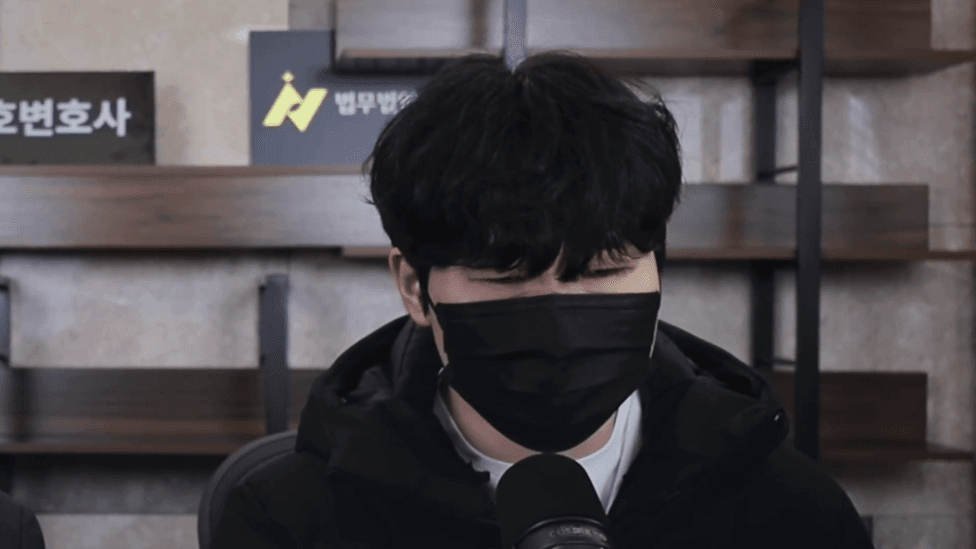
Han Won-seok, who achieved the highest score in South Korea's certified tax accountancy examination, has publicly admitted to cheating using miniature cameras, mobile phones and artificial intelligence tools. According to BBC News, the 34-year-old made his confession in a video posted on the YouTube channel of his lawyer, Lee Don-Ho, and subsequently provided details of his methods to the Seoul Metropolitan Police Agency.
Han's admission came after his exceptional performance in the first round of the examination raised immediate suspicion. He scored 397.5 out of 400 points, answering correctly all but one of 160 questions—a result that triggered online speculation about the legitimacy of his achievement. In South Korea, where standardised national tests carry outsized significance in determining career trajectories, such anomalous results inevitably attract scrutiny.
How did the candidate cheat?
Han employed a coordinated system of technology to circumvent examination security. He used a miniature camera to photograph test questions during the examination, transmitted the images to an artificial intelligence system, and then verified his answers using a smartphone before submitting them.
"I cheated in both the first and second rounds of the tax account exam by using electronic devices and generative AI,"he stated in the video released on Sunday.
"I used a microcamera to photograph the test questions and sent them to an AI then checked my answers on my smartphone to commit the cheating."
The scope of Han's cheating extended beyond the tax accountancy examination. Korea Herald reported that Han also admitted employing the same method during the first round of the certified public accountant examination in March, which he failed to pass. Four proctors who supervised Han during the tax-accountant examination told the administering agency they had observed no suspicious behaviour, and Korea Times noted that mobile phones were not collectively confiscated before the examination commenced.
Why did he confess?
When accusations of cheating initially surfaced, Han denied any wrongdoing. However, he reconsidered his position after reflecting on the impact of his actions on the candidate who had finished second in the examination. He subsequently offered an apology to all other candidates who had passed the tests through legitimate means.
"It seems that because of me, other successful candidates are being suspected,"he acknowledged. Han explained that his motivation for cheating stemmed from a desire to earn money and secure employment that would restore his parents' pride in him.
What are the consequences?
The government has established severe penalties for those found to have used artificial intelligence to cheat in the tax accountancy examination. Individuals found guilty will have their qualification revoked and will be prohibited from retaking the test for five years. The Ministry of Employment and Labour and the Human Resources Development Service convened an emergency meeting following Han's admission.
The Human Resources Development Service announced it would file a complaint against Han for obstruction of business and initiate procedures to cancel his qualification. Chosun Ilbo reported that the agency also plans to review past examinations and strengthen supervision measures, including consideration of radio-wave detectors and eyewear inspections at examination venues.
South Korea's president's policy chief Ha Jun-kyung warned that new measures would be introduced to prevent cheating and stated that
"past crimes" would be "tracked down and apprehended to the very end".
What is the broader context?
The scandal emerges at a particularly sensitive moment, occurring just days before South Korea's annual college entrance examination—a critical milestone for students pursuing higher education. Instances of examination cheating are not uncommon in South Korea, and cases involving artificial intelligence technology have become increasingly prominent as the technology has grown more sophisticated.
Last month, two college applicants were reported to have attempted to use artificial intelligence glasses to cheat during entrance examinations at two Seoul universities. Education ministry data indicates there were four documented cases of cheating through artificial intelligence glasses at middle and high schools during the preceding twelve months. In response to these concerns, Chosun Ilbo reported that the Financial Supervisory Service implemented training for invigilators to detect artificial intelligence glasses beginning with this year's second-stage certified public accountant examination, and examinees' eyewear underwent physical inspection.
What happens next?
The Seoul Metropolitan Police Agency confirmed on Sunday that it had received a written confession through Han's lawyer regarding the cheating incident and assigned the case to investigators. The examination agency has stated it will cooperate fully with the police investigation and pursue qualification-cancellation procedures against Han. The case has been assigned to a metropolitan investigation unit for further examination.