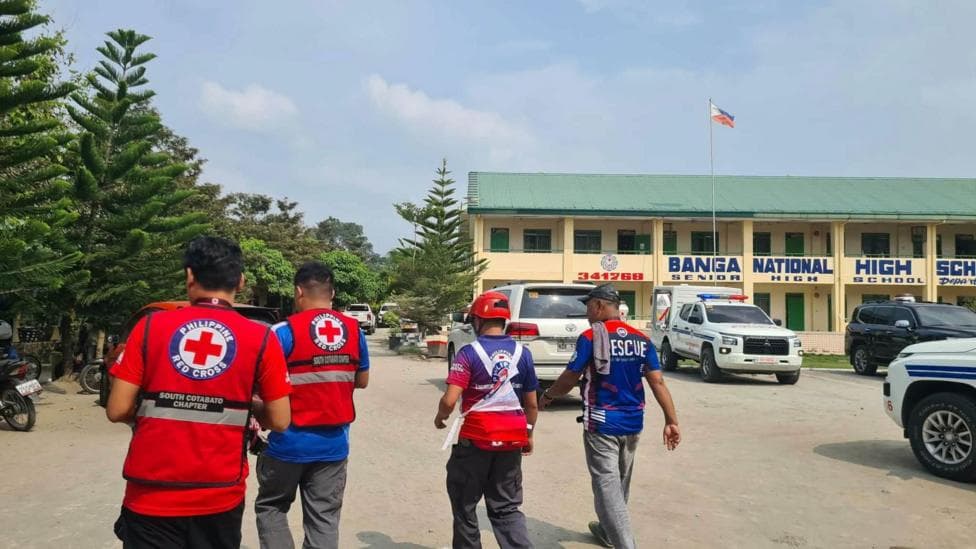
On Tuesday, an Indonesian court convicted 19 people in a baby trafficking case that has drawn attention in both Indonesia and Singapore, but the verdict left unresolved what will happen to the children involved. The syndicate was found guilty of procuring at least 34 babies and selling them for adoption, with most of the children bound for Singapore and at least 12 already sent there.
The case has raised urgent questions about whether the babies in Singapore will, or should, return to Indonesia. For adoptive parents in Singapore, the verdict has sharpened months of uncertainty as they wait to learn whether they will be able to keep the children they have been raising.
It was 'love at first sight' with their adopted baby. Then they were told he may have been trafficked
David, the Singaporean parent previously interviewed by the BBC, said after the verdict that he wanted both governments to make a decision soon. Speaking to the BBC on condition that a pseudonym be used, he said the family had lived with fear and anxiety for almost a year while waiting for clarity.
"Since the case is concluded, how can we move on and what will happen to our son? It's been almost a year of fear and anxiety from waiting,"
"I sincerely hope that both authorities can come to a decision based on the best interests of the children.
"We respectfully ask that, in making this decision, consideration be given to the fact that both our son and our family are victims of the circumstances surrounding this case."
David and his wife Ally had previously told the BBC that they had no idea the child they adopted from Indonesia could have been trafficked. They said they had done their best to carry out their own background checks, and had also gone through numerous checks required by the Singaporean government during the adoption process, which they believe should have detected any trafficking.
Neither Indonesian nor Singaporean authorities previously gave definitive answers to the BBC about what they intended to do with the babies, and after the verdict the BBC asked again.
Indonesia’s foreign affairs ministry said that "several aspects require further examination including the children's legal status, the identities of their biological parents, and the ongoing proceedings in Singapore". It also reiterated that it is "committed to prioritising the best interests of the children". Singaporean authorities have yet to respond to the BBC’s latest queries.
Earlier this week, a court in West Java found 19 people guilty of trafficking the babies.
There is little data on what happens to children trafficked within Indonesia after they are rescued, because the information is generally not made public, according to Ni Made Martini Puteri, a criminologist and lecturer at the University of Indonesia. It is even less clear what happens to children trafficked overseas.
Anti-trafficking and child rights groups in Indonesia have argued that the children in this case should return to their biological parents, as a matter of principle. Speaking to BBC Indonesian after the verdict, Ai Maryanti, a commissioner with Indonesia’s independent child protection commission, said the children’s true identities have still not been established and their "best interests have not been given sufficient consideration".
"best interests have not been given sufficient consideration"
She said the fact that the children may already have been adopted in Singapore "should not be treated as the final outcome".
"Of course, children who are victims of human trafficking must be returned. Even if they're already adopted, what's the legal basis for that?
"What we don't want is Singapore saying that the adoptions complied with their law. According to our law, we found there was a high level of manipulation, resulting in Singapore easily accepting [the adoption applications]."
During the trial, it emerged that the trafficking ring had submitted false information when applying for the infants’ birth certificates and family cards. They listed the names of members of the trafficking ring as the children’s birth mothers, and local officials issued the documents based on that information, raising questions about whether adequate checks were carried out.

Why is this legally difficult?
Annulling the adoptions in Singapore and returning the children to Indonesia will likely be complicated because the case enters uncharted territory. Lawyers told the BBC they had never heard of an adoption order being revoked in Singapore.
With a framework designed with "substantial safeguards upfront" and numerous checks, "adoption orders in Singapore are generally treated as final", said Derek Choo, an associate director with PKWA Law Practice.
If the government applies to revoke the adoption orders, the court could consider several factors, said Lim Fung Peen, a consultant with Yuen Law. One is the psychological impact on the child.
Child psychologists had previously told the BBC that separating young children from their caregivers could have a lifelong impact on their mental health. The duration the child has spent in Singapore, and the family and living conditions the child would return to in Indonesia, could also be considered, according to Lim.
The babies are believed to have entered Singapore between 2023 and 2025, which means the oldest among them is at least three years old by now.
Another factor could be whether the basis of the adoption is untrue, Lim said. In this case, the babies’ birth certificates have been proven to be fraudulent, so a court could find the basis of their adoption "questionable".
Then there are other challenges.
At least 12 babies are believed to be in Singapore already, but Indonesian authorities still have not identified all of the children’s birth parents. This means some children may have no one to return to. If they are returned, they would be placed into state care. At least eight other babies rescued from the trafficking ring are already in the care of an orphanage in Bandung.
"Suppose a child is recognised as a trafficking victim and returned to Indonesia, but nobody here knows who the biological parents are because our evidentiary system is weak," said Puteri.
"I would argue that if the child has only known life in Singapore since infancy, then it makes more sense for the child to remain in Singapore with the adoptive parents.
"However, if the biological parents are later identified, the child should still have the right to know who they are."
With the verdict, Singapore should now treat these children as victims of trafficking and therefore give them protection, she argued.
"Protection should also extend to the adoptive parents because they too may have had no idea what had happened,"
David said he and his wife only want to "live a normal family life, like any other couple hoping to raise a child in a safe, stable, and loving home." He added that they hope the matter can now be resolved so their son can move forward with certainty and security.
"Since the case is concluded, how can we move on and what will happen to our son? It's been almost a year of fear and anxiety from waiting,"
"I sincerely hope that both authorities can come to a decision based on the best interests of the children.
"We respectfully ask that, in making this decision, consideration be given to the fact that both our son and our family are victims of the circumstances surrounding this case."
"Of course, children who are victims of human trafficking must be returned. Even if they're already adopted, what's the legal basis for that?
"What we don't want is Singapore saying that the adoptions complied with their law. According to our law, we found there was a high level of manipulation, resulting in Singapore easily accepting [the adoption applications]."
"best interests have not been given sufficient consideration"
"I would argue that if the child has only known life in Singapore since infancy, then it makes more sense for the child to remain in Singapore with the adoptive parents.
"However, if the biological parents are later identified, the child should still have the right to know who they are."
"Protection should also extend to the adoptive parents because they too may have had no idea what had happened,"
Additional reporting by Farida Susanty of BBC Indonesian.
Key Facts
- On Tuesday, an Indonesian court convicted 19 people for baby trafficking.
- Investigators said at least 34 babies were procured and sold for adoption, with at least 12 sent to Singapore.
- Indonesia’s foreign affairs ministry said the children’s legal status, biological parents and Singapore proceedings still need examination.
- Lawyers said they had never heard of an adoption order being revoked in Singapore.
- At least eight rescued babies are already in an orphanage in Bandung.