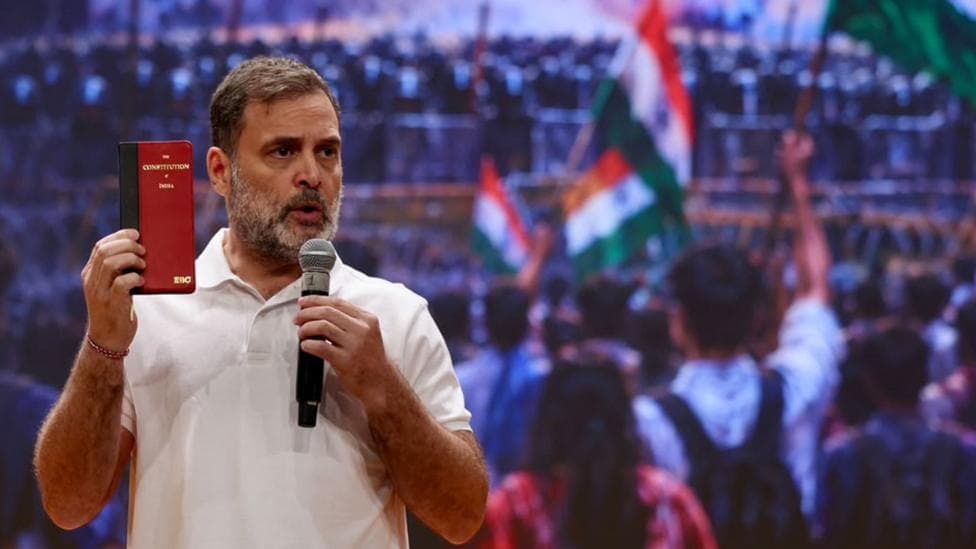
Thousands of opposition supporters marched through Delhi to India's Supreme Court on Monday to demand the resignation of the election chief, alleging systematic fraud in the electoral roll revision process. The "March for Democracy" represented the latest escalation in weeks of demonstrations, with authorities deploying thousands of security personnel, barricading roads across the capital, and detaining thousands of protesters over the preceding weekend.
Congress leader Rahul Gandhi submitted a formal petition to the court challenging the electoral roll revision, in which tens of millions of names have been removed from voter registers. Opposition parties contend that the process disproportionately benefits Prime Minister Narendra Modi's ruling Bharatiya Janata Party (BJP), a charge both the Election Commission and the BJP firmly deny.
The opposition's demands extended beyond the election chief's removal. According to reporting on the march, opposition parties also called for halting the Special Intensive Revision (SIR) process and returning to paper ballots for future elections.
For weeks, police had denied requests to hold demonstrations, citing public order concerns. When the Cockroach Janta Party (CJP), an unregistered pressure group, attempted to organize a protest over the weekend, authorities responded with mass detentions. According to estimates from coverage of the weekend unrest, more than 30,000 police and paramilitary personnel were deployed, with reports suggesting up to 80,000 protesters were present.
Gandhi called upon "all opposition parties, civil society groups [and] all those who believe in democracy" to participate in Monday's march. At a press conference, he and Congress President Mallikarjun Kharge presented a letter to Chief Justice Surya Kant outlining their concerns regarding Chief Election Commissioner Gyanesh Kumar's conduct. When the opposition subsequently filed their petition at the court, Kant acknowledged that the matter was already sub judice—meaning he could not publicly discuss it—but offered reassurance:
"You have my assurance that any such petition shall be heard at the earliest possible opportunity, in accordance with the law."
The Supreme Court had already begun examining the electoral process. On October 5, the court stated it had not approved a modified Form 6 used during the SIR and demanded records to establish who had altered it, issuing notices to both the central government and the Election Commission. This judicial scrutiny followed multiple petitions challenging the Election Commission's handling of the revision and seeking action against Gyanesh Kumar.
Central Delhi experienced unprecedented security measures on Monday. Heavy deployments lined the march route, with traffic restrictions and controlled access at several metro stations. According to details of the march logistics, the procession was scheduled to begin at 1:30 pm from the Connaught Place–Barakhamba Road junction and cover approximately 2 kilometres to the Supreme Court.
A bus carrying Gandhi and other opposition leaders proceeded from Barakhamba Road toward the court as supporters waved flags and chanted his name. Among those seated near Gandhi was Neha Bora, a student leader who has become prominent in the protest movement. At Mandi House, several kilometres along the route, Gandhi and fellow leaders climbed atop the vehicle to address thousands of supporters lining the streets. Other protesters mounted additional buses while waving flags and chanting anti-government slogans accompanied by drums and sustained cheering.
Protesters articulated their concerns with emotional clarity. One demonstrator asked an AFP news agency reporter: "If they take away our right to vote, what is left with us?" Another characterized the march as "a fight to save the very fabric" of India, the world's largest democracy.
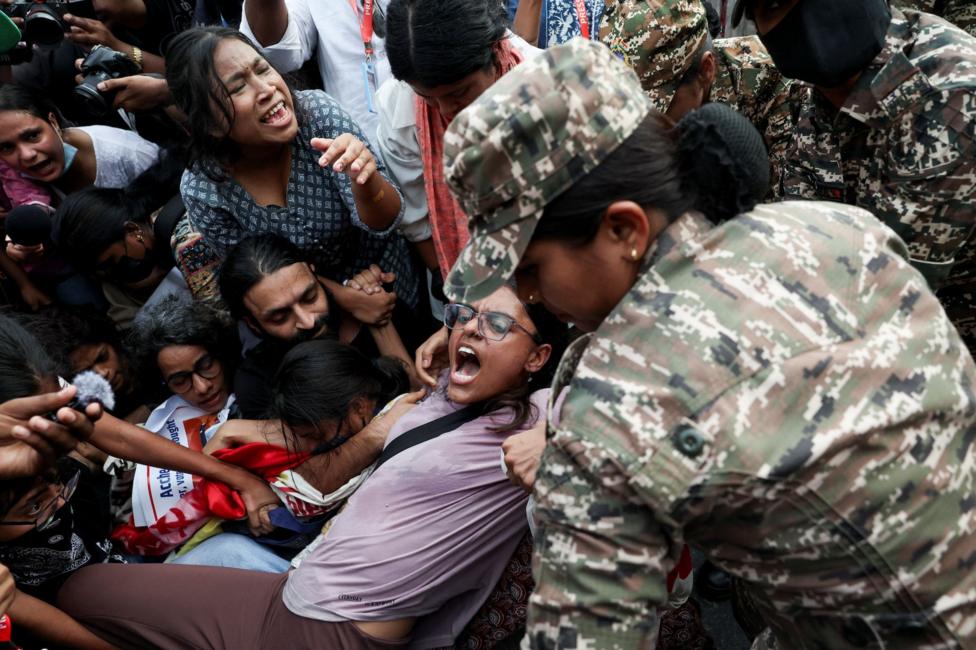
The weekend preceding Monday's march had witnessed aggressive police action. The CJP had announced plans for a Saturday demonstration at Jantar Mantar, Delhi's most recognized protest location. However, authorities imposed sweeping restrictions that made reaching the site nearly impossible—train services were cancelled, dozens of metro stations were closed, and tens of thousands of police and paramilitary personnel were positioned to detain protesters.
CJP leaders Abhijeet Dipke, Saurav Das, and Ashutosh Ranka faced dramatic detention when they landed in Delhi to participate in the weekend action. Dipke was released to attend his grandmother's funeral, while Das and Ranka held a press conference declaring that demonstrations would continue. Both leaders indicated they would seek authorization from police for future protests.
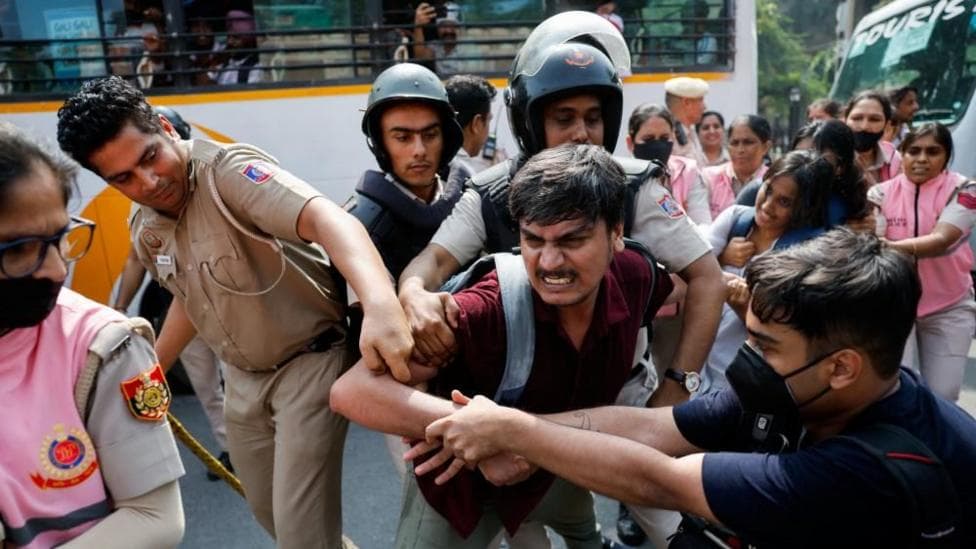
Over the weekend, authorities detained and subsequently released thousands of individuals, including at least 16 journalists. Video and photographic evidence documented police forcibly removing people—including women—from protest sites and pushing them into buses. One video captured a police officer striking a detained protester inside a vehicle. The Delhi police declined to respond to inquiries regarding the use of force against demonstrators.
International press freedom organizations responded sharply to the journalist detentions. Reporters Without Borders issued a statement condemning the arrests:
"Covering events of public interest is not a crime. It is their job. The police's actions against the press are unacceptable."
Gandhi characterized the police response as disproportionate, stating that young Indians who had come to peacefully protest with "love in their hearts, not hatred or anger" had been beaten. In response, BJP President Nitin Nabin accused opposition parties and the CJP of attempting to destabilize India "at the behest of foreign forces," though he provided no elaboration on the identity of these alleged forces.
The Home Ministry announced that demonstrations would no longer be permitted at Jantar Mantar, designating three alternative sites for future protests should authorities grant permission. This restriction followed the CJP's successful mobilization of a summer protest that culminated in the resignation of India's federal education minister.
Over the preceding week, top opposition figures including Gandhi had been briefly detained multiple times while leading protests in central Delhi. The escalating confrontations reflected deepening tensions between the opposition and the government over electoral integrity.
What happens next
The Supreme Court was expected to proceed with examining the opposition's petition through the judicial process, with potential hearings anticipated for October 13. The court's handling of the electoral roll revision challenge and the demands for the election chief's removal will likely shape the trajectory of the broader political confrontation.
Key Facts
- Tens of millions of names have been struck from electoral rolls during the Special Intensive Revision process, which opposition parties claim benefits the ruling BJP
- The Supreme Court on October 5 stated it had not approved the modified Form 6 used in the revision and demanded records showing who altered it
- Authorities deployed more than 30,000 police and paramilitary personnel during the weekend protests, with estimates of up to 80,000 demonstrators present
- At least 16 journalists were detained during weekend protests, drawing international condemnation from press freedom organizations
- The Home Ministry has prohibited demonstrations at Jantar Mantar and designated three alternative protest sites