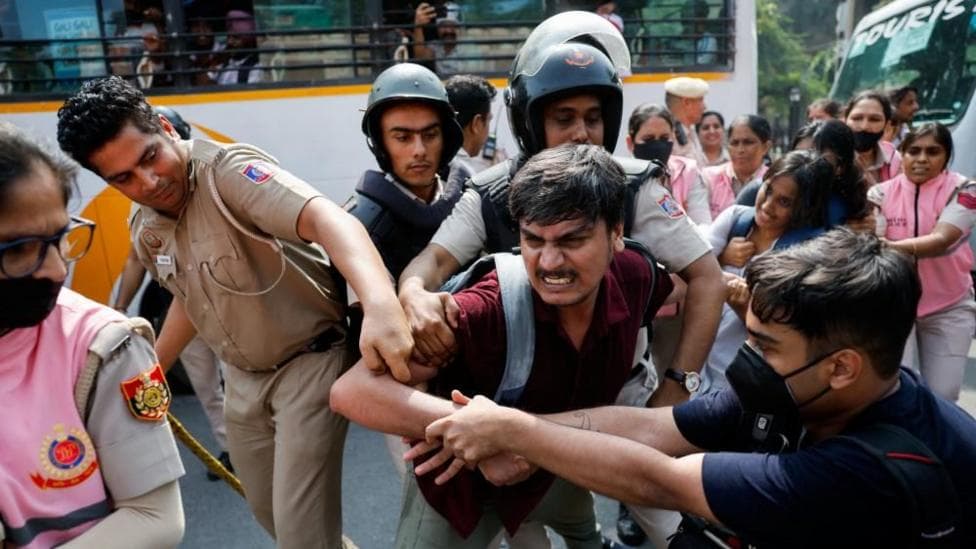
Hundreds of demonstrators have been detained in Delhi during a major protest by the Cockroach Janta Party (CJP), a Gen-Z led movement demanding electoral reforms and the resignation of the country's Chief Election Commissioner. The group's founder, Abhijeet Dipke, along with two other senior leaders, Saurav Das and Ashutosh Ranka, were detained on their flight from Mumbai before the demonstration could take place, with the CJP claiming they were taken to an undisclosed location.
The protest unfolded on October 10 amid extraordinary security measures across central Delhi. According to reporting from the day, mobile internet was suspended in central Delhi and markets were closed as authorities implemented a lockdown-like security operation. Tens of thousands of security personnel were deployed, roads were barricaded, and dozens of metro stations were shut from the previous evening. Several trains to and from major Delhi stations had been cancelled. Despite these restrictions, the CJP had insisted the demonstration would proceed.
Delhi Police refused permission for the protest to take place at Jantar Mantar, a landmark in the Indian capital, and according to police statements, authorities said the protest request was submitted late and organisers had breached undertakings from previous demonstrations. Police warned that protesters violating the ban could face legal action. The police have not publicly commented on the mass detentions.
The CJP, which is not registered as a political party in India, is demanding the resignation of Chief Election Commissioner Gyanesh Kumar over allegations that he has manipulated voters' lists to favour Prime Minister Narendra Modi's Bharatiya Janata Party (BJP). The Election Commission and the BJP have both denied these accusations.
What is the electoral roll controversy?
At the centre of the dispute is the Special Intensive Revision (SIR) of electoral rolls, a nationwide exercise that began the previous year. The Election Commission describes this as a routine operation to remove dead, duplicate, or ineligible voter entries. However, the revision has sparked widespread controversy, with tens of thousands of people in multiple states alleging they have been wrongly removed from the voter register. According to reporting on the scale of removals, approximately 130 million names were flagged in the draft exercise, though the Election Commission stated the process was still incomplete and that people wrongly removed could re-enrol.
The CJP and opposition parties contend that the electoral roll revision is being conducted in a manner that advantages the ruling BJP. The movement's demands extend beyond Kumar's resignation to include freezing the voter-roll revision entirely, restoring the January 2025 voter list, seeking an independent inquiry into the process, and repealing the 2023 law governing election commissioner appointments.
Who is leading the movement now?
With Dipke and the two other leaders in detention, Ajinkya Shinde has been designated as the CJP's temporary leader. He released a video message to protesters telling them that
if Delhi Police tries to stop you, wherever they stop you will become your Jantar Mantar. Student activist Neha Bora, who was also detained by Delhi Police, urged demonstrators to
hold the line.
Before his detention, Dipke had declared his resolve, stating:
If you think you can stop us by threatening us with jail or trying to intimidate us with the fear of imprisonment, you are mistaken.
The large number of protesters expected to converge on Delhi were unable to reach Jantar Mantar due to the heavy security presence and road blocks. Announcements were broadcast across the city asking people to cooperate with police. Buses packed with detained protesters were seen being driven away from the protest site.
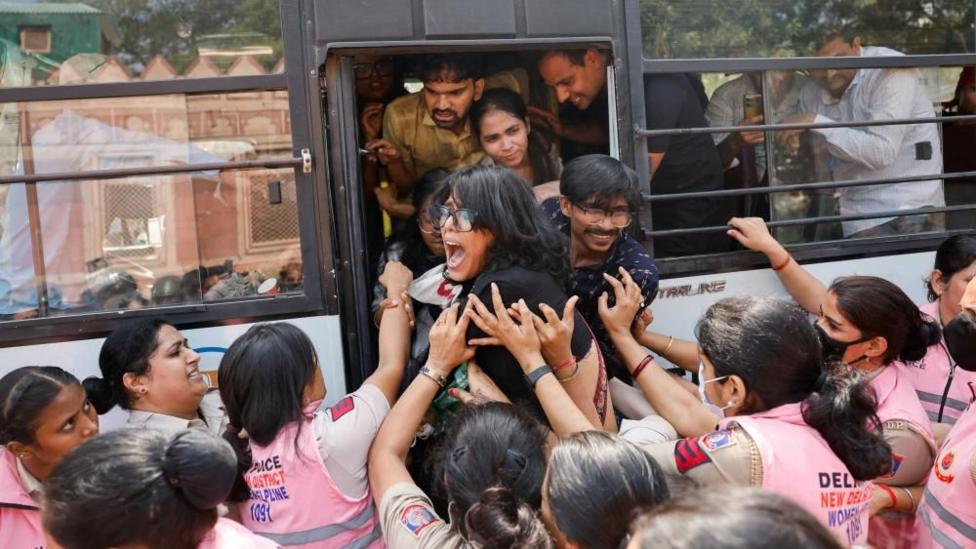
One protester, Sabika Muzaffar, described the atmosphere of fear surrounding the demonstration. She told a national broadcaster that she and her mother had prepared for detention, saying:
On the way to the protest site, instead of reciting hymns and verses as we usually do, my mother and I were rote learning our lawyer's number.She characterised her participation as
her way of defending the country and its democracy. A few minutes after speaking to the broadcaster, Muzaffar was taken away by police.
How did the Cockroach movement begin?
The CJP emerged from a remark made by India's Chief Justice Surya Kant, who likened jobless young people to
cockroaches. The Chief Justice later said his comments had been misinterpreted. Dipke, who had previously worked with the opposition Aam Aadmi Party (AAP) and had just completed a master's degree at Boston University, responded with a post on X in May that asked:
What if all cockroaches come together?
The post went viral, and the movement was born. The CJP first gained prominence during weeks of demonstrations over the summer demanding education reforms and the resignation of Education Minister Dharmendra Pradhan. The movement tapped into widespread anger over unemployment, exam paper leaks, and government accountability. In July, Dipke watched from the stage as the five-week-long protest ended in celebration following the education minister's resignation, marking a significant victory for the nascent movement.
The current protest represents the CJP's return to the streets, this time targeting electoral governance just months before crucial state elections. The movement's rapid growth from a viral social media post to a force capable of mobilising tens of thousands of demonstrators reflects the depth of discontent among India's younger generation with institutional practices and governance.
Key Facts
- Founder Abhijeet Dipke and leaders Saurav Das and Ashutosh Ranka were detained on their flight from Mumbai before the October 10 demonstration
- Mobile internet was suspended in central Delhi, metro stations were closed, and dozens of trains were cancelled as part of the security operation
- The CJP demands the resignation of Chief Election Commissioner Gyanesh Kumar and seeks to freeze the voter-roll revision that has seen approximately 130 million names flagged for removal
- The movement originated from a viral May post by Dipke responding to the Chief Justice's remarks about jobless youth, and previously secured the resignation of the education minister in July
- The CJP is not a registered political party but has mobilised tens of thousands of supporters demanding electoral reforms ahead of state elections