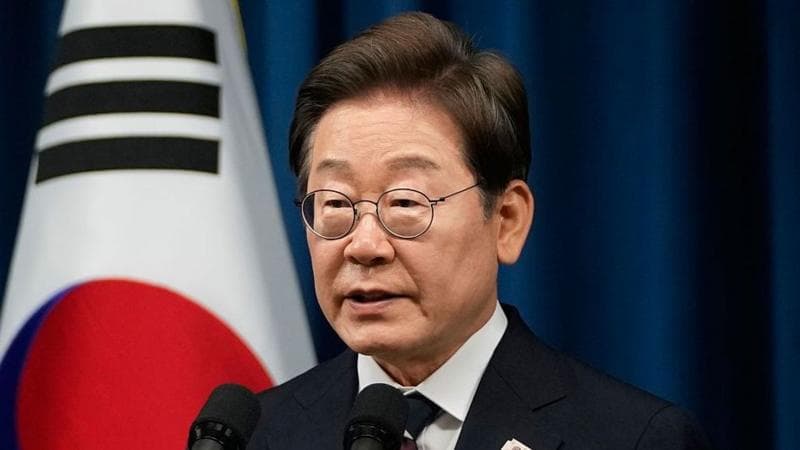
South Korea announced it will recall its ambassador to Ukraine, marking the latest stage in an escalating diplomatic confrontation between the two nations over the handling of captured North Korean soldiers.
The dispute began when Ukrainian President Volodymyr Zelensky disclosed in September that his government had transferred two captured North Korean soldiers to Seoul. South Korea contends that Ukraine violated a confidentiality agreement by making the transfer public, while Zelensky's office disputes that any such agreement existed.
The two North Korean soldiers, part of a larger contingent supporting Russian forces in the Ukraine war, had previously expressed to local media their desire to relocate to South Korea. According to South Korean news sources, the soldiers were captured in January 2025 during fighting in Russia's Kursk region and arrived in South Korea in mid-September 2026.
How did the diplomatic row begin?
Zelensky revealed the transfer during his address to the UN General Assembly in September, noting that the two North Koreans had not been "easy to capture alive". This announcement prompted immediate criticism from South Korean President Lee Jae Myung, who described it as "greatly disappointing" and characterised the transfer as a "highly sensitive issue" with implications for national security.
Lee's office explained that the transfer had been kept confidential to protect the North Korean soldiers' families and that Ukraine had also wanted secrecy to avoid the appearance of having surrendered an opportunity to exchange the soldiers for Ukrainian prisoners of war. The office stated that Ukraine had indicated the soldiers would be mentioned in Zelensky's address but not the fact of their transfer itself.
In September, South Korean Vice Foreign Minister Park Yoon-joo filed a formal complaint with Ukrainian Foreign Ministry counterpart Andrii Vieshkin over the disclosure. The dispute intensified when Zelensky's office responded by asserting that the two countries had never established a non-disclosure agreement, contradicting Seoul's position.
What has been the official response?
Seoul subsequently demanded that Ukraine apologise for "announcing a falsehood" and stated that the actions had caused serious damage to bilateral trust. Earlier this week, Foreign Minister Cho Hyun said he received an apology from his Ukrainian counterpart, but characterised it as falling short of Seoul's expectations.
According to international reporting, President Lee Jae Myung threatened unspecified further measures if Ukraine did not issue a public apology. The South Korean Foreign Ministry confirmed that Ambassador Park Ki-chang would be recalled, though the ministry has not announced when the ambassador will return or how long the recall will last.
Ukrainian Foreign Ministry spokesperson Heorhii Tykhyi responded on Thursday with a statement emphasising that "diplomacy should prevail over emotions". He added:
Despite Seoul's decision to recall its ambassador, Ukraine remains open to restoring a constructive dialogue - even if it takes time.
On the same day, South Korea's Foreign Ministry released a statement indicating it would "continue consultations with the Ukrainian side", expressing the expectation that "various outstanding issues...[would] be resolved smoothly". The ministry also clarified that the embassy in Kyiv would remain open despite the ambassador's recall.
Why did the disclosure cause such controversy in Seoul?
President Lee faced significant domestic criticism following Zelensky's revelation, with opposition figures accusing him of attempting to conceal the transfer to avoid antagonising Pyongyang. The incident became a focal point for broader questions about South Korea's approach to North Korea and its alignment with international efforts to support Ukraine.
South Korea has maintained a sympathetic stance toward Ukraine since Russia's full-scale invasion began, yet has adhered to its longstanding policy of declining to supply lethal weapons to nations engaged in active conflict. However, after North Korean troops deployed to support Russia in 2024, Kyiv intensified pressure on Seoul to provide advanced anti-air missiles to defend Ukraine's energy infrastructure from Russian drone and missile strikes.
What is South Korea's military assistance position?
In July, Seoul announced a $100 million assistance package for Ukraine. Lee's office characterised this as an expansion of earlier support, which had consisted of non-lethal items including helmets, personal armour and medical equipment. Russia's foreign ministry responded by warning it would have "no choice but to retaliate" if South Korea provided Ukraine with weapons, though it did not specify what actions it might take.
What is South Korea's broader strategic position?
South Korea has long pursued balanced relations with neighbouring nations that may be at odds with its ally, the United States. Since the Soviet Union's collapse, it has worked to deepen trade and diplomatic ties with Russia, which shares a border with North Korea, and views both Moscow and Beijing as essential partners in efforts to influence Pyongyang's behaviour and policies.
What happens next?
Seoul indicated that the timing of Ambassador Park Ki-chang's return would depend on how ongoing consultations with Ukraine develop. The two nations remain engaged in discussions aimed at resolving the dispute, though the path to full reconciliation remains uncertain given the depth of disagreement over whether a confidentiality agreement existed and the domestic political pressures both leaders face.