South Korea's Education Minister Choi Kyo-jin has stepped down following a national exam cheating crisis that exposed vulnerabilities in the country's high-stakes college entrance system. He accepted responsibility for last-minute security measures deployed during Thursday's annual Suneung exam, which involved sending emergency alerts to every mobile phone in the country. According to BBC News, the resignation came after authorities discovered 111 candidates carrying unauthorised smart devices during the test taken by approximately 500,000 students.
"As the minister in charge, I believe I cannot escape criticism that we failed to prepare in advance,"Choi said in a statement on Sunday.
"Now that the exam has concluded, I feel a deep sense of responsibility and am offering my resignation."South Korean President Lee Jae Myung, who has advocated for overhauling the current exam system, subsequently accepted the resignation.
What triggered the security crackdown?
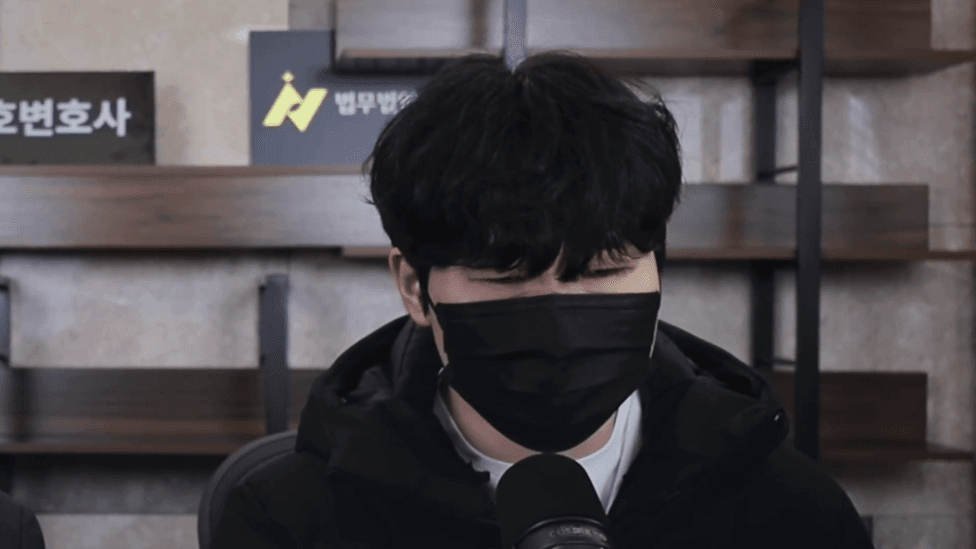
The scandal intensified after Han Won-seok, who achieved the highest score in South Korea's certified tax accountancy exam in April, confessed to cheating. His near-perfect result—with only one error out of 160 questions—had raised immediate suspicion among officials and the public.
"I used a microcamera to photograph the test questions and sent them to an AI, then checked my answers on my smartphone to commit the cheating,"the 34-year-old revealed in a video message. This admission prompted authorities to act with urgency, introducing emergency measures just days before the Suneung.
How did authorities respond to the cheating threat?
Officials deployed unprecedented security measures for the exam, marking the first time South Korea used its national disaster alert system to combat academic dishonesty. Three nationwide emergency alerts were transmitted between 08:00 and 15:00 local time on Thursday, causing mobile phones across the country to sound alarms simultaneously—even those on silent mode and devices belonging to tourists using data roaming. According to Korea Herald, the three alerts led to 54 detections: 31 candidates were identified after the 8:30 a.m. alert, 11 after the 2:21 p.m. alert, and 12 after the 2:57 p.m. alert. Phones remained silent only if switched off or set to airplane mode.
Beyond the alerts, Agence France-Presse reported that authorities blocked public Wi-Fi in testing areas, required candidates to cover buttons on shirts and jackets to prevent hidden cameras, and conducted inspections of eyewear. Of the 111 device-related cases discovered, five involved candidates actually using electronic devices during the exam, with police opening investigations into two cases.
How did test takers react to the security measures?
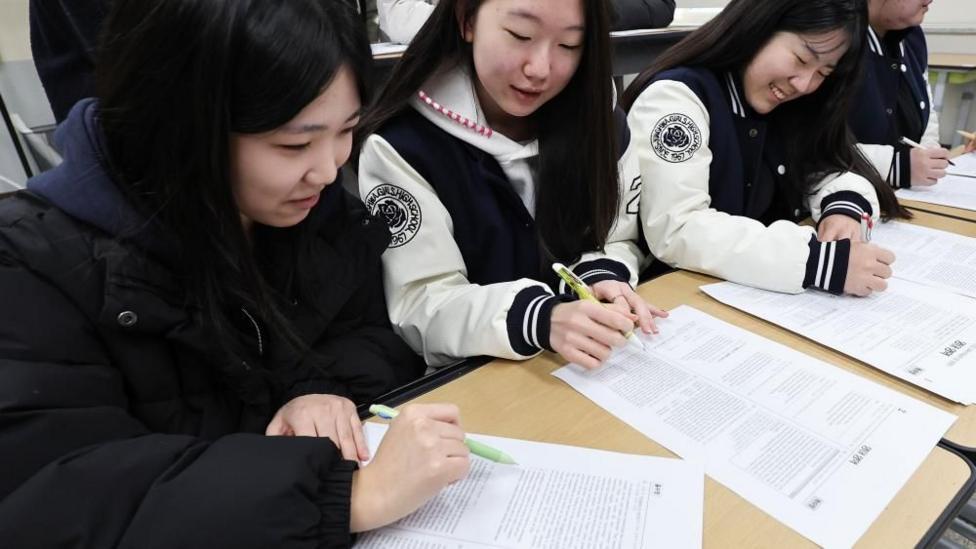
The intensive precautions created anxiety even among honest candidates. One high school senior told the Korea Times he worried his horn-rimmed spectacles would be mistaken for smart glasses. Another student told Yonhap news agency that although he normally wore glasses, he made an effort to wear contact lenses during the Suneung to avoid raising suspicions about his eyewear.
Why is the Suneung so significant in South Korea?
The Suneung, which takes up to nine hours to complete, plays a critical role in determining the career trajectories of millions of South Korean students. The exam's high stakes and competitive nature have made it a focal point for academic pressure and, increasingly, for concerns about dishonesty. The discovery of AI-assisted cheating schemes has intensified calls for systemic reform of how the nation conducts its most important educational assessment.
What penalties and policy changes are being considered?
The government has launched a task force to investigate cheating connected to this year's Suneung. According to Arirang, Prime Minister Han Seong-sook stated that people caught cheating with smart devices would face criminal charges. The Education Ministry's misconduct committee is scheduled to decide penalties before exam scores are released on December 11, 2026. Additionally, the government and ruling Democratic Party have proposed extending the ban on AI-assisted cheating from one year to 10 years and applying it retroactively to this year's exam.
Key Facts
- Education Minister Choi Kyo-jin resigned on Sunday, accepting responsibility for inadequate advance preparation against cheating threats.
- Authorities discovered 111 candidates with unauthorised smart devices during the Suneung, taken by approximately 500,000 students.
- The scandal was triggered by Han Won-seok's confession to using a microcamera, AI tools and a smartphone to cheat on the tax accountancy exam.
- South Korea deployed its national disaster alert system for the first time to detect exam cheaters, sending three emergency alerts that identified 54 cases.
- Criminal charges will be pursued against those caught using smart devices, with penalties to be decided before scores are released on December 11, 2026.