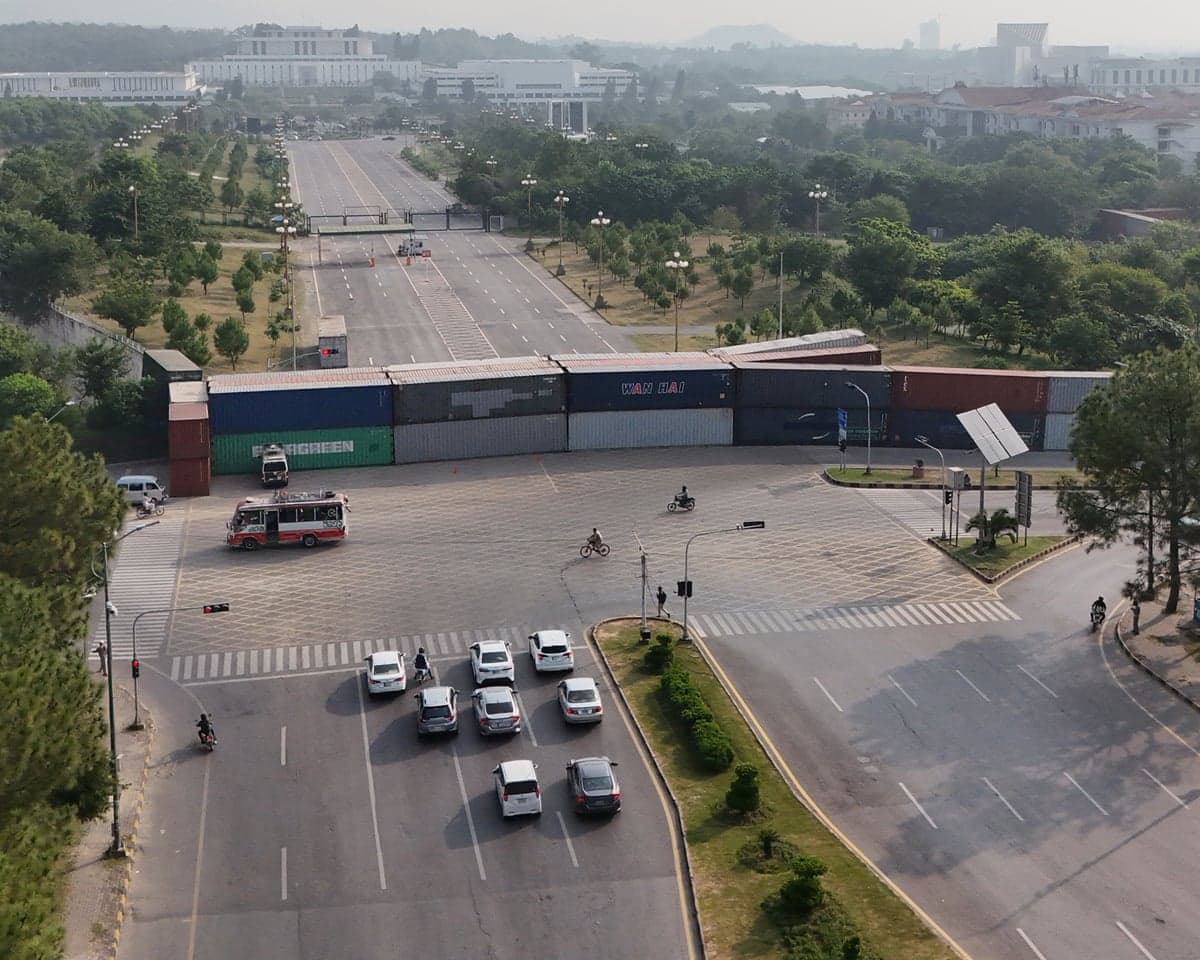
Pakistan's government has imposed an unprecedented lockdown on Islamabad, deploying more than 57,000 security personnel and blocking major highways as Imran Khan's Pakistan Tehreek-e-Insaf (PTI) party prepares to march on the capital to demand the release of the jailed former prime minister. Despite the scale of the security operation, PTI leaders have publicly committed to proceeding with the demonstration scheduled for 27 September, setting up a potential confrontation between the state and Khan's supporters.
The government has taken extraordinary measures to prevent the march from reaching Islamabad. According to reports on the security deployment, authorities have deployed an additional 35,000 police and paramilitary personnel around the capital, supplementing the 22,000 security officials already stationed there. More than 1,000 shipping containers, many fortified with spikes, have been positioned to barricade roads, while sandbags have been placed on bridges. Public gatherings have been banned in Islamabad, and key routes including the Islamabad-Peshawar Motorway (M1), the Islamabad-Dera Ismail Khan Motorway (M14), and GT Road (N5) have been closed indefinitely from 23 September.
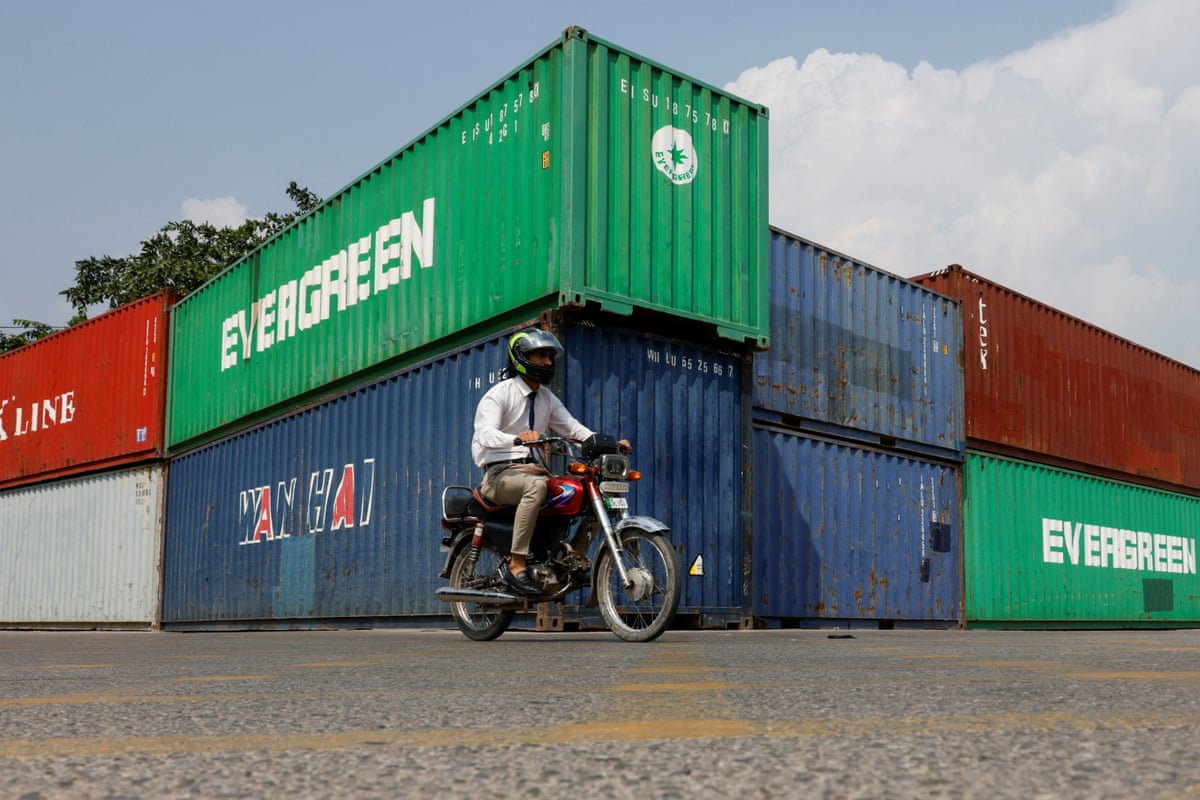
The lockdown has created severe disruption for residents and businesses in the capital. More than 1,000 shipping containers have blockaded roads and sandbags were placed on bridges, while a key highway into the capital was closed. The government's shutdown has fuelled anger and frustration in the capital, with many businesses unable to get supplies. Shahid, a 76-year-old retired businessman, expressed the frustration felt by many residents:
The entire city is suffering. The government has shut down the whole city and we, as citizens, are helpless. I have never seen such a situation. Joblessness, inflation and insecurity has made our lives hell but does the government care? No.
Why is the government taking such extreme measures?
The state fears that the PTI protest could escalate into a broader movement capable of destabilising or toppling the military-backed administration. Analysts point to recent precedents in South Asia, where large-scale protests have swept away governments in neighbouring countries. Niaz Murtaza, a Pakistani political columnist, explained the government's anxiety:
They have an eye on what has happened in south Asia over the last five years, where country after country has seen huge protests snowballing suddenly out of nowhere and sweeping away a government. Given the breadth of grievances in Pakistan at the moment – the performance of the government has been so poor on the economy and security while the repression is so high – that they are very nervous that the whole situation could combust very quickly.
The ruling coalition, led by Prime Minister Shehbaz Sharif, is widely regarded as unpopular, while the country's powerful military, represented by Field Marshall Asim Munir, is seen as the true power behind the government. Khan, despite being imprisoned since 2023 on corruption charges that he denies, remains a popular rallying figure and is viewed by many as a political alternative to the current regime. The government has instructed media organisations not to refer to Khan by name in an effort to diminish his public presence.
Interior Minister Mohsin Naqvi stated that the government would enforce a 14 September Islamabad High Court ruling against the march, treating the planned demonstration as a security threat.
What are PTI leaders saying about the march?
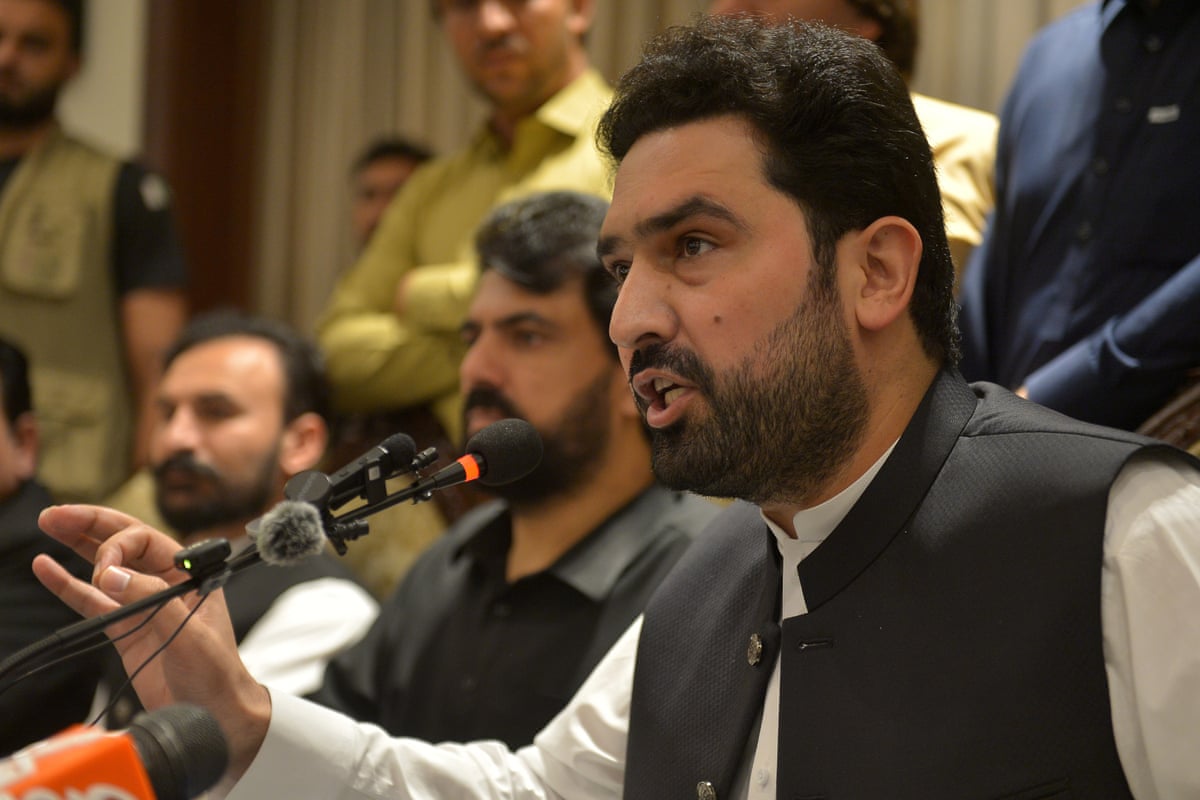
Despite the security lockdown, PTI leadership has insisted the march will proceed as planned. Sohail Afridi, the chief minister of Khyber Pakhtunkhwa—Khan's home province and the PTI's stronghold—declared that the party would carry out the march unless the government made significant concessions regarding Khan's treatment and conditions in jail, including a fair hearing for his cases.
The government is panicking – that's why they have put Islamabad under siege, that's why they are abducting our ministers. But Imran Khan is the most popular leader of the country and people will come out for him. I am certain they won't be able to stop the public power of the masses when they come out on streets and take to Islamabad.

Afridi acknowledged the scale of the security deployment and the risk of violent confrontation, which has occurred during previous demonstrations.
I know they can go to any extent to stop us by brute force, we have no doubt about it. But if we have a large number of people, they can't open fire at us. Our plan is to bring so many people that they surrender.
According to PTI statements on the march, the party has instructed participants to avoid sticks, slingshots, and weapons, emphasising that the protest will be peaceful. However, PTI sources have also indicated that some leaders are considering postponing the demonstration to 5-10 October if circumstances change.
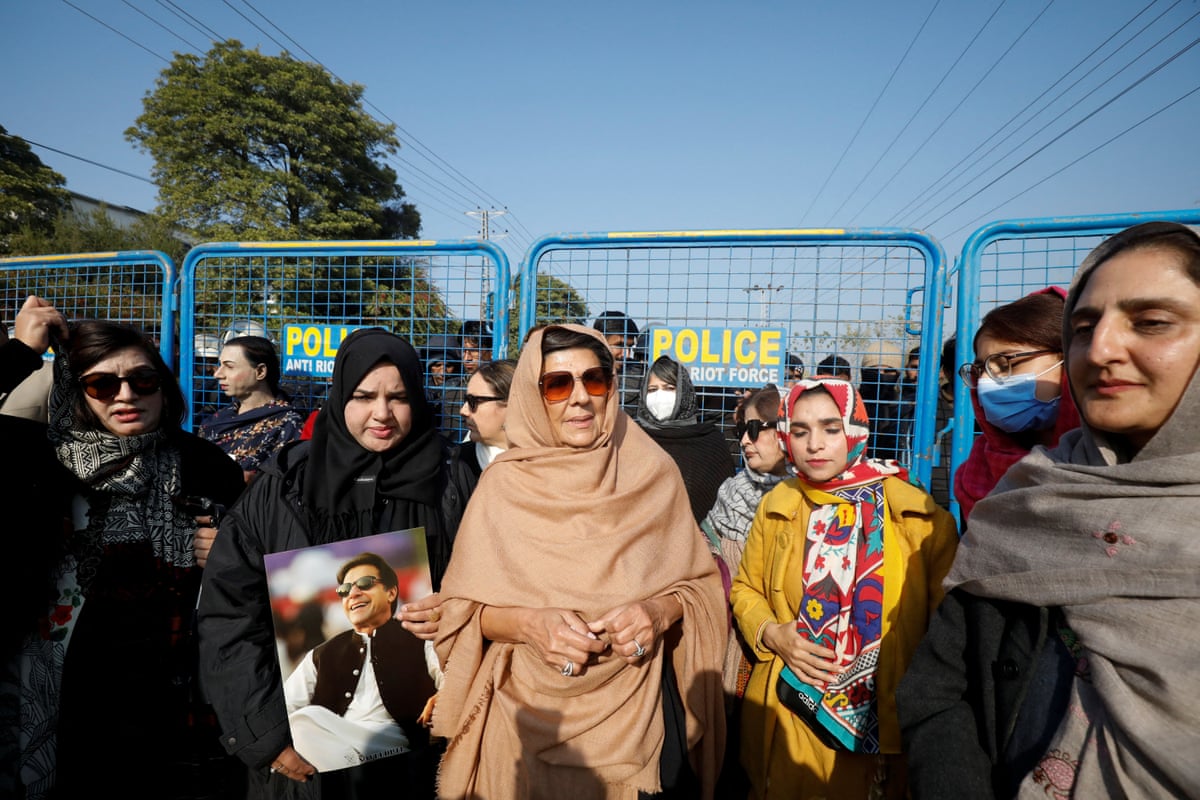
The government has already begun detaining PTI figures ahead of the march. According to reports on arrests, around 1,500 PTI supporters had been arrested ahead of the march. Dozens of PTI leaders and ministers have been detained or issued arrest warrants this week. Among those facing arrest is Sohail Afridi himself, while Aleema Khanum, one of Khan's sisters, was arrested earlier in the week during protests near Adiala jail, where Khan is being held.
What is Khan's legal situation?
Khan has been imprisoned since 2023 on corruption charges, which he denies entirely. He alleges that he is being held in solitary confinement and has been denied adequate medical treatment and any contact with his family or lawyers for months. The PTI contends that Khan is being imprisoned due to the political threat he poses to the ruling government and the country's military establishment. Significantly, all but one of the court rulings against Khan have been overturned, suggesting inconsistencies in the legal proceedings against him.
Faisal Karim Kundi, the governor of Khyber Pakhtunkhwa and a central government appointee, defended the security measures as
precautionaryand accused the PTI of attempting to create
instability and violence.
The state can't allow any violent group to march on Islamabad,Kundi said.
What happens next?
The PTI march is scheduled for 27 September, with party leaders publicly maintaining they will proceed despite the security lockdown. However, some PTI sources have suggested the protest could be delayed to 5-10 October under a revised plan. Paramilitary Rangers have been deployed from 20 September to 5 October across Islamabad and parts of Punjab, indicating the government expects heightened tensions throughout this period. The coming days will determine whether the march takes place as scheduled or whether negotiations or further government action alter the timeline.
Key Facts
- More than 57,000 security personnel have been deployed in and around Islamabad, with major highways closed indefinitely from 23 September
- Over 1,000 shipping containers and sandbags have been used to barricade roads into the capital, creating severe disruption for residents and businesses
- PTI leaders have publicly committed to proceeding with the march on 27 September, though some sources suggest a possible postponement to 5-10 October
- Around 1,500 PTI supporters had been arrested ahead of the march, including senior party figures and members of Khan's family
- Khan, imprisoned since 2023 on corruption charges he denies, remains a popular political figure, and all but one court ruling against him has been overturned