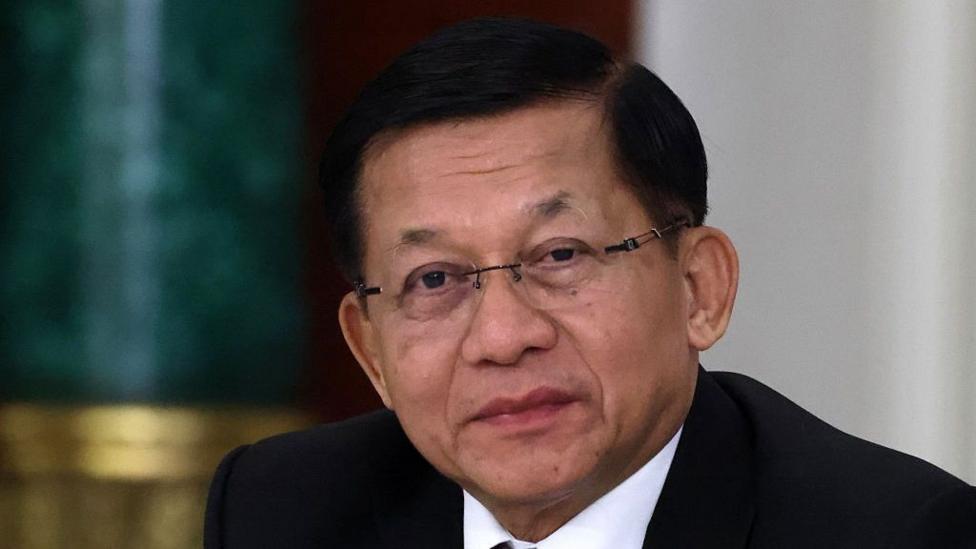
Myanmar's military leader Min Aung Hlaing has declared that his government will not comply with what it views as "inappropriate" elements of a landmark International Court of Justice ruling that found the country guilty of genocide against the Rohingya minority. The statement, made at a government meeting on Wednesday, marks his first public response since the ICJ delivered its verdict last week, according to state media reports.
According to BBC News, the ICJ determined that Myanmar committed genocide during a 2017 military crackdown in Rakhine State that resulted in approximately 10,000 deaths and forced more than 700,000 Rohingya to flee to Bangladesh. The ruling, reached by a majority of nine votes to six among the international panel of judges, makes Myanmar the first state to be found in violation of the 1948 Genocide Convention.
Min Aung Hlaing expressed concern that the genocide designation had harmed Myanmar's international standing. "Myanmar would take actions appropriate for a responsible country but would not comply with requirements it considered inappropriate," he stated through state media, without specifying which aspects of the judgment his government rejected.
Myanmar's military has consistently denied the genocide allegations, contending that its 2017 operations in Rakhine State were defensive responses to attacks by armed groups. The country's position stands in contrast to the ICJ's findings, which documented systematic violence targeting the Rohingya Muslim population.
What did the ICJ find?
The court's investigation, initiated through a case brought by The Gambia in 2019, examined so-called "clearance operations" conducted across Rakhine State. The ICJ determined that approximately 815,000 Rohingya had been targeted in some manner during the violence. Beyond the death toll, the court found that Myanmar had violated multiple provisions of the 1948 Genocide Convention and failed to prevent and punish genocide, describing the military's actions as involving "extreme violence," according to UN media records.
Eleven states intervened in the proceedings, and the ICJ held merits hearings from January 12 to 29, 2026, which included witness and expert testimony before reaching its conclusion.
What remedies did the court order?
The ICJ ordered Myanmar to cease ongoing violations and immediately launch investigations into those suspected of breaching the Genocide Convention. The court's remedies extend beyond financial reparations to include arranging the safe return of refugees and ensuring accountability for those responsible for the violence, according to reporting from the Seattle Times. While the ICJ ordered Myanmar to pay proportionate reparations, the exact amount will be determined at a later date.
The verdict is final and cannot be appealed. However, the ICJ lacks enforcement mechanisms and must rely on the UN Security Council and international political pressure to compel compliance with its orders.
Can the ruling be enforced?
The ICJ does not possess the authority to enforce its decisions independently. Instead, implementation depends on voluntary compliance by Myanmar or intervention by the UN Security Council, which faces potential complications given geopolitical dynamics. While the ruling carries primarily symbolic weight, it has been welcomed by Rohingya communities and human rights organizations that have long documented the population's suffering.
More than a dozen countries have acknowledged the ICJ judgment. The United Kingdom has responded by imposing sanctions on several senior Myanmar military leaders in connection with the genocide findings.
What is Myanmar's current political situation?
Myanmar has descended into civil war since Min Aung Hlaing orchestrated a military coup in 2021 that ousted civilian leader Aung San Suu Kyi. The coup transformed Myanmar into an international pariah, subjecting its military regime to extensive international sanctions. Min Aung Hlaing, who led the 2021 coup, is set to become president amid ongoing civil war, economic crisis, and political unrest, despite promises of elections and civilian rule.
Since consolidating power, Min Aung Hlaing has pursued efforts to reintegrate Myanmar into the international community, though the country remains largely excluded from major diplomatic forums. The ICJ genocide ruling presents an additional obstacle to Myanmar's rehabilitation on the world stage, as the government's refusal to comply with key aspects of the judgment signals continued defiance of international legal standards.
Myanmar's spokesperson Khine Khine Soe characterized the judgment as "unfair" on November 20 and indicated the government would study the ruling, though the statement did not commit to implementing the court's remedies.