Meta continued to distribute hundreds of paid advertisements featuring artificial intelligence-generated child sexual abuse imagery across its platforms over a ten-month period, with a significant portion appearing in India even after the government ordered their removal, according to a report released by the Tech Transparency Project (TTP).
The Washington-based research organisation identified 332 adverts containing child sexual abuse material (CSAM) that ran on Facebook and Instagram globally, with 274 of these appearing in August 2026 alone. Of the total, 84 ads ran in India, and 78 of those were published after the Indian government's July directive to Meta to remove all such content from Instagram.
This latest finding builds on a BBC investigation published on 3 July 2026 that first exposed Instagram ads promoting CSAM in India, which prompted the Indian government to take action. The new report demonstrates that the problem has persisted and expanded despite regulatory intervention and Meta's stated commitment to combating child exploitation.
How did the ads operate?
According to TTP's analysis, nearly all the advertisements began with a photograph of a real child, which was then manipulated using artificial intelligence technology to depict the child engaging in graphic sexual acts. The ads directed users toward AI image and video generation applications, predominantly developed by Chinese companies, with the implication that these tools could be used to create or access child sexual abuse material.
One specific advertisement identified by TTP and run in India featured a photograph of a preteen girl that was animated to show her performing a graphic sexual act, accompanied by a voiceover stating:
There are no restrictions. All the characters are real people and there are many options. This is the AI men actually use.According to TTP, this particular ad was posted by more than 50 different handles across India over a two-week period in August 2026.
The alleged ads reportedly used explicit search phrases such as "rape video" and "child video" and redirected users to messaging channels where CSAM was being offered for sale, according to reporting from a major Indian news outlet. The illegal material was being sold for as little as 99 Indian rupees (approximately $1.05 or £0.80), with links pointing to Telegram channels.
What did TTP discover about Meta's response?
When TTP attempted to report the 84 ads that ran in India through Meta's own reporting system, the company only permitted reporting of 55 ads, as Meta's system allows reports only while advertisements are live. Of those 55 reports, Meta responded to 54, claiming that 43 did not violate its Advertising Standards, while 11 had already been removed. The company provided no response for one additional ad.
However, when TTP contacted Meta directly with details of all the advertisements it had identified, the company removed all of them. This pattern mirrors what occurred during the original BBC investigation: when the BBC used Meta's reporting system to flag one ad featuring child sexual abuse to Instagram, the platform did not take action. Only after the BBC requested comment from Meta did the company disable several adverts, suspend the accounts posting them, and remove additional content.
When the BBC contacted Meta about TTP's findings, the company stated:
We don't tolerate nudify apps or any kind of child exploitation, whether real or AI-generated. These criminals constantly shift tactics to evade detection, which is why we keep strengthening our detection and enforcement.
Meta later told the BBC:
we've built strong defenses, including systems that block violating ads as well as ongoing monitoring in case we initially miss something: that's why many of the ads flagged to us had already been removed, most had fewer than 200 impressions, and the total ad spend was under $5,000.

What role did Meta's advertising partners play?
TTP's investigation revealed that several of the advertisements featuring child sexual abuse material were placed by Meta's own advertising agency partners based in China. These partners, known as "resellers," channel billions of dollars' worth of Chinese advertising onto Facebook and Instagram. When TTP contacted these partners with questions about the ads, they did not respond.
Meta's advertising system requires all ads to be approved by its moderation technology before publication. The review process relies primarily on automated systems designed to examine images, video, text, and audio, as well as to assess the target audience and destination links. However, TTP found that new ads continued to appear even after the organisation made Meta aware of its report's findings, with 17 additional ads identified on 1-2 September 2026, including 11 that ran in India.

What has India's government done?
On 6 July 2026, India's Information Technology Ministry ordered Meta to immediately disable all ads and content on Instagram that promote or facilitate child sexual abuse material. The ministry also sought a detailed explanation from Meta regarding how such content had been permitted to run on the platform.
Following the original BBC investigation, India's National Commission for Protection of Child Rights (NCPCR) and National Human Rights Commission (NHRC) both announced they were examining the matter. More recently, the NHRC took cognisance of media reports on 3 September 2026 and began proceedings over the alleged Meta ads, while the NCPCR summoned Meta India's Managing Director and Head to appear on 9 September 2026, escalating the inquiry significantly.
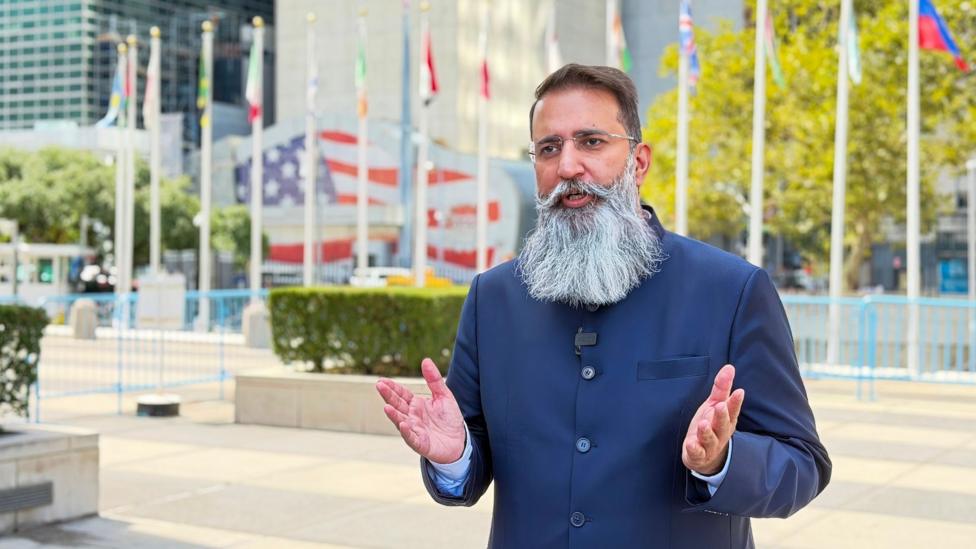
Bhuwan Ribhu, founder of Just Rights for Children, a network of more than 250 organisations working to prevent violence against children in India, argues that Meta's current compliance measures are insufficient. He stated:
Social media companies are clearly flouting Indian laws by not reporting child sexual abuse content to Indian law enforcement agencies as mandated by our child protection laws.
Just Rights for Children has filed a petition in India's Supreme Court, citing the BBC's findings, and requested directions to social media platforms for mandatory reporting and identification of those promoting child sexual abuse material.
What are the enforcement challenges?
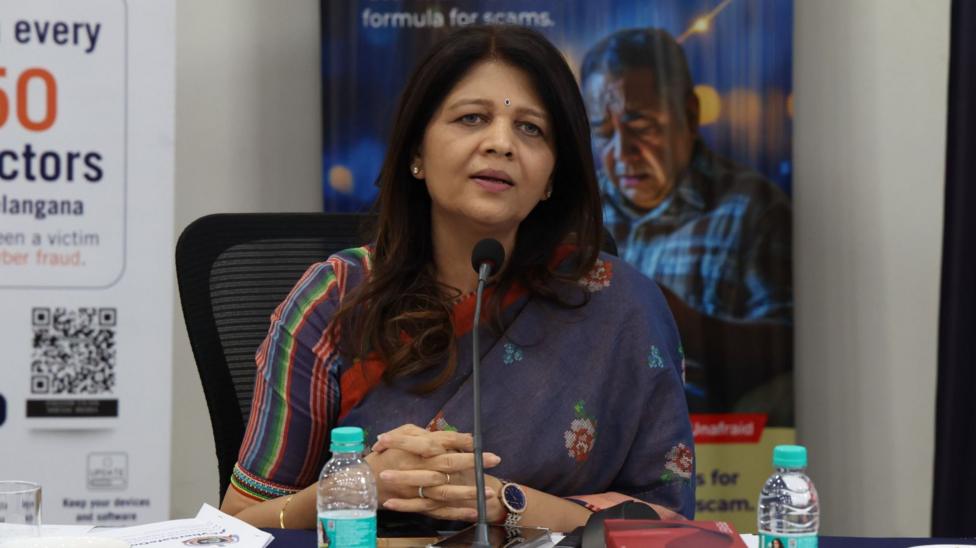
Shikha Goel, director of the Cyber Security Bureau in the Indian state of Telangana and one of India's top cyber police officers, told the BBC that a significant challenge in combating CSAM is
the ease with which users can move from one platform to another, making it harder to nab them. She added:
We are hopeful that the government will be addressing this in its latest interactions with social media intermediaries and direct them accordingly.
The distribution of CSAM is a criminal offence under Indian law, and Meta's own policies explicitly state that advertisements must not contain content that sexually exploits or endangers children. When Meta becomes aware of apparent child exploitation, the company reports it to the United States-based National Center for Missing and Exploited Children (NCMEC) in compliance with its legal obligations. The NCMEC serves as the centralised global reporting system for online sexual exploitation of children.
However, Ribhu and other advocates contend that reporting to NCMEC alone does not satisfy India's domestic legal requirements for mandatory reporting to Indian law enforcement agencies. They argue that social media platforms must be required to identify and report those promoting CSAM directly to Indian authorities.
What is the broader context?
TTP, a research initiative of the non-profit Campaign for Accountability that seeks to hold large technology companies accountable, identified the 332 ads across multiple jurisdictions including the United States, United Kingdom, European Union, Australia, and India. The organisation has reported all identified advertisements to NCMEC.
The ads that the BBC had discovered in its original investigation also directed users to the messaging application Telegram, where material could be purchased. Telegram told the BBC at the time that the company uses both automated and human moderation to tackle CSAM and that it has "virtually eliminated the public spread of CSAM" on its platform.
In July 2026, following the BBC's investigation, Meta published a detailed statement on its website outlining how it fights child exploitation on its applications. The company stated:
Anyone on our platforms can report ads if they believe they violate our policies.However, TTP's experience suggests that Meta's automated systems frequently fail to identify violations when reports are submitted through standard channels, only removing content when directly contacted by journalists or researchers.
Meta has acknowledged that
no system is perfectand that
determined criminals continue to try to exploit our platform, including through our advertising systems. The company prohibits promotion of nudify apps, which use artificial intelligence to create fake non-consensual nude or sexually explicit images.
What happens next?
The NCPCR's scheduled hearing with Meta India's leadership on 9 September 2026 represents a critical juncture in India's regulatory response to the issue. The outcome of this meeting and the NHRC's ongoing proceedings could result in stronger enforcement actions, including potential fines or mandatory changes to Meta's content moderation practices in India. The case also highlights broader questions about the adequacy of current regulatory frameworks for addressing AI-generated child sexual abuse material and the responsibility of technology platforms to implement more robust safeguards against such content.