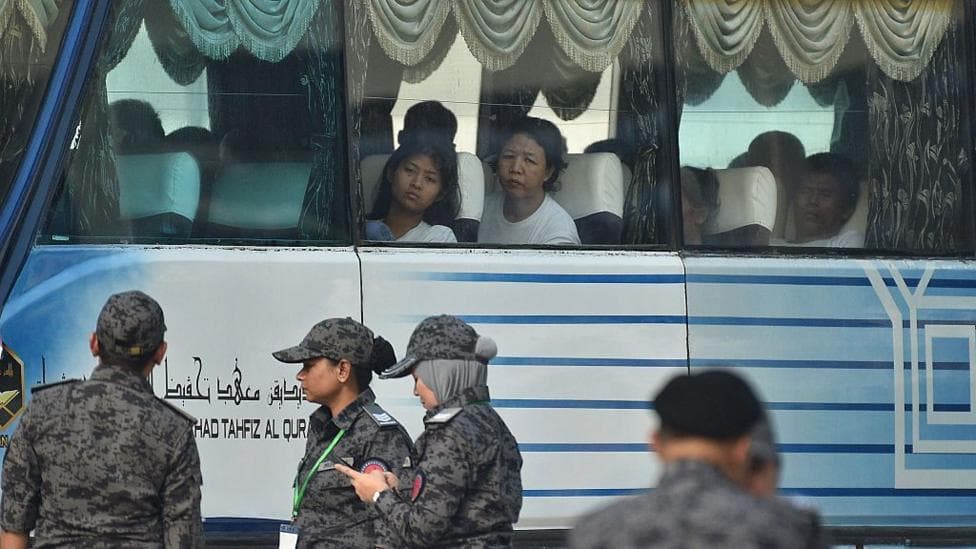
The Malaysian government has initiated the repatriation of approximately 5,000 asylum seekers from Myanmar under a contentious arrangement with Myanmar's military leader Min Aung Hlaing. Three vessels from the Myanmar navy departed from Malaysia on Tuesday carrying the first 1,476 returnees, marking a significant reversal in Malaysia's historical stance on refugee protection.
International human rights organisations have strongly objected to the repatriation programme, warning that those being sent back face potential violence, persecution, and forced military conscription. Malaysia's authorities have characterised the repatriation as voluntary, yet they have prevented the UN refugee agency from accessing or evaluating the returnees, who have been held in immigration detention facilities.
According to Malaysia's Home Ministry, 10,388 Myanmar nationals were held in immigration detention depots as of 15 August, with 5,000 selected for the return programme. The 1,476 individuals in the initial phase were identified by Myanmar's government through a diplomatic note dated 13 August.
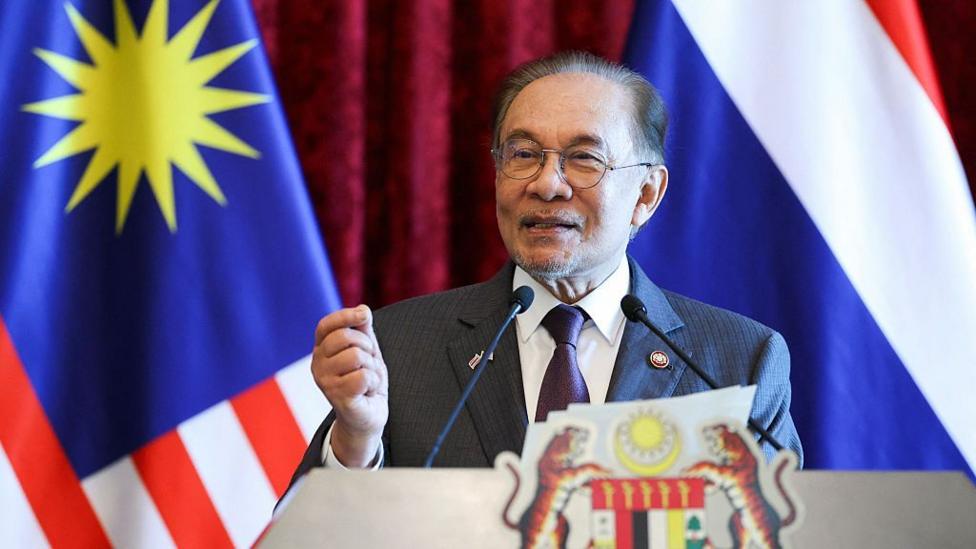
Prime Minister Anwar Ibrahim has justified the repatriation by pointing to escalating public hostility towards the substantial Rohingya population in Malaysia, stating he has no alternative but to engage with the Myanmar government regarding their return. However, it remains uncertain whether any Rohingyas, who lack citizenship recognition in Myanmar, were included in the first group of deportees. More than one million Rohingyas have been forced to flee Myanmar following military operations that the UN characterises as potentially constituting genocide.
The repatriation represents a striking departure from Malaysia's previous approach. Anwar, a former political prisoner, has historically positioned himself as an advocate for human rights and freedom, previously calling for enhanced assistance to Rohingyas. Under his administration, Malaysia had declined to recognise Min Aung Hlaing's regime and had been among Southeast Asia's most vocal proponents of negotiating an end to Myanmar's civil conflict.
Two interconnected factors explain this dramatic shift. First, economic hardship affecting lower-income Malaysians since the Covid pandemic has generated resentment towards the Rohingya population. Second, Malaysian politics has become increasingly unstable since 2018, when a historic election removed the United Malays National Organisation (UMNO), the ethnic Malay party that had dominated governance for over six decades, resulting in a succession of fragile coalition administrations.
How has Malaysian public opinion on Rohingyas changed?
Public sentiment among Malaysians has undergone a substantial transformation. For many years, considerable sympathy existed among Malaysians for their fellow Muslims in Myanmar. In August 2017, a brutal military campaign expelled three-quarters of a million Rohingyas from their homes in Rakhine State into neighbouring Bangladesh. Subsequently, deteriorating conditions in Bangladeshi refugee camps motivated those with sufficient resources to undertake dangerous sea voyages to Malaysia seeking safety and employment opportunities.
Although the Malaysian navy and coastguard had long attempted to prevent Rohingya boats from reaching Malaysian shores, many arrived through alternative routes and were largely accepted. According to , Malaysia hosted approximately 193,800 refugees from Myanmar, including substantial numbers of Rohingya, as of February. More than 200,000 are now believed to reside in Malaysia, predominantly earning subsistence incomes from manual labour.
This tolerance eroded during the pandemic, which severely damaged Malaysia's economy. Amid heightened public anxiety regarding the coronavirus, accusations targeting Rohingya migrants proliferated on social media platforms, accompanied by demands for their deportation. The then-government responded by adopting a more stringent approach, declaring that Malaysia could accept no additional refugees and authorising raids on communities suspected of harbouring undocumented immigrants.
Comparable developments have occurred in 2026. In May, an online complaint alleged that Rohingyas had improperly disposed of animal waste following the Muslim Eid al Adha festival, triggering a widespread social media campaign that falsely accused Rohingya leaders of demanding land and citizenship rights in Malaysia. Shortly afterwards, an online petition on Change.org demanding Rohingya expulsion accumulated more than 400,000 signatures before being removed.
Why is Prime Minister Anwar under political pressure?
Given Anwar's former reputation as a proponent of liberal principles, observers might have anticipated him to counter this surge of hatred and misinformation. He has stated that Rohingyas should receive humane treatment.
We can arrest them, but do not beat, intimidate or humiliate them,he declared in a recent podcast interview—despite human rights organisations accusing Malaysian officials of perpetrating exactly such treatment in immigration detention facilities.

Nevertheless, Anwar maintains that Rohingyas must be expelled.
They have clearly become a burden,he stated in the same interview.
A security burden, an economic burden and a source of hostility among the people.
Certain former supporters have characterised his position as a betrayal of his values. Latheefa Koya, the former head of the Malaysian Anti Corruption Commission, described his decision as
disgraceful, amoral, and shames the nation in the eyes of the international community.
Anwar confronts substantial political pressure. Once regarded as a perpetual prime minister-in-waiting, he finally attained the position in 2022, but exclusively by constructing an uncomfortable coalition with his erstwhile rivals UMNO. Subsequently, his personal approval ratings have declined significantly, and his party has lost seats in recent local elections. He must schedule a general election by early 2028.
According to Tricia Yeoh, Director of the Asian Institute for Policy and Engagement at the University of Nottingham Malaysia,
He is in a corner, at his weakest point. He has been forced to make concessions to his UMNO partners... There have been several corruption scandals, and his own party is divided. And after four years of telling voters this is what is required to maintain his fragile coalition, they are no longer willing to go along with that narrative.
Yeoh contends that ethnic Malays, comprising more than half the electorate, are responding to the traditional UMNO narrative emphasising their requirement for state protection and support—a form of ethnic politics that cultivates apprehension and animosity towards outsiders.
It's the same narrative you hear in the rest of the world, about immigrants taking jobs, that we should not be spending our public funds on facilities for them.
What are the practical obstacles to repatriation?
Significant uncertainties surround the feasibility of repatriating any Rohingyas to Myanmar, regardless of governmental agreement. They possess no citizenship status and lack the fundamental documentation necessary for lawful entry into Myanmar. Additionally, they are prohibited from travelling within Myanmar and are restricted to residing in Rakhine State, which borders Bangladesh. However, nearly all of Rakhine State currently remains under the control of the insurgent Arakan Army and experiences sustained bombardment by the Myanmar air force. On 28 September, the day preceding the repatriation, the Arakan Army reported that two bombs killed 49 individuals at a market in Kyauktaw.
The only theoretically feasible destination for Rohingya returns is the state capital Sittwe—yet it is besieged and cut off, and even there Rohingyas are confined to appalling camps experiencing critical shortages of food and medicine. Rights organisations additionally fear that male individuals in the group could face forced conscription into the military to participate in the civil conflict.
According to a UN spokesperson, ongoing conflict and widespread violence and rights violations meant conditions did not permit safe, dignified and sustainable returns. Neither Malaysia nor Myanmar have articulated how these substantial obstacles can be surmounted, nor how their intended repatriation programme can align with humanitarian standards. In reality, the Malaysian government likely recognises these constraints but hopes to diminish public antipathy towards Rohingyas by merely suggesting they may be encompassed in the initial deportations.
Who is actually being returned?
Ambiguity persists regarding the composition of those being repatriated. James Bawi Thang Bik, a representative of Myanmar's Chin community in Malaysia, indicated that community leaders were aware of several asylum-seekers among those being returned, including a UNHCR card holder. Malaysia stated that 4,008 individuals, predominantly Rohingya, would be channelled into its Refugee Registration Document programme, separate from the 5,000 designated for repatriation.
What happens next?
Anwar has discussed negotiating the return of substantially greater numbers of Rohingyas with Min Aung Hlaing during a planned visit to Malaysia. However, it merits consideration that Bangladesh has been attempting to negotiate the return of its significantly larger Rohingya population for more than a decade with minimal advancement. Additional return phases depend on completing identification, documentation and verification procedures, as well as logistical readiness and coordination between the two nations.
Nur Sadek, a Rohingya refugee rights advocate, articulated the perspective of affected communities:
We all dream of being able to return home one day, but we want to return because it is safe and because we choose to - not because we are forced to. For me, the most important thing is that Rohingya and other refugees affected by this decision are listened to and treated with dignity.