Japan has substantially increased fees for foreign nationals seeking to establish permanent residency in the country, with the cost climbing to 200,000 yen ($1,270; £955)—a twenty-fold jump from the previous amount. The new fee structure, which took effect on 1 October 2026, represents a significant shift in the nation's approach to managing its expanding foreign population under Prime Minister Sanae Takaichi's administration.
Alongside the fee increases, permanent residency applicants now face stricter eligibility criteria. Candidates must demonstrate a stable income at or above the Japanese average—5.75 million yen based on 2024 household data—and satisfy new Japanese-language proficiency requirements beginning in April 2027. Additionally, applicants' expected pension benefits must match those of someone enrolled in the employee pension system for 30 years, though financial assets can offset shortfalls in projected pension income.
The policy changes triggered a rush to immigration offices earlier in the week as applicants attempted to submit applications under the old fee structure before the deadline. Tokyo's primary immigration bureau experienced queues extending beyond seven hours as foreign residents sought to avoid the higher charges.
Why are fees increasing?
The fee increases form part of a broader restructuring of Japan's immigration framework designed to regulate the country's rapidly growing foreign resident population. In July 2026, Japan implemented a five-fold increase in visa fees for all foreign nationals—the first such rise in 50 years—with officials attributing the adjustment to inflation and currency fluctuations. A 2026 amendment to Japan's immigration law raised the statutory fee ceilings to ¥100,000 for temporary-residency procedures and ¥300,000 for permanent-residency applications, with the government setting actual charges through ordinance.
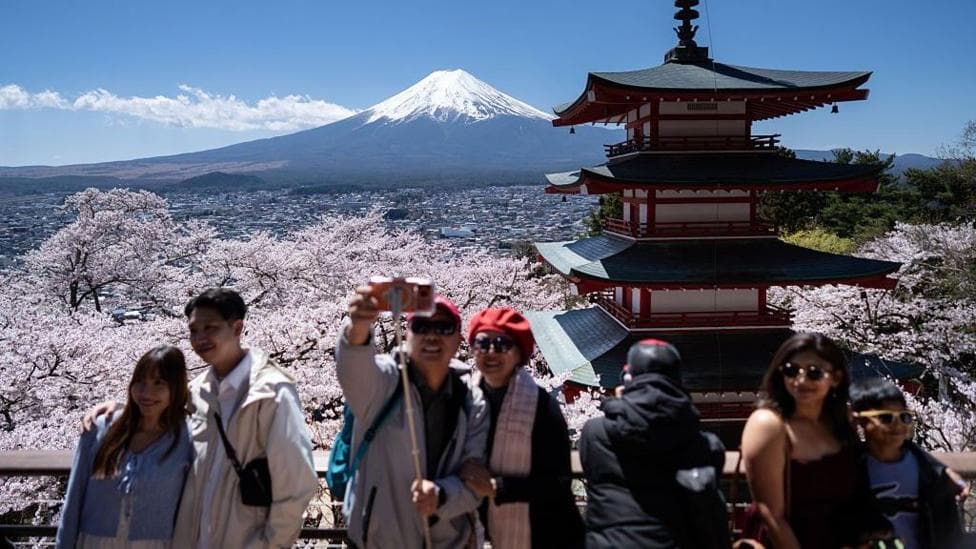
Japan's foreign resident population reached 4.12 million at the end of 2025, representing a record 9.5% year-on-year increase. This demographic shift has generated public concern about social integration and cultural change, prompting the government to emphasise orderly immigration management.
What are the new fee structures?
Before the October changes, non-permanent residents paid 6,000 yen each time they applied to modify their residency status or extend their stay. The revised fee schedule now varies based on the duration of residency sought. Online applications to change or extend residence status carry lower fees than in-person applications for stays longer than three months; for five-year periods or longer, the online fee is ¥65,000 compared to ¥75,000 for in-person submissions. For shorter stays, fees range from 10,000 yen for three months or less to 75,000 yen for five-year permits. Permanent-residency applications remain unavailable through online channels.
Importantly, reduced fees are available to certain applicants facing severe financial hardship who qualify for humanitarian consideration, with eligible applicants paying ¥10,000 for a status change or extension and ¥20,000 for permanent residency; the permanent-residency reduction is limited to certain spouses and children of Japanese nationals or permanent residents. Additionally, those designated as refugees receive fee discounts.
How are foreign residents responding?
Micaiah Michaela-Spence, a 37-year-old who has resided and worked in Tokyo for a decade, was unable to gather the required documentation to submit a permanent residency application before the fee increase took effect. Despite his intention to proceed with an application, he expressed concerns about the new requirements.
My immediate reaction was that foreigners were being treated a bit too conveniently. We're being asked to make more than the average Japanese person, pay a significantly higher fee, just to be able to work in Japan and provide taxes. There's already a significant language and cultural barrier that prevents some talent from coming over. This just doesn't strike me as a plan that was thought out to the long term.
The tightened requirements have prompted a surge in enrolments at Japanese language schools and increased registrations for the Japanese-Language Proficiency Test, according to local media reports. Many foreign residents are preparing for the April 2027 implementation of language proficiency standards for permanent residency eligibility.
What is the government's rationale?
Prime Minister Takaichi has prioritised immigration management since assuming office in October 2025. In a social media post issued days before the residency fee increases took effect, she acknowledged that
some members of the public may feel a sense of concern or unfairnessas Japan's foreign resident population expands. She stated that her administration is
working to ensure that its policies toward foreign nationals are orderly, and that both Japanese citizens and foreign residents can live safely and securely.
The policy adjustments reflect a tension within Japan's immigration approach. Although the nation maintains traditionally restrictive immigration policies that remain politically sensitive, Japan's ageing demographic structure has created an urgent need for foreign workers to address labour shortages across multiple sectors. The fee increases and stricter requirements represent an attempt to balance these competing pressures—managing public concerns about rapid demographic change while maintaining access to foreign labour.
Key Facts
- Permanent residency fees increased from 10,000 yen to 200,000 yen, effective 1 October 2026; applications filed by 30 September remain subject to the old fee structure
- New eligibility requirements include stable income at or above the Japanese average (5.75 million yen), Japanese-language proficiency from April 2027, and pension benefits equivalent to 30 years of employee pension system contributions
- Japan's foreign resident population reached 4.12 million at the end of 2025, a 9.5% increase from the previous year
- Online applications for temporary-residency changes carry lower fees than in-person submissions for stays exceeding three months
- Reduced fees apply to refugees and certain applicants facing severe financial hardship, including eligible spouses and children of Japanese nationals or permanent residents