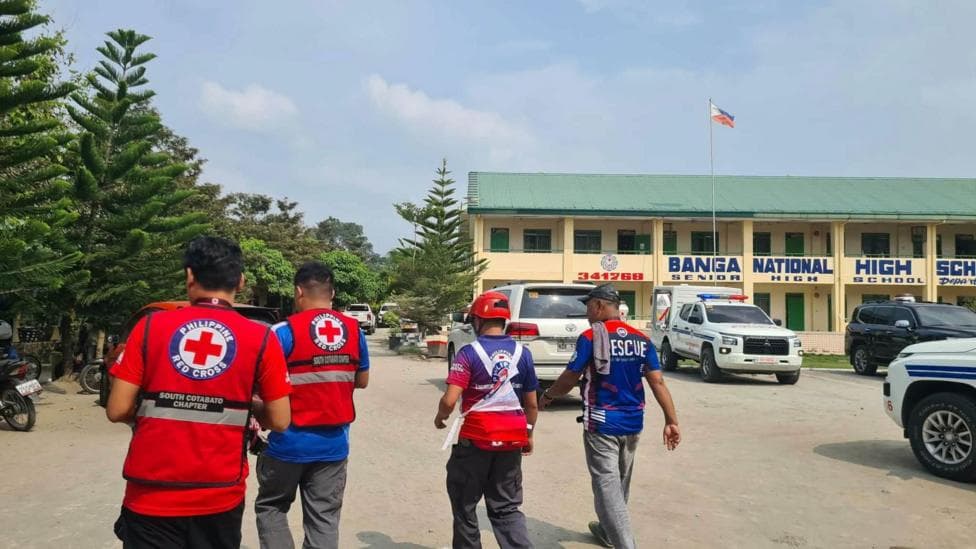
India's Cockroach Janta Party (CJP) has called off its five-week-long protest, hours after Education Minister Dharmendra Pradhan resigned. The group described the move as a win for democracy, while thousands of jubilant supporters continued celebrating at Jantar Mantar, the main protest venue in Delhi.
An online satirical campaign with an AI-generated cockroach as its mascot, the CJP is not a real party but has become a powerful platform for young people's anxieties and dissent. The protest has been the most visible expression of public anger against PM Narendra Modi's government in recent years and gained momentum after Monday's police crackdown on people marching to parliament left dozens injured.
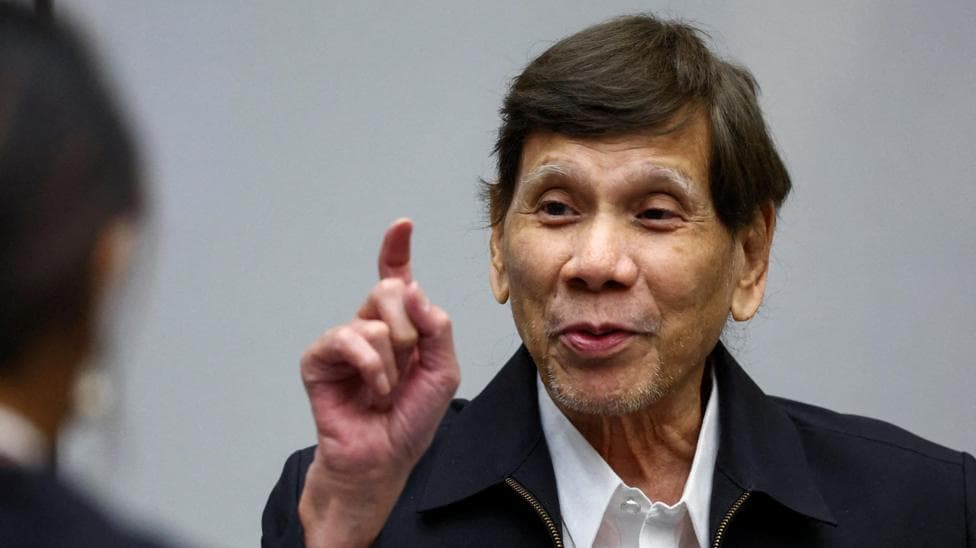
CJP founder Abhijeet Dipke has called Pradhan's resignation a win for democracy.
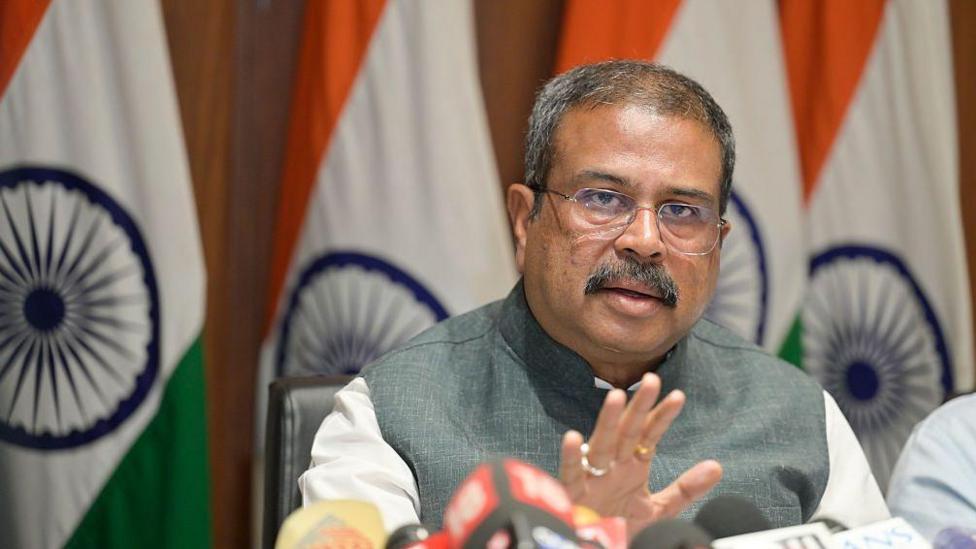
Pradhan announced his resignation on X in a post in Hindi saying he "respected the aspirations, dreams, and expectations of the youth" and was "pained by the events" of the past few days.
"Considering the situation at Jantar Mantar and across the country - with the aim of preventing anti-national forces from exploiting it, preserving national unity, ensuring that not a single Indian student's future gets entangled in legal complexities, and allowing our children to devote their time to studies and focus on building their careers - I have submitted my resignation to the prime minister,"
As news of Pradhan's resignation broke, a visibly emotional Abhijeet Dipke, CJP's founder, screamed from the makeshift stage at Jantar Mantar: "We have done it."
A loud cheer went up and huge celebrations erupted with the protesters singing, dancing, shouting slogans and handing out sweets.
Several hours after the CJP announced the end of its protest and its leaders left the site, crowds were still gathered at the venue into the night. Many told the BBC they had waited for this day for weeks, and were not in the mood to leave without celebrating.
The site increasingly looked like the centre of a party, with volunteers doing their best to manage the crowds. A large number of police were deployed around the area, but they said they would intervene only if they saw breaches of the law.
Dharmendra Pradhan announced his resignation on X in a post in Hindi.
The CJP was formed after the chief justice of India described some unemployed young people turning to journalism and activism as "cockroaches". He later said he was referring specifically to people with "fake and bogus degrees", but by then, the term had taken a life on its own.
The movement is led by Abhijeet Dipke, a 30-year-old political communications strategist and former student at Boston University. The CJP quickly gained a huge following online, turning one of the most reviled insects into a symbol of defiance and resilience with 26 million followers on Instagram.
It called for reforms to India's education system, greater accountability over exam paper leaks and the resignation of Pradhan.
The protests gained global attention after activist and educationist Sonam Wangchuk joined them on 28 June and began an indefinite hunger strike in support of their demands.
As his health deteriorated, the crowds began to swell and Wangchuk was forcibly removed from the protest site by police last Saturday and taken to hospital where he continued to fast. He finally called it off early Friday morning following assurances from the government that his demands would be looked into.
Over the course of the protest, most of India's major opposition political parties, activists and many celebrities turned up to show solidarity. On Saturday, opposition leaders welcomed Pradhan's resignation, with many calling it a victory for the youth-led movement.

Since coming to power in 2014, PM Modi's government has rarely tolerated dissent and cracked down heavily on protests, which is why Pradhan's resignation is being seen as a big deal in India.
But this isn't the first time the government has faced big protests - and it's not the first time it has been forced into a climbdown either. In 2021, the government repealed agriculture laws after a year-long protest by farmers.
The students' protest has resonated with a large section of middle-class India, cutting across identities of religion, caste or sectors, with people voicing anger about the lack of educational opportunities and jobs in India.
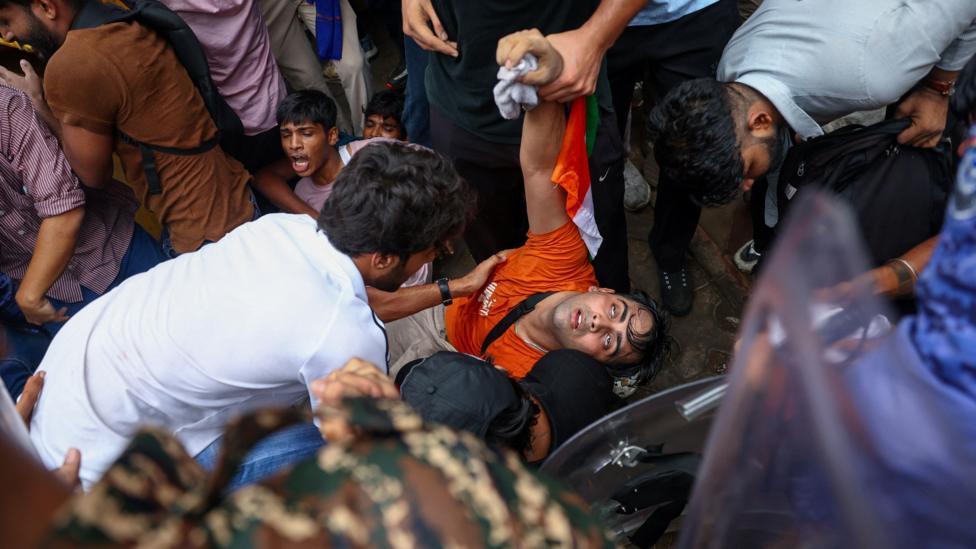
Pressure grew on the government after Monday's violent crackdown, when police and paramilitary forces used batons and wooden sticks to beat young men and women, while firing tear gas cans at them.
About 300 people were taken to hospital. Police said at least half of the injured were security personnel and also arrested about 70 protesters - most of them have since been released on bail.
After ignoring the protesters for nearly five weeks, Modi finally broke his silence on Thursday to say they had "decided to set up fast-track courts to ensure swift and stringent punishment for those involved in paper leaks".
Later that night, Modi posted a video message saying that a tough new law on examination paper leaks was being prepared. He said he had received a draft of the law, which they wanted to introduce soon in parliament.
Following Pradhan's resignation, the CJP founder Dipke said in a statement on X that the fight was not over yet.
He said they would continue to fight for the families of students who died by suicide after a key medical exam was cancelled to ensure they received compensation.
He also renewed his calls for action against police officers he accused of using excessive force against protesters on 20 July on CJP supporters who tried to march to Parliament.
"Remember, do not mess with [the] cockroach,"
Follow India on Instagram, external, YouTube,, external Twitter, external and Facebook, external.
Why are thousands protesting for education reform in India?
The hunger-striking engineer demanding education reforms in India
CJP protest: The youth movement India's Modi didn't see coming