

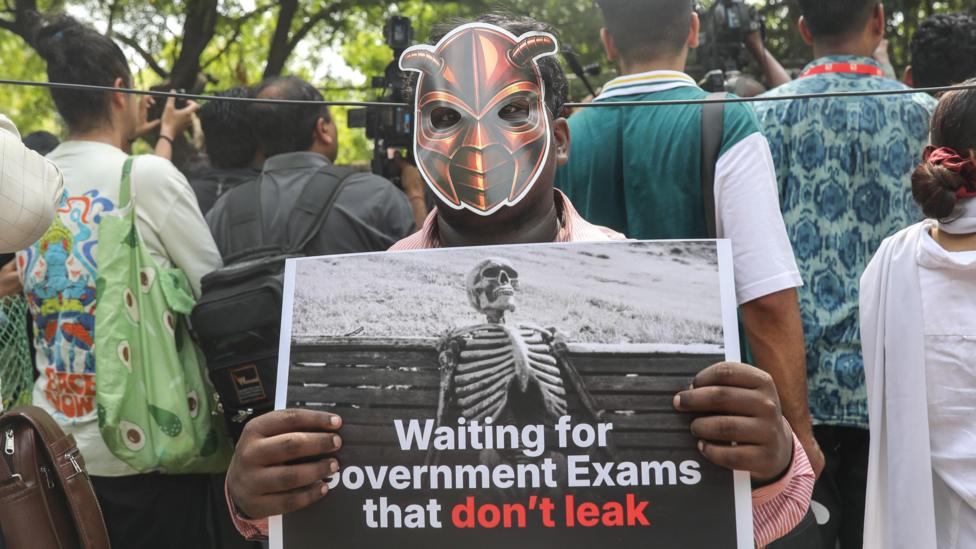
The women BBC spoke to say they received threats and abuse after participating in the CJP protests. Their videos lasted only a few seconds: lip-syncs, sarcastic reels and jokes filmed on the way to protests, but after India’s recent anti-government demonstrations many of the young women behind those posts say they have paid a heavy price for speaking out.
While thousands of young people filled social media with memes and videos mocking Prime Minister Narendra Modi during one of India’s biggest anti-government protests in years, the Cockroach Janta Party (CJP), a youth-led movement, helped force the resignation of India’s education minister and relied as much on Instagram as it did on marches. Memes, reels and viral videos became the movement’s calling card, documenting everything from protest songs to the police crackdown when officers used tear gas and baton charges to stop demonstrators marching to parliament on 20 July.
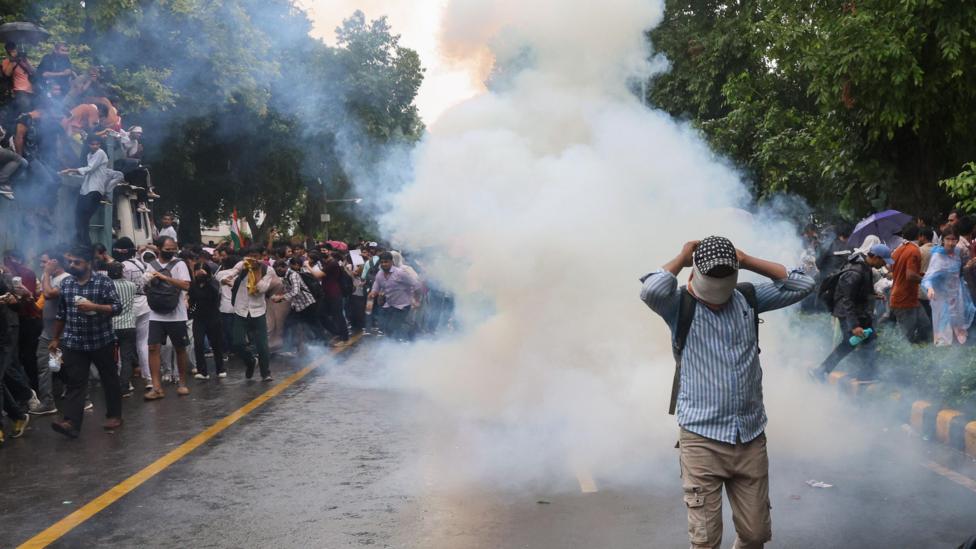
Delhi police said 60 protesters and 118 police personnel were injured on the day, but the CJP said the number of injured protesters was significantly higher than the official count. The posts reached hundreds of thousands of people, turning ordinary students into some of the movement’s most recognisable faces.
Since the protests ended, police have opened criminal cases against some protesters. But many women say another reckoning played out online. They describe rape threats, doctored images spreading on social media and strangers trawling through their photos and videos.
Some cases spilled into TV debates, police complaints and political statements. Many more unfolded quietly, as young women deleted posts, locked their accounts and stopped answering calls from unknown numbers. The BBC spoke to four women and reviewed screenshots of abusive messages, posts and other material they shared. Their names have not been used to protect their identities.
What did the content creator experience?
The content creator said she is in her mid-20s and had been posting about the protests from the beginning, but 20 July was the first time she attended one. After the baton charge that day and the internet shutdown around the protest site, she went home and started sharing first-person accounts on Instagram.
She also helped organise food, aid and volunteers. She said she thought she was just helping and did not think of it as political. But the hate started almost immediately.
I was slut-shamed and I was attacked for questioning the prime minister's comments, external after the protest ended. [Modi said he forgave the children who had abused him, urging society to do the same rather than punish them or drag them through the courts.]
She said she has lost count of the number of messages she has deleted and people she has blocked, but the comments keep coming. As a content creator, she already lives with the feeling of constantly being watched, and every word she says is scrutinised, mostly by men.
When she first started creating content, she would block men if they made her feel uncomfortable. Over time, the algorithm started pushing her content towards more women, and she believes that has shielded her from abuse compared with many other female creators. Her mother stopped reading the comments on her posts long ago because she said she could not bear the things strangers were saying about her daughter, and the creator said she understood why. She said any parent would be frightened by that.
She said that as a woman in India, you grow up with fear, are told not to stay out late, to watch where you go, who you are with and how you will get home. She said you learn early that your safety is something you must constantly think about.
She said when you have a voice online, that fear does not disappear. It just follows you there.
How did police respond on 20 July?
Police used tear gas and baton charge to disperse protesters who tried to march to the parliament on 20 July. Delhi police said 60 protesters and 118 police personnel were injured that day, while the CJP said the number of injured protesters was significantly higher than the official count.
What happened to the college student?
The college student said she is 20 years old and that this was her first protest. She said she went because she believed the students were standing up for something important.
Before leaving the Metro station, she propped her phone against a railing and filmed a quick
fit check[a video showing off her outfit before the protest.] She joked,
Going to get beaten by cops, guys,and said that is the kind of light-hearted videos she usually makes.
When police fired tear gas and charged protesters that afternoon, she kept filming. She said she was simply recording what was happening around her, as she always does, and never imagined those videos would reach far beyond her followers.
One of the videos was shown on a national TV channel. Soon afterwards, her face began appearing in social media posts claiming protesters were being identified by the police. She said someone even found out which college she attended, and that was when she realised people were not just attacking her online, but were trying to find her.
Her inbox filled with anonymous messages. Some said they would report her to the police so she would be beaten or arrested. Men called her degrading names associated with prostitution, made sexually explicit remarks, mocked her body and threatened violence. Some said she should be
taught a lesson. Others simply warned:
Your turn will come.

What frightened her most was not the abuse itself, but what followed. Relatives and acquaintances called her parents, urging them to make her delete her videos or face the consequences. Seeing them so frightened was devastating, and that is why she does not want her name published. She has since removed or archived almost all her protest videos.
She said she worries less about what could happen to her than what they might do to her parents.
How did the student activist say the abuse escalated?
The student activist said she has always spoken her mind online. She is a student activist and a Muslim, part of a religious minority in an increasingly polarised India, and none of that ever frightened her. But after the CJP protests, everything changed.
Her Instagram account is private now, and she has muted most of her other social media because the abuse has been unrelenting. Every time she looks at her phone, there is another offensive comment or message or post about her.
She said she went to the protest because she believed it was the right thing to do. She made a few satirical videos during the march, including one that mocked the prime minister. Others showed protesters singing on stage and chanting slogans. They were political, irreverent and the kind of videos she had always made.
But they spread far beyond the people she knew. One Instagram page edited a photograph to make it appear as though she was kissing a man to shame her. Another morphed her images and branded her an anti-national and a terrorist.
She was also called a hijra - using the term for South Asia's transgender community as an insult - and dismissed as a paid protester.
When her father, a journalist, read the comments, he panicked. He kept asking why she had spoken out. He said that once people saw her Muslim name, nothing else would matter. Her parents have watched other Muslim activists investigated and arrested, and fear the same could happen to her.
But she said she is not going to stop speaking up. She still believes she was right to go to that protest, and now she just understands the cost much better than she did before.
What did the student in West Bengal say?
The student in West Bengal said she is studying in the state, where political discussions are an integral part of college life. She has participated in those conversations on campus for years, so she did not think much before posting online about the protests.
Although she first joined the Kolkata protest on 20 July, she had already been helping online, organising supplies ranging from diabetic biscuits to masks for people worried about being identified. A friend and she also launched an Instagram fundraiser.
But on 24 July, the police started detaining protesters in the state and they began talking about it online. That was when the hate really started.
People began leaving spiteful comments on her fundraiser post, and they called her a prostitute in private messages. They did not stop even after the protest had ended, and eventually she deleted the post.
In the days that followed, the fear of being doxxed became real. She changed her name on social media, made her account private and blocked messages from people she did not know.
What hurt most was that none of her male friends faced the abuse she did. They expressed similar views but were not targeted over their sexuality or subjected to insults about their mothers. She was.
She said that when it comes to women, the response quickly becomes about gender. That has left her wondering why women cannot express the same opinions as men online.


