Sonam Wangchuk, a well-known Indian activist and educator, is in the headlines after beginning a hunger strike in support of youth-led protesters demanding reforms to India’s education system. He started fasting on 28 June at the protest site in Delhi and has eaten nothing but salt and water since then, losing more than 9kg.
Concern over his rapidly deteriorating health has intensified after police forcibly admitted him to hospital on 18 July. Wangchuk is backing an online satirical movement called the Cockroach Janta Party (CJP), which is pushing for education reforms after a series of controversies, including recent exam paper leaks.
The movement is being viewed as one of the biggest public displays of dissent against Prime Minister Narendra Modi’s government, which has been in power since 2014.
One man's hunger strike changed India's map. Can it still change politics?
The thousands of Indians protesting in freezing cold
Who is Sonam Wangchuk?
Popularly known as “Sonam sir”, Wangchuk is one of the best-known public figures in the disputed Indian-administered territory of Ladakh and a well-known name across India. His work has received international recognition, including the Ramon Magsaysay Award in 2018, often described as Asia’s Nobel Prize.
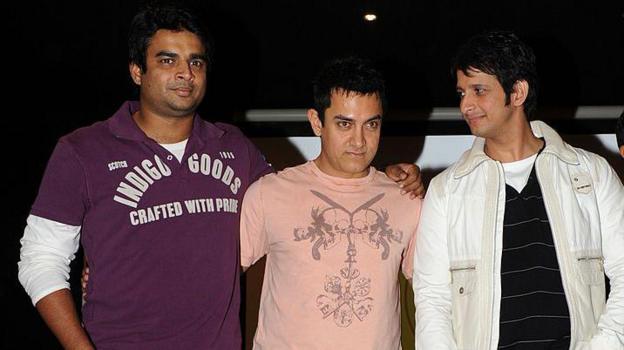
He was the inspiration for Three Idiots, the 2009 Bollywood hit, and in 2017 he appeared as a celebrity guest on Kaun Banega Crorepati, the Indian version of Who Wants to Be a Millionaire, hosted by Amitabh Bachchan.
His worsening condition has alarmed supporters. As his health has deteriorated in recent days, opposition leaders, activists, Bollywood actors and musicians have called on Wangchuk to end his fast.
But he has said he will do so only if the government takes accountability
“for the recent failures in the education system”; or if he and the CJP leadership reach parliament and MPs assure them they will take up the issue; or if lawmakers visit him in hospital and assure him this will happen.
Why is he protesting now?
Wangchuk went on hunger strike last year to demand more be done to protect the fragile ecology of Ladakh in the Himalayas.
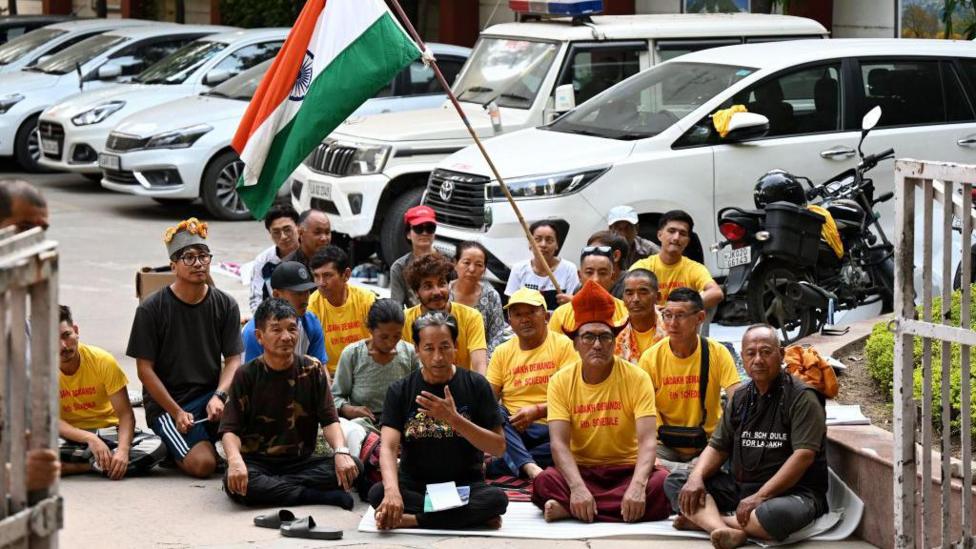
Fasting has long been woven into political life in India, where many of the religions its citizens follow attach moral significance to voluntary self-denial.
Wangchuk, 59, is no stranger to refusing food as a form of protest.
Last year he held two hunger strikes, lasting several weeks, to highlight the fragile ecology of his hometown, an icy cold desert in the Himalayas that lies at the centre of border disputes between India and China.
Before beginning his hunger strike, Wangchuk and his supporters walked for hundreds of kilometres from Ladakh to reach Delhi. They argued that greater autonomy for Ladakh would help prevent the exploitation of natural resources.
Wangchuk and his supporters say the fragile Himalayan ecology is at risk without constitutional safeguards.

The concerns arise from the government’s accelerated infrastructure development in border regions.
Ladakh is strategically important for India because it borders both China and Pakistan.
The federal government has approved several highways, power projects and military-related infrastructure in Ladakh, which Wangchuk says will damage the region, especially without consultation with local representatives.
“We don't oppose development. We want sustainable growth,”he said.
Wangchuk and his supporters say Ladakh’s ecology means it cannot follow the development models used in other Indian states.
How has his work shaped education and innovation?
Wangchuk has had a long career as an engineer and innovator, and a long record of challenging the status quo.
As a child, he studied for three years in Srinagar, then the capital of Jammu and Kashmir state, where lessons were taught in English, Urdu and Hindi. In an interview, he recalled being the
“butt of jokes”in class.
“In Srinagar, I was a dumb boy from Ladakh who could not speak Hindi or English,”he said.
In the 1980s, those experiences led him to question Ladakh’s education system, which he said did not meet local needs. He protested against the use of textbooks in English and Urdu in a region where most people spoke the Ladakhi language.
“All the textbooks, even in early primary classes, came from Delhi. The examples were of unfamiliar cultures and environments like ships, oceans, coconut trees and monsoon rains,”says a note on the website of a school co-founded by him.
“These alien examples in alien languages only confused Ladakhi children.”
Since then, he has worked with local authorities and communities to ensure that the education system addresses the unique needs of children in Ladakh.
His innovations have also attracted attention.
Wangchuk studied mechanical engineering after a relative noticed his experiments with concave mirrors to brighten dark buildings and cook food.
In recent years, he has developed a low-cost mud house that keeps a temperature of 15C even in -15C conditions.
He has also designed an artificial spring in the shape of an ice stupa, a hemispherical structure common in Buddhist cultures, that stores downstream water for use in late spring when farmers need water.
Follow India on Instagram, YouTube, Twitter and Facebook.
Key Facts
- Sonam Wangchuk began a hunger strike on 28 June in Delhi.
- He has lost more than 9kg and was forcibly admitted to hospital on 18 July.
- He is supporting the Cockroach Janta Party’s campaign for education reforms.
- Last year, he held two hunger strikes over the ecology of Ladakh.
- He received the Ramon Magsaysay Award in 2018.