Members of India's Cockroach Janta Party (CJP) were taken into custody early on Tuesday after forcibly entering a heavily-secured demonstration site and demanding the resignation of the nation's top election official over a contentious overhaul of voter registration lists.
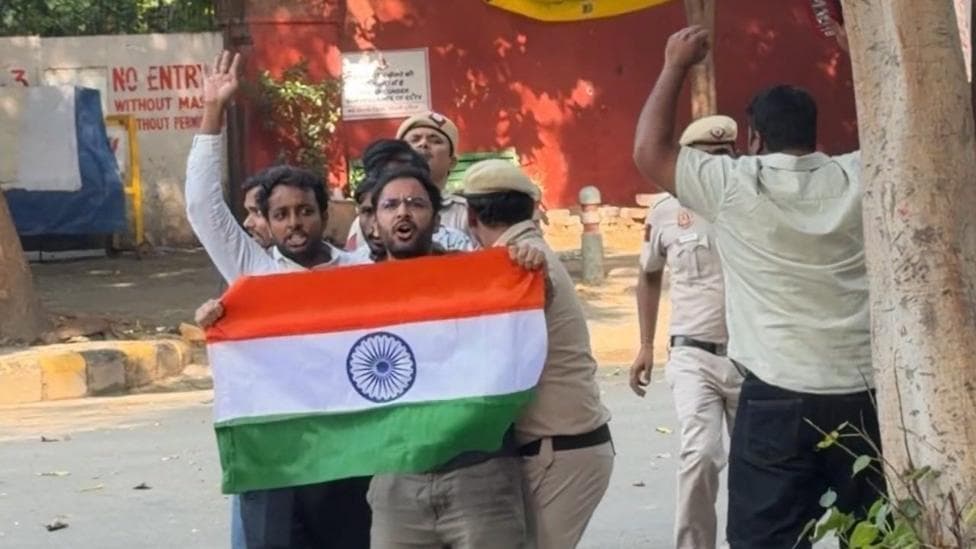
Party founder Abhijeet Dipke released footage documenting the detention of Ashutosh Ranka and Saurav Das by law enforcement officers at Jantar Mantar, a historic Delhi landmark frequently used as a venue for public demonstrations.
Video evidence captured the pair—alongside other activists—scaling police barriers before voicing demands while displaying the national flag. The incident occurred shortly after authorities formally revoked Jantar Mantar's status as an approved protest location.
Why the electoral rolls revision sparked outrage
The underlying grievance centers on a sweeping revision of voter registration that has eliminated tens of millions of names from electoral rolls. Opponents of Prime Minister Narendra Modi contend the exercise disproportionately benefits his party, though both the government and the Election Commission have rejected this allegation. Detractors warn the revision threatens to disenfranchise eligible voters and erect barriers to proving their voting rights.
Controversy intensified following a report in The Indian Express revealing that Chief Election Commissioner Gyanesh Kumar had disregarded objections raised by the two other election commissioners regarding modifications to voter registration procedures. The Election Commission subsequently asserted that all decisions had been reached unanimously.
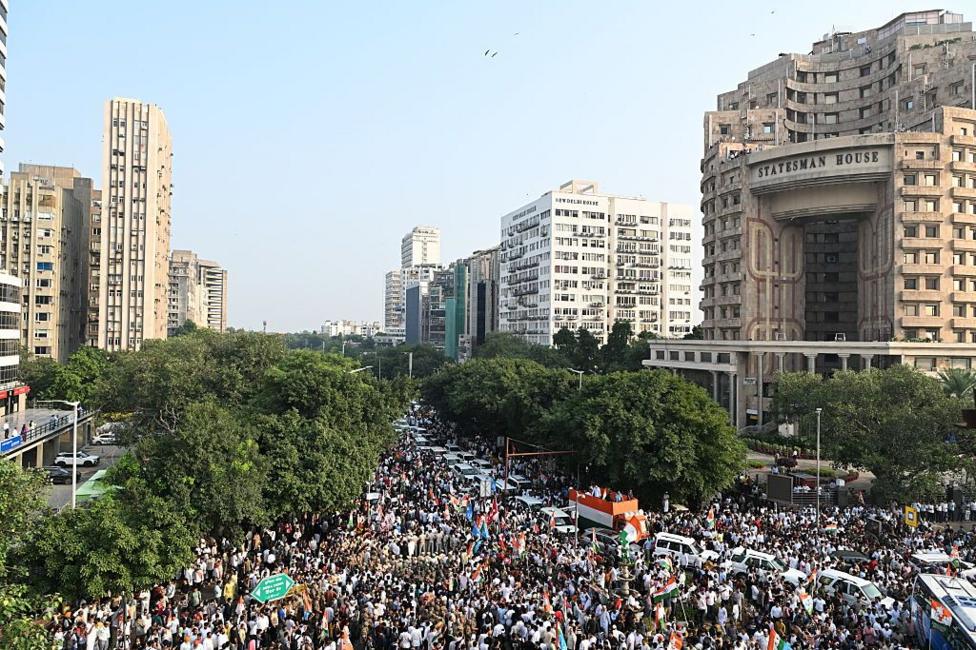
The demonstrations demanding Kumar's resignation have persisted for multiple days, drawing widespread participation across the capital.
How the protest site designation changed
On October 11, Delhi Police formally removed Jantar Mantar from its list of designated protest venues and designated three alternative locations—Ramlila Ground, Burari Ground and CBD Ground—where demonstrations may proceed with authorization. The order was issued by Delhi Police Commissioner Anurag Kumar following recommendations from a committee established by the Union Home Ministry.
The timing of the denotification raised eyebrows among protest organizers. Ranka posted on X that the decision came merely thirty minutes after the CJP had approached Delhi Police requesting authorization for a peaceful gathering at Jantar Mantar. The party had previously warned it would escalate demonstrations if authorities failed to respond to their request.
The Supreme Court had asked the central government the previous week to consider an alternative protest location with adequate facilities, following suggestions that another venue replace Jantar Mantar.
What happened during Tuesday's breach
Early on Tuesday morning, Dipke, Das and Ranka all distributed videos documenting Das and Ranka's entry into Jantar Mantar. Dipke wrote on X: "You cannot denotify the resistance." Das posted a separate message asserting that the site had been "reclaimed" and that they faced detention.
The precise location where police transported the detained leaders remained unclear initially. However, Ranka subsequently appeared during an Instagram live transmission from a police vehicle alongside other detainees, where they displayed cheerful demeanor and declared their refusal to abandon their cause.
How authorities responded to weekend demonstrations
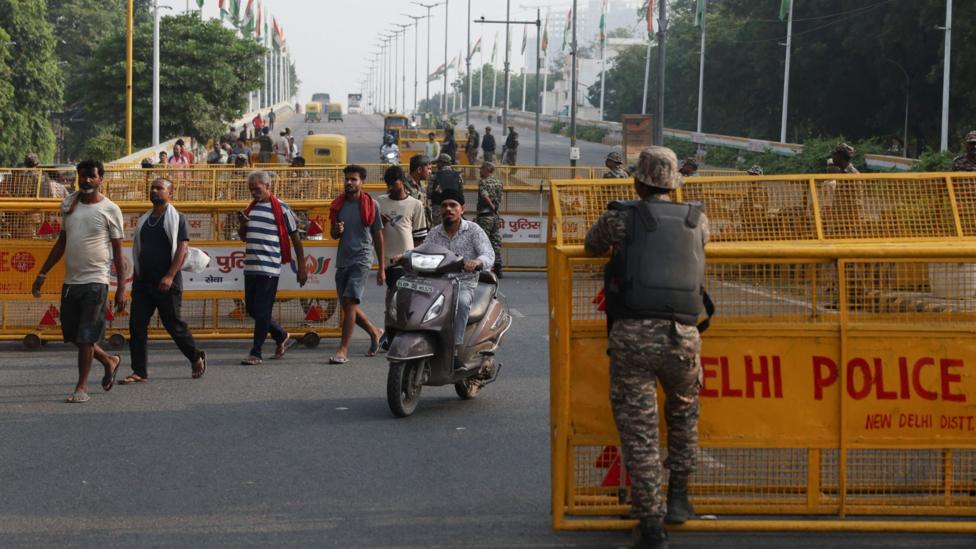
The CJP had organized a protest at Jantar Mantar for Saturday, but authorities implemented sweeping security measures throughout Delhi to prevent demonstrators from accessing the site. Multiple metro stations were shuttered, rail services experienced disruptions and thousands of uniformed and paramilitary officers were deployed across the city.
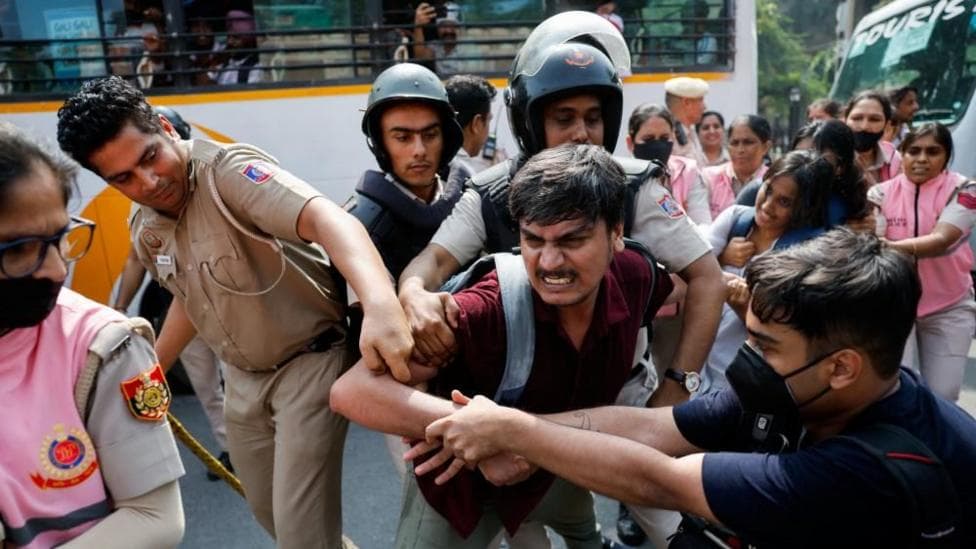
Over the weekend, law enforcement detained and subsequently released thousands of individuals, including multiple journalists. Documented footage and photographs from the demonstrations depict officers forcibly removing people, including women, and forcing them into transport vehicles.
Dipke had traveled to his native Maharashtra following his grandmother's death but was among numerous CJP leaders detained in advance of the Saturday demonstration and released the following day.
What broader movements preceded these protests
The current demonstrations build upon student-driven activism earlier in the year protesting examination irregularities and demanding educational reforms. The CJP spearheaded weeks of sustained action that ultimately resulted in the resignation of federal Education Minister Dharmendra Pradhan.
The organization originated as online satire following remarks by India's Chief Justice Surya Kant, who compared certain unemployed young people to cockroaches during a judicial proceeding in May. Although the Chief Justice later stated his comments had been misunderstood, the language had already become a rallying symbol for young people advocating for systemic change.
Following the summer demonstrations, the CJP transformed from an online movement into an organized pressure group, channeling broader discontent regarding joblessness, examination failures and governmental accountability.
What opposition parties did Monday
Separately, opposition political organizations conducted a march in Delhi on Monday, traveling from Connaught Place—a major commercial district in the city center—to the Supreme Court. The Congress party, India's principal opposition force, also filed a petition with the Supreme Court on Monday, challenging the Election Commission's voter revision initiative that has resulted in tens of millions of names being struck from electoral rolls.
What comes next for protest procedures
Delhi Police indicated it would formulate revised standard operating procedures for demonstrations at the three newly designated venues, though the order did not establish a specific timeline for implementation.
Key Facts
- CJP leaders Ashutosh Ranka and Saurav Das were detained after scaling police barriers at Jantar Mantar on Tuesday morning to protest the Election Commission's voter revision exercise
- Jantar Mantar was formally denotified as a protest venue on October 11, with authorities designating Ramlila Ground, Burari Ground and CBD Ground as alternative demonstration sites
- The voter revision has eliminated tens of millions of names from electoral rolls, with critics warning it may disenfranchise eligible voters
- The CJP emerged from student-led protests earlier in 2026 over examination irregularities and has evolved into a broader pressure group advocating for governmental accountability
- Authorities deployed extensive security measures across Delhi over the weekend, detaining and releasing thousands of individuals including journalists