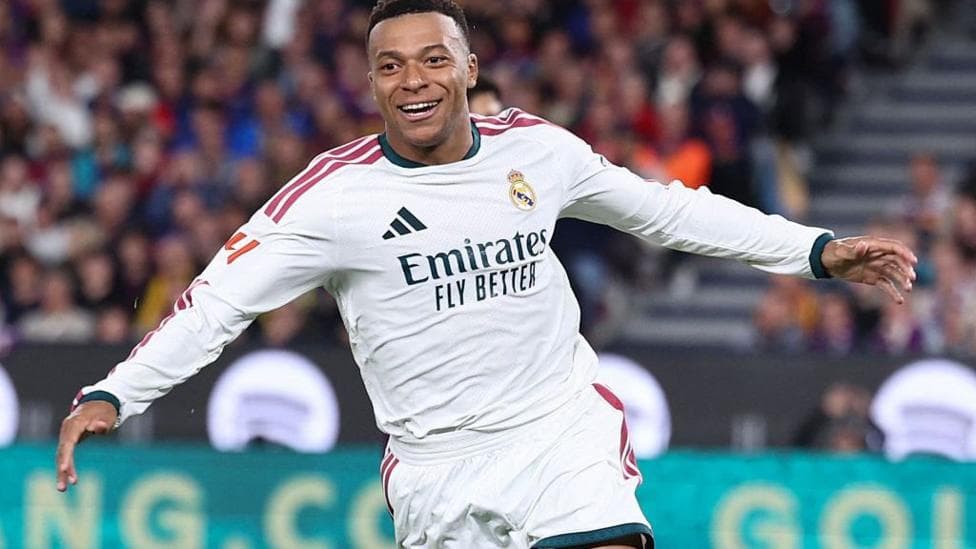
Multiple Chinese companies have terminated endorsement deals with Real Madrid striker Kylian Mbappé following widespread backlash over his comments about a meme featuring the late Chinese leader Mao Zedong. According to BBC News, the controversy erupted after Mbappé appeared on a French talk show and referenced a meme comparing him to a "Chinese dictator," triggering anger across Chinese social media and prompting swift commercial consequences for the 27-year-old footballer.
Mbappé made the comments during an appearance on the French talk show The Bridge, hosted by his Real Madrid teammate Aurélien Tchouaméni. In the unverified clips circulating online, the striker discussed a meme that "makes me laugh the most," describing it as showing "a video of a guy, I think it's a Chinese dictator." As he spoke, a meme featuring his face superimposed on an image resembling Mao appeared on screen. The footballer's nickname "the dictator" stems from his considerable influence at his clubs and has become the subject of numerous online jokes and memes.
The original video has been removed from the show's YouTube channel, and the timing of the interview remains unclear. In the clips that have spread online, Mbappé does not explicitly name Mao, instead stating he "uses [the meme] with friends all the time." However, the reference proved deeply offensive in China, where Mao remains a revered figure within the Communist Party despite his rule resulting in millions of deaths through famine and political purges.
The backlash intensified on Monday night when Chinese football forum Dongqiudi drew attention to the comments in a statement, describing them as "inappropriate" and saying they "hurt the feelings of Chinese people." Screenshots of the clip and meme rapidly spread across Chinese social media platforms, with users echoing criticism and calling for boycotts of both Mbappé and Real Madrid. Notably, many posts blurred the meme itself and redacted the portion of Mbappé's comment referring to a Chinese dictator.
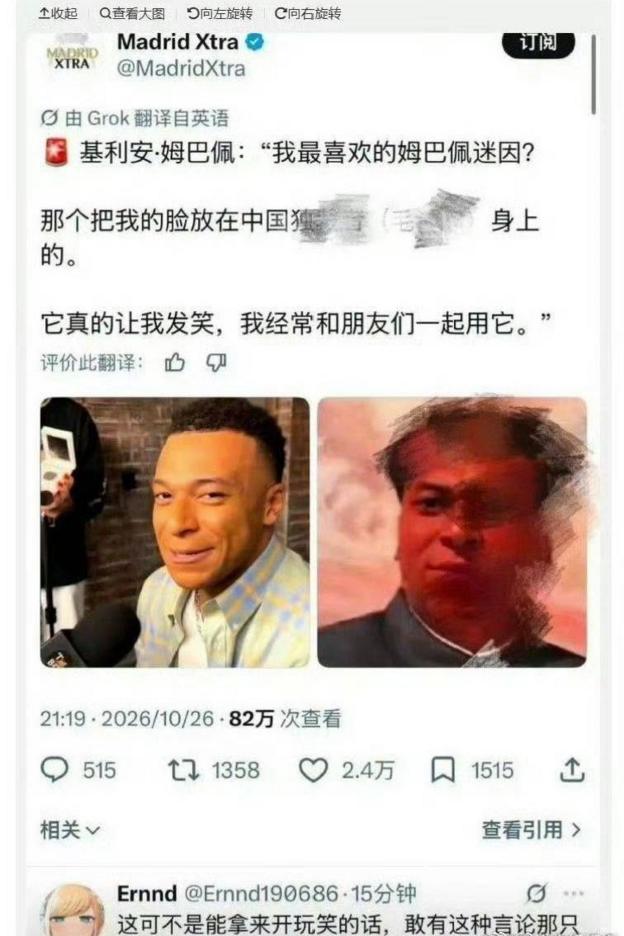
Dongqiudi stated in its statement that it was "unable to translate" his comments because they "were offensive to China and the Chinese people," leaving many social media users uncertain about the exact nature of his remarks and prompting questions in response to angry posts.
What brands have ended their partnerships?
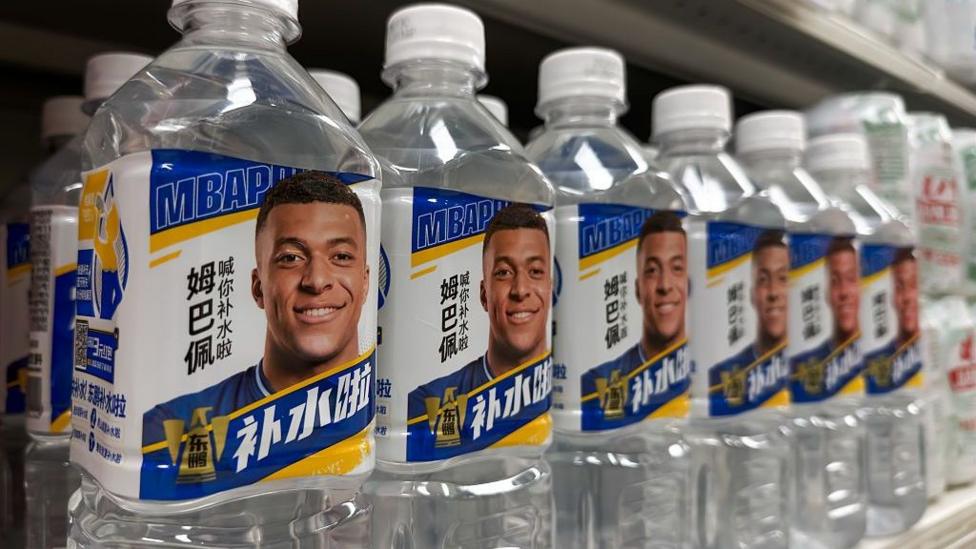
As anger mounted online, Chinese brands began severing ties with Mbappé, though most did not explicitly reference the video. Mengniu, the country's largest dairy producer, issued a statement saying it "firmly opposes and has a zero-tolerance policy towards any words or actions that hurt the feelings of the Chinese people." Drinks manufacturer Dongpeng released similar language, declaring that its "company firmly opposes and has a zero-tolerance policy towards any behaviour that offends national sentiments." According to Agence France-Presse, Dongpeng had appointed Mbappé as ambassador for its electrolyte drink in April ahead of the World Cup, with the company's World Cup advertising campaign featuring AI-generated images of him consuming the sports drink. The termination took effect immediately.
Additional companies moved to distance themselves from the footballer. Yahoo Sports reported that cheese producer Milkground also ended its partnership with Mbappé. Meanwhile, social media platform Xiaohongshu announced that its content deal with the striker had already concluded in 2024 and that it was removing his materials from the platform.
By 14:00 local time on Tuesday, five of the top 10 trending topics on Weibo centred on Mbappé, with the hashtag "multiple brands terminate partnerships with Mbappé" topping the list. Comments on the platform included harsh criticism, with one prominent post stating "Don't ever come to China." Chinese fans criticised Mbappé—who maintains significant popularity in China and substantial brand endorsements—for "profiting from the Chinese market yet making remarks that offend the Chinese public." Another comment read: "International public figures, in particular, should show greater respect and sensitivity, as national sentiment must never be taken lightly."
What has the Chinese government said?
State authorities have responded to the controversy. According to state-owned newspaper The Global Times, state broadcaster CCTV's news apps will not feature content related to the French striker. CCTV also suspended broadcasts of La Liga matches, Chinese media reported on Tuesday. Real Madrid, one of 20 clubs competing in Spain's top football division, holds the record as the most decorated team with 36 league titles.
China's foreign ministry weighed in through spokesperson Lin Jian, who stated: "We have noted the relevant reports. Words and deeds that hurt the feelings of the Chinese people will naturally be met with opposition from all sectors of Chinese society."
Why is Mao such a sensitive topic?
Mao Zedong founded the People's Republic of China in 1949 and governed through turbulent decades during the 1960s and 1970s. His initiative for rapid industrialisation, termed the Great Leap Forward, precipitated a famine responsible for tens of millions of deaths. The Cultural Revolution followed—a violent campaign targeting anyone perceived as a threat to Communist ideology, encompassing Chinese intellectuals, landowners, artists, and frequently rivals within the Party itself. Mao's death in 1976 marked a transition for China, which subsequently began engaging with the global economy. Despite the nation's departure from Mao's policies, the Communist Party has consistently elevated him as a national icon whose legacy remains beyond criticism.
Consequently, jokes or memes involving Mao are perceived not merely as insults to the party but as challenges to its carefully maintained historical narrative. Few topics carry such sensitivity within China's tightly controlled information environment, where citizens are expected to align with party and government positions on delicate matters.
How did Mbappé become associated with dictator memes?
The timing of when the Mbappé meme involving Mao originated remains unclear, but the "dictator" nickname has made the striker the subject of numerous online jokes and memes. In 2024, he pursued legal action against a French influencer and kebab shop owner for using his name in the description of one of the establishment's sandwiches, which only amplified jokes about the nickname. France teammate Ousmane Dembélé participated in the trend during the 2026 World Cup, referring to Mbappé as Mobut—a reference to Mobutu Sese Seko, the dictator who governed the Democratic Republic of Congo, formerly Zaire, for three decades.
In a September interview with France Football, Mbappé acknowledged the humorous intent behind many of these memes but expressed concern about their implications.
There's a side that's a bit less funny, because we know the damage people like that have caused throughout history. Being compared to people who murder others, or who have made millions upon millions of people miserable... I don't think I've done that in my life.He recognised that dictator memes could demonstrate "a lack of political and human awareness among people," given the historical suffering inflicted by such figures.
What is Mbappé's commercial standing in China?
China represents a major market for international sports personalities, with homegrown brands having signed multimillion-dollar endorsement agreements with Mbappé, Norwegian striker Erling Haaland, and NBA player Stephen Curry. The controversy has significantly impacted his commercial presence in the country. A small number of individuals have publicly supported Mbappé on Chinese social media, though such responses remain rare given China's closely monitored internet landscape, where alignment with party and government positions on sensitive subjects is expected.