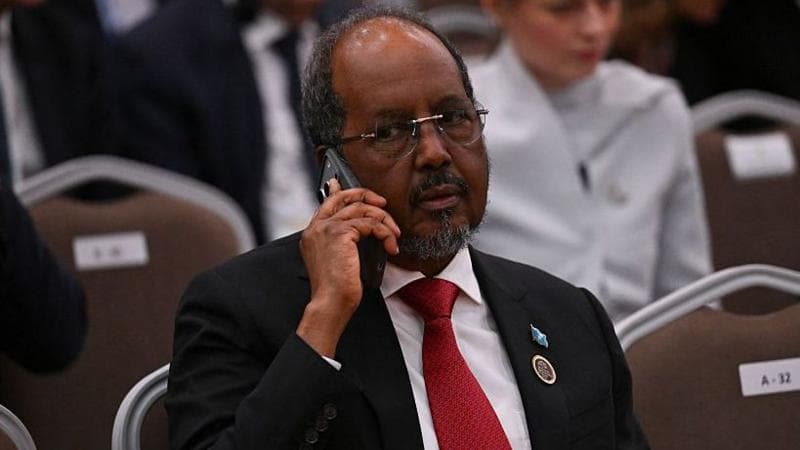
Somalia's Supreme Court has declared that President Hassan Sheikh Mohamud's extension of his mandate was unconstitutional, intensifying a severe political crisis and deepening the rift between the executive and judicial branches. The ruling, issued on Thursday, came immediately after Mohamud dismissed Chief Justice Bashe Yusuf Ahmed—an action the court determined the president had no legal authority to undertake. According to BBC News, the court has ordered political leaders to negotiate an electoral plan within 30 days and conduct elections within 90 days, a timeline that could upend the government's strategy for holding nationwide polls in 2027.
The confrontation reflects deepening tensions over Mohamud's efforts to remain in office beyond his original four-year term, which ended in May. His administration secured parliamentary approval in March for constitutional amendments that extended his mandate by an additional year. The Supreme Court rejected this approach, ruling that the constitutional changes could not be applied retroactively to the president's current tenure. The court also determined that the federal parliament and government's mandates had expired, limiting the administration to routine caretaker functions.
In a separate decision, the court declared the chief justice's dismissal "null and void" and accused the presidency of undermining judicial independence. Mohamud appointed Ibrahim Idle Suleiman, a former holder of the position, to replace Ahmed. The presidency justified the dismissal by citing complaints about the administration of justice and stated it aimed to establish a more equitable and transparent judiciary. The court rejected this rationale, asserting that constitutional procedures must be followed for any removal of the chief justice.
What triggered the escalation?
The confrontation intensified on Thursday when former Prime Minister Hassan Ali Khaire levelled serious accusations against the president. According to Arab News, Khaire alleged that the chief justice and lawyers were being pursued at their homes, subjected to torture, and that court operations had been halted. He described the situation as an "assault on the Supreme Court," warning that "Somalia stands at a dangerous juncture. The dismantling of our judiciary is a direct threat to the rule of law." The AFP news agency reported these allegations, though it could not independently verify the claims about security force deployment. Photographs circulating in Somali media, however, appeared to show armed personnel inside the court compound.
Why does the president defend the term extension?
Mohamud has maintained that the constitutional reforms are essential for advancing Somalia towards genuine democratic governance. He argues that the changes would replace the existing clan-based system, in which elders select their representatives, with fully democratic elections. Somalia has not held nationwide direct elections since 1969 and has endured more than three decades of civil conflict. The president contends that these reforms represent a necessary step toward modernising the electoral process, though opposition groups accuse him of using the constitutional amendments as a pretext to prolong his grip on power.
How have opposition figures responded?
Former President Sharif Sheikh Ahmed welcomed the court's decision, characterising the situation as a grave constitutional crisis. He called on Mohamud to adopt a consensus-based approach to resolving the deadlock. The ruling was endorsed by five of the Supreme Court's nine judges. Opposition leaders have questioned Mohamud's legitimacy to convene national discussions, and regional administrations in Puntland and Jubaland have rejected the electoral timetable proposed by the government. The constitutional amendments themselves sparked violent clashes in Mogadishu in June as political factions disputed the changes.
What is the current electoral timeline?
The electoral commission has scheduled parliamentary elections for 15 April 2027, with a presidential vote to follow a month later. However, this timetable faces significant opposition from multiple political actors. Mohamud has called for national talks from 14 to 18 November to break the impasse, but opposition leaders have questioned whether he possesses the authority to convene such discussions given the court's ruling that his mandate has expired.
How does this affect Somalia's security situation?
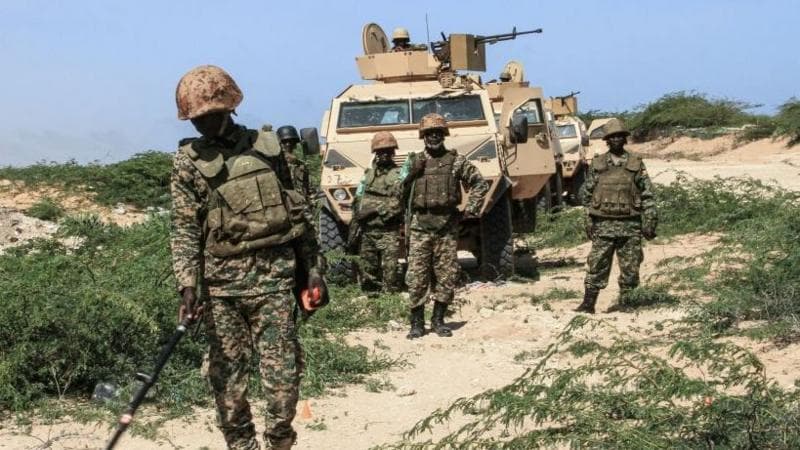
The political turmoil unfolds as Somalia continues its struggle against al-Shabaab, the Islamist militant group that controls substantial portions of the countryside despite years of military operations. The crisis compounds existing security challenges, as Uganda, the largest contributor of troops to the African Union mission fighting the militants, announced this week that it intends to withdraw its forces by the end of the year. This development has intensified concerns about Somalia's capacity to maintain security and combat extremism during a period of severe political dysfunction.
What happens next?
The Supreme Court's 30-day deadline for negotiating an electoral plan and 90-day deadline for conducting elections represent a significant constraint on the government's timeline. Mohamud's proposed national talks in mid-November will be a critical test of whether political actors can reach consensus. The outcome of these discussions will determine whether Somalia can move forward with elections under the court-mandated schedule or whether further constitutional and political conflict will ensue. The government's ability to function as a caretaker administration while managing security threats and international relations remains uncertain.
Key Facts:
- President Mohamud's original four-year mandate expired in May 2026; parliament approved a one-year extension in March through constitutional amendments.
- The Supreme Court ruled the extension unconstitutional and ordered elections within 90 days, conflicting with the electoral commission's April 2027 parliamentary election schedule.
- The court declared the dismissal of Chief Justice Bashe Yusuf Ahmed null and void, accusing the presidency of violating judicial independence.
- Former Prime Minister Hassan Ali Khaire alleged security forces were pursuing judges and lawyers and that court operations had been halted, claims the AFP could not independently verify.
- Uganda's planned withdrawal of African Union troops by year-end compounds security concerns as Somalia faces political dysfunction and ongoing al-Shabaab insurgency.