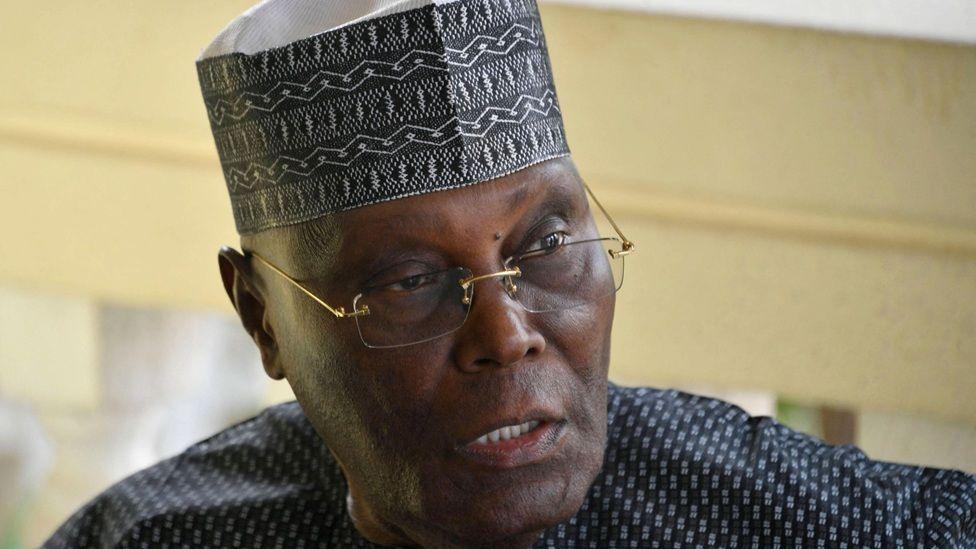
Nigeria's Federal High Court has removed the leadership of the opposition African Democratic Congress (ADC) party and declared the presidential nomination of former Vice-President Atiku Abubakar invalid, in a ruling that threatens to destabilise the main opposition force ahead of elections scheduled for 16 January 2027. According to BBC News, the court's decision also voided the positions of ADC National Secretary Rauf Aregbesola and other national officers, and invalidated the party's nominations for all races scheduled for 2027. The ADC has characterised the judgment as a deliberate attempt to weaken the opposition and cripple its electoral prospects.
This story was first reported by BBC News.

This marks Abubakar's seventh attempt to secure Nigeria's presidency. The 79-year-old served as vice-president between 1999 and 2007 when the PDP held power, and has emerged as one of President Bola Tinubu's principal challengers in the forthcoming election, alongside former Anambra State Governor Peter Obi.
What triggered the court dispute?
The legal conflict centres on the legitimacy of the ADC's current leadership structure. In 2025, several prominent politicians defected to the ADC from the Peoples Democratic Party (PDP), frustrated by factional divisions within that once-dominant party. Abubakar and former Senate president David Mark were among those who joined, and Mark was appointed interim chairman as the party accommodated these high-profile arrivals.
However, Nafiu Bala Gombe, a former ADC national deputy chairman, challenged this arrangement in court. He contended that Mark's appointment violated party rules and the nation's laws, since Mark and other senior figures had not been elected at a national convention. Gombe argued that he himself should have assumed the chairmanship following the resignation of the ADC's previous chairman in 2025.
The Federal High Court in Abuja had previously addressed this dispute. In July, Judge Musa Liman ruled that Mark's selection complied with Nigerian law and the party's constitution, rejecting a similar challenge brought by another former ADC member. The case was sent back to the Federal High Court by the Supreme Court on 30 April after an interim order had restored the Mark-led leadership.
Abubakar questioned the logic of reopening the dispute:
Why, after that judgment, was another case filed to reopen the same dispute?The ADC's statement characterised Thursday's judgment by Justice Peter Lifu as part of a coordinated campaign to undermine the opposition. The party alleged the ruling was
a calculated attempt to weaken the ADC and frustrateAbubakar's candidacy.
The court's directive was specific: the judge instructed the electoral commission not to recognise decisions from the ADC's 99th National Executive Committee meeting of 27 July 2025 or any subsequent actions taken by that body.
What does this mean for Abubakar's campaign?
Despite the court's ruling, Abubakar remains on the electoral commission's final candidate list for the ADC, with former Rivers State Governor Rotimi Amaechi as his running mate. The 79-year-old has expressed confidence that the matter will be resolved and has urged supporters to maintain focus on the campaign's core message.
Nigerians deserve relief from this crushing cost-of-living crisis. We urge our supporters to remain resolute, take our message from house to house and door to door, and stay peaceful and focused,he said. On social media, Abubakar characterised the judgment as evidence of
panicamong those threatened by his candidacy, noting that the ruling came
barely a day after a mammoth crowd turned out in Sokoto to welcome himat his campaign launch. He added:
The people of Sokoto came out in their thousands because they are hungry for change and believe in our promise to make life affordable again. What we witnessed in Sokoto is only the beginning.
What is the broader impact on Nigeria's opposition?
The ADC has emerged as the most formidable opposition force to President Tinubu's ruling All Progressives Congress (APC), having attracted numerous high-profile politicians dissatisfied with the governing party. The court's ruling threatens to create significant uncertainty for hundreds of ADC candidates across the country and raises questions about which leadership structure has legitimate authority to represent the party.
Peter Obi, who is running for the presidency for a second time, has expressed alarm at the judgment's implications for democratic governance. The 65-year-old, who briefly joined the ADC before departing earlier this year to contest under the Nigeria Democratic Congress (NDC), released a statement with the heading
Do not undermine democracy.He warned:
My concern is that three months before a general election, it is in the public interest to have certainty.
Obi emphasised the stakes for Nigeria's democratic system:
The sustenance of democracy in Nigeria, in the midst of encroaching military rule in West Africa, should strengthen our resolve to protect opposition politics and not stamp out opposition parties.He pledged that if elected, he would ensure opposition parties are respected and allowed to flourish, stating:
This is a time to strengthen our democracy by allowing the opposition to thrive.
Political parties in Nigeria have increasingly turned to the courts to resolve internal disputes, a trend that has raised concerns about the use of litigation as a weapon in factional struggles. The ADC's legal troubles appear to stem partly from the rapid influx of senior politicians from other parties, which created competing claims to leadership positions and exposed gaps in the party's governance structures.
What happens next?
The ADC has announced its intention to appeal the Federal High Court's decision to the Court of Appeal, signalling a determination to overturn the ruling before the January elections. The party has not specified a timeline for filing the appeal, but the compressed election calendar means any legal proceedings must move swiftly.
Nigeria's presidential and National Assembly elections are scheduled for 16 January 2027, leaving approximately three months for the courts to resolve the dispute. The outcome of the appeal will determine whether Abubakar can proceed as the ADC's official presidential candidate or whether the party must nominate an alternative standard-bearer. Until the appeal is resolved, the ADC faces the prospect of operating under two competing leadership structures, with potential confusion over which decisions are legally binding.