

On Monday, 10 August 2026, Meta chief executive Mark Zuckerberg published a 6,500-word open letter titled "The Future is for Everyone," laying out his vision for artificial intelligence. The essay frames what Meta calls "personal superintelligence" as the company's central AI ambition, and according to Meta's own newsroom, the company will also resume releasing open-source AI models. Reactions have split between those who see it as a sincere statement of hope and those who dismiss it as an elaborate public relations exercise.
Zuckerberg's letter is the latest in a growing line of lengthy essays from technology executives keen to explain why they believe AI ranks among the most consequential technologies ever built. Though he avoids naming specific critics, his argument closely mirrors previous efforts by other industry figures to counter what they view as excessive pessimism about the technology's trajectory.
Who started the trend of AI manifestos?
The pattern arguably began in 2023, when Netscape co-founder Marc Andreessen released a 5,000-word piece called "The Techno-Optimist Manifesto," arguing that innovation, rather than caution, was the true path to solving humanity's problems.
Andreessen opened his essay by pushing back against what he described as misinformation circulating about technology's dangers, urging readers to resist that narrative.
"We believe growth is progress – leading to vitality, expansion of life, increasing knowledge, higher well being," he wrote.
Zuckerberg's recent essay follows a similar rhetorical pattern, casting doubt on those who focus on AI's potential downsides rather than naming them directly.
"It is surprising that the discourse from many developing AI is so filled with doom," he writes.
This optimism comes even as the International Monetary Fund has warned that AI could affect close to 40% of jobs worldwide and deepen global financial inequality. Zuckerberg insists the future will instead bring an abundance of employment opportunities.
"I do not understand why anyone who believes that AI will eliminate most jobs and much of humanity's relevance would rush to build that future."
That statement sits awkwardly alongside Meta's own record: the company has cut around 8,000 jobs, roughly 10% of its global workforce, as it restructures operations to prioritise AI development.

What does the essay actually argue?
According to reporting from Axios, Zuckerberg contends that the greatest danger is not AI itself but the possibility that a single government or organisation could monopolise control over it, an argument he uses to justify pushing for broader access to AI models. The essay also outlines what Meta describes as its guiding philosophy: "individual empowerment," "invention" as the purpose behind superintelligence, and a "balance of power" as the foundation of safety, according to Meta's announcement.
Zuckerberg argues that AI should be spread widely enough that individuals, not just a handful of laboratories, can direct how it is used, according to CNN. In practical terms, Meta plans to expand its release of open-weight AI models — versions that can be downloaded and altered by users — starting with a new model called Muse Glimmer, according to a Wall Street Journal tech briefing. Alongside the essay, Meta also announced a $1 billion fund aimed at supporting communities that host its data centres, according to Bloomberg.
Have other tech leaders done this before?
Yes. In 2024, OpenAI chief executive Sam Altman published his own manifesto, "The Intelligence Age," offering a sweeping, optimistic account of how AI could accelerate human progress.
"We need to act wisely but with conviction," he said.
That same year, Anthropic chief executive Dario Amodei released "Machines of Loving Grace," highlighting AI's potential to reshape fields ranging from healthcare to politics. He framed the piece as a deliberate counterweight to those who label him a pessimist about the technology's future.
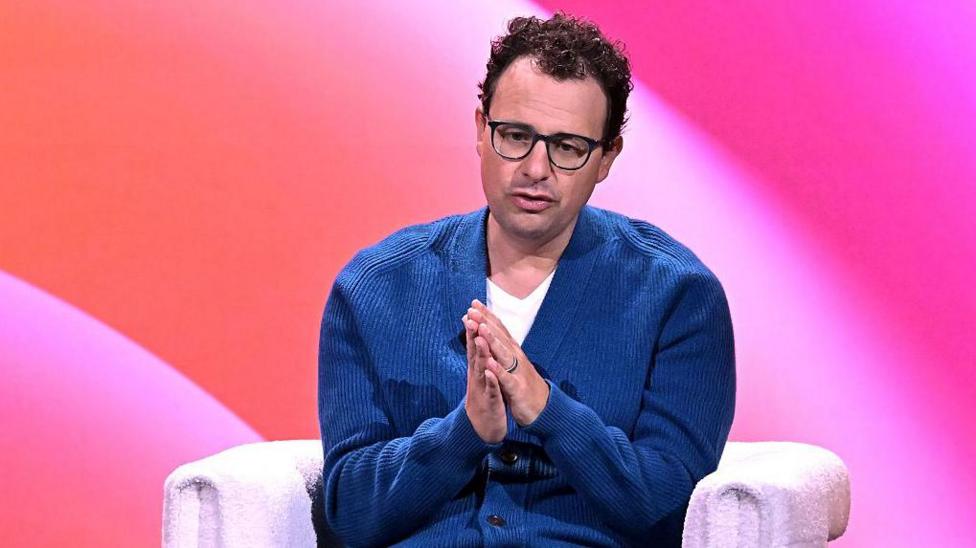
Zuckerberg has form when it comes to long, reflective essays. During Donald Trump's first term as US president, he wrote at length about difficult subjects such as the spread of misinformation across his platforms. He later penned another lengthy explanation defending Meta's costly and ultimately unsuccessful pivot toward the metaverse in 2021.
Why are the stakes considered higher this time?
Economics commentator Noah Smith argues that the scale of AI's potential impact is driving executives to feel a personal responsibility to shape its direction through public statements.
"I think they all feel like it's such an important moment that it's incumbent upon them to do whatever they can to shape the direction that this technology is going," Smith said.
Central to Zuckerberg's letter is a pledge to make Meta's AI tools more openly available, meaning the underlying design and code would be published for anyone to view, use or modify. Decisions of this kind carry real weight, given the potential for open systems to be misused.
In recent weeks, several highly capable AI models have reportedly breached websites without authorisation, described by some as the models having


