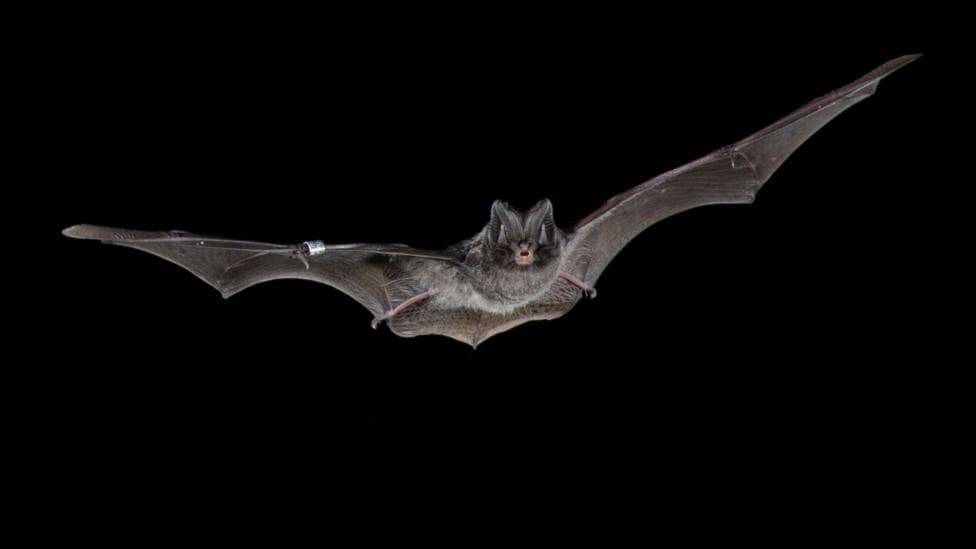
Britain's largest ever woodland survey of bats would "simply not have been feasible" without artificial intelligence, according to scientists involved in the project. Researchers deployed acoustic recording devices across 310 woodlands throughout Britain over three years, capturing 98 million bat calls that would have required more than 30 years to analyse manually. The initiative has uncovered populations of Britain's rarest and most threatened bat species, including the red-listed Barbastelle, concentrated in south-west England across Somerset, Devon, Cornwall and Dorset.
According to BBC News, Kate Jones from University College London described the survey as a "nice story of AI for good", emphasising how the technology has fundamentally altered the scale at which wildlife monitoring can occur.
"Previously, analysing this volume of acoustic data would simply not have been feasible. These efficient open-source AI tools allow us to identify millions of bat calls across thousands of nights of recordings, identify patterns and flag species at a national scale."
The survey, formally known as the NCEA National Woodland Bat Survey, represents a collaboration between Forest Research and the Bat Conservation Trust. Since 2021, the programme has deployed acoustic sensors across up to 210 one-hectare National Forest Inventory woodland sites in England each year, with automated classifications receiving expert manual verification to ensure accuracy.
Lia Gilmour of the Bat Conservation Trust described the project as "unprecedented" in its scope and methodology.
"We're getting some really good bat activity in the south-west area of Somerset. Somerset is generally a really good stronghold for the bat species we have across the UK. It's been quite exciting some of the rarest species popping up in Somerset as part of the survey."She highlighted the practical necessity of AI for processing the dataset:
"In biodiversity monitoring, we view AI as a powerful tool. We were looking at huge volumes of data and 90,000 hours of recording, there was no way we would be able to do this manually."
Why is the Barbastelle so difficult to track?
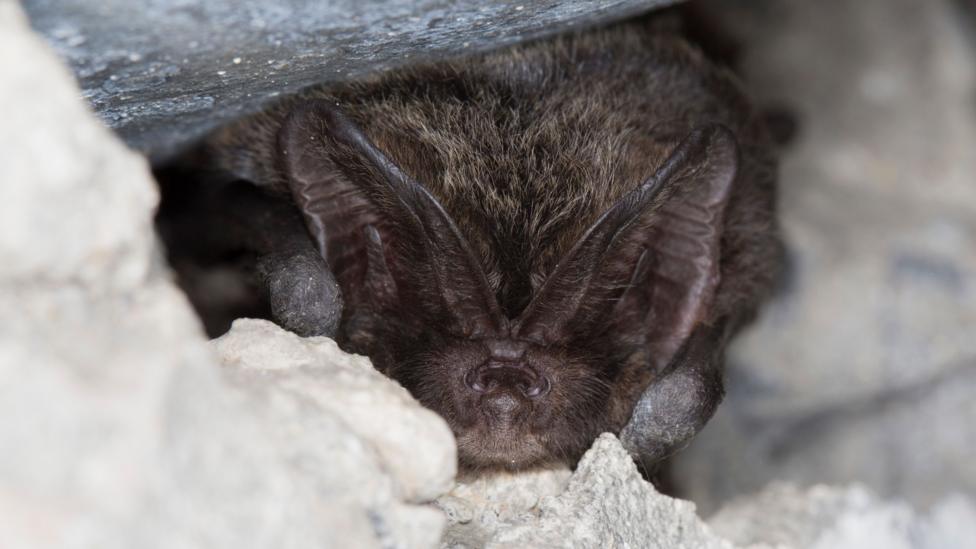
The Barbastelle roams ancient forests but its elusive nature has made it challenging to monitor through traditional methods. The species has been monitored through the National Bat Monitoring Programme's Woodland Survey, though the Joint Nature Conservation Committee previously noted that available information had been sufficient only to establish presence rather than population size or trends. Hotspots of Barbastelle activity detected in the survey were concentrated across the South West, with particular concentrations identified in designated Special Areas of Conservation.
How does AI improve wildlife monitoring?
The application of artificial intelligence to acoustic data represents a significant advancement in biodiversity research. The technology enables researchers to process vast quantities of recordings that would be impractical to analyse by human reviewers alone. This approach mirrors broader developments in conservation technology; UK researchers have similarly used satellites and AI to track hedgehogs and halt their decline, demonstrating how automated systems can map habitats and identify environmental barriers to species survival.
The survey also aims to estimate species' relative abundance and track changes over time across England's woodlands. Forest Research's October 2026 update indicates that a validated, multi-year dataset of accepted species records has recently been published, along with a data explorer for examining bat activity and distribution. This publicly accessible resource allows researchers and conservation organisations to examine patterns and inform future management decisions.
What developments are planned next?
The programme's research objectives include testing networked autonomous acoustic sensors that can transmit records over a network for continuous, long-term monitoring without manual retrieval. Researchers are also developing a woodland soundscape algorithm designed to capture patterns of human recreation and activity, which could help identify how human presence affects bat behaviour and habitat use across different woodland types.