Dr Rok Nežič, a Slovenian space scientist at Armagh Observatory and Planetarium, has been selected to have an asteroid named after him—a recognition he describes as a dream realised. According to BBC News, the honour comes nearly three decades after the asteroid's discovery in New Mexico, marking a significant achievement in his career as a science communicator and researcher.
Growing up in Slovenia in 1999, Nežič had no way of knowing that an asteroid discovered that same year in New Mexico would eventually bear his name. The celestial body, officially designated (20560) Nežič, was discovered on 9 September 1999 by LINEAR at Socorro, New Mexico, according to The Asteroid News. The International Astronomical Union published the asteroid's official name on 9 July 2026.
Nežič first arrived at Armagh Observatory and Planetarium in 2015 to complete his doctorate in space and climate physics, focusing on cometary dust using polarimetric techniques. He has remained at the institution ever since, working as a tours and outreach officer. When he learned that asteroids could be named after people, he expressed a wish to achieve this honour himself. Now that it has happened, he reflected on the moment with astonishment.
"I'm not sure how to believe it myself," he admitted.
The asteroid bearing his name is classified as a smallish rock in space compared to planets. At 10.9 kilometres across, it is considerably large for an asteroid named after an individual. The celestial body currently orbits the Sun from its position in the asteroid belt, following the same path as Earth.
How are asteroids named?
The naming process for small bodies in the solar system is governed by the International Astronomical Union. Asteroids can be named by their discoverers once their orbits are sufficiently known. The IAU's naming citation describes Nežič as a Slovenian scientist and science communicator who studies cometary dust using polarimetric techniques, according to The Asteroid News.
To be considered for an asteroid namesake, someone must nominate you. In Nežič's case, two people put his name forward: his PhD supervisor and a former astronomer from the observatory. He does not know the identities of those who chose him for the honour, though he remains grateful for their recognition.
Why are larger named asteroids becoming rarer?
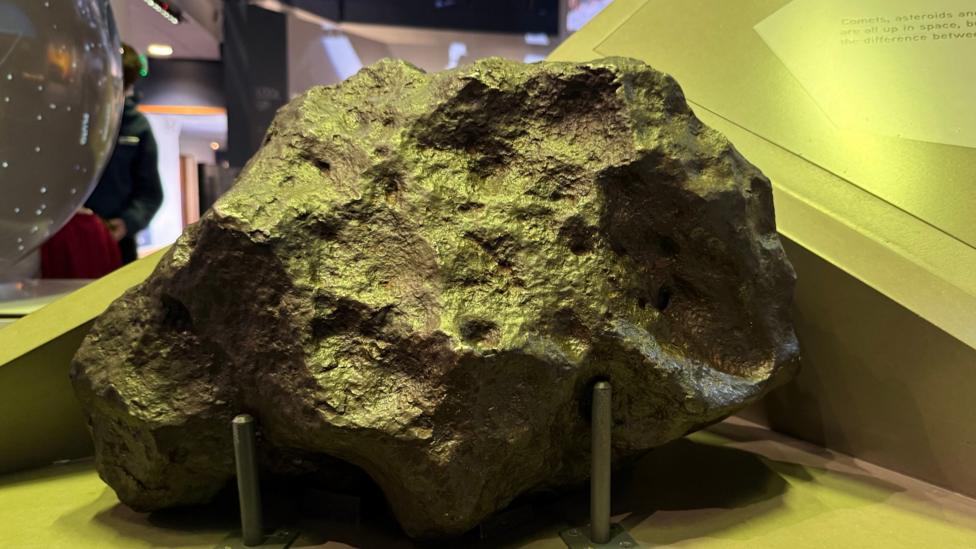
Nežič's asteroid is notably large compared to most asteroids named after people. The reason lies in the history of asteroid discovery: the largest asteroids were identified first and named long ago, meaning modern discoveries tend to be progressively smaller. His colleague Shane Kelly's asteroid, officially named (7050) Shanekelly, measures 15.6 kilometres across—even larger than Nežič's—making both exceptional in size for named asteroids.
Nežič explained that his asteroid was discovered by what he described as
"one of the big missions"focused on cataloguing asteroids.
"This is an Earth-based mission in this case, which is looking for lots of asteroids, essentially, because the more we know about them, the more we know where they're going, the more we know which ones are not hitting us, including mine and Shane's."
Who else at Armagh has received this honour?
Nežič is one of two Armagh Observatory and Planetarium employees recently chosen to have a celestial body named after them. His colleague Shane Kelly, the principal meteorological observer at Armagh Observatory, has also been honoured in this way. Kelly's asteroid was discovered in Chile in 1982 and officially designated (7050) Shanekelly, according to RTÉ News.

Kelly has served as the observatory's principal meteorological observer for 27 years, a role that began in 1999. His daily responsibilities involve opening the Stevenson screen, which houses sensitive thermometers, and recording his readings into a handwritten ledger. His hand has entered far more lines of data than any of his 17 predecessors, making him one of the world's most prolific weather observers.
Prof Michael Burton, the institute's director, praised Kelly's contribution to the field.
"He's probably observed the weather more than anyone else in the world, I suspect,"Burton said.
"So this is in recognition of Shane's contribution to the observatory and to the measuring of the weather."
What is the significance of Armagh Observatory's role?
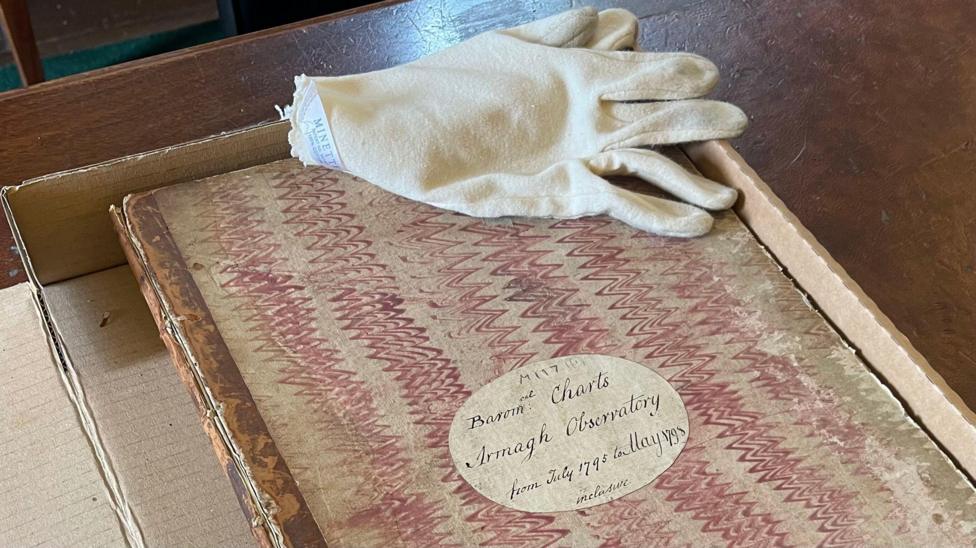
Armagh Observatory and Planetarium has maintained an unbroken record of daily weather readings since 14 July 1795, spanning more than 230 years. This extraordinary archive of meteorological data makes the institution a unique resource for climate and weather research. The observatory's neighbouring planetarium has become a hub for both research and public engagement with space science.
Nežič emphasised that despite being a small institution, Armagh punches well above its weight in the scientific community.
"Even though we're a small institution, people who work here can just focus on the research so much that we have really top researchers in the field."His own research on cometary dust began during his PhD at Armagh Observatory in collaboration with University College London, demonstrating the institution's capacity to attract and develop world-class talent.

Prof Burton expressed enthusiasm about the dual recognition.
"It's fantastic that the two members of the team have been awarded in this way."The achievements of Nežič and Kelly are part of a broader pattern of recognition for the institution: there are now 29 asteroids with some connection to Armagh Observatory and Planetarium.
How will the institution commemorate these achievements?
Armagh Observatory and Planetarium plans to recognise the achievements of Nežič and Kelly with a new LED dome display. This installation will showcase the asteroids named after the two scientists and visualise their orbits, allowing visitors to the planetarium to understand the scale and significance of these celestial honours. The display will serve as a lasting tribute to their contributions to space science and meteorological research.