A coordinated cyber-attack on refrigeration systems across European supermarkets has spread to at least 10 countries, with the UK also reporting exploitation of vulnerable technology. The attack, which began on Monday, affected supermarket chains in Belgium, Estonia, Finland, Ireland, Italy, Luxembourg, the Netherlands, Portugal, Germany and Sweden, forcing retailers to discard significant quantities of perishable food after freezer temperatures were remotely raised to dangerous levels. According to BBC News, the European Union has warned of a deliberate attempt to disrupt the food supply chain, with food losses estimated in the tens of millions of euros.
This story was first reported by BBC News.
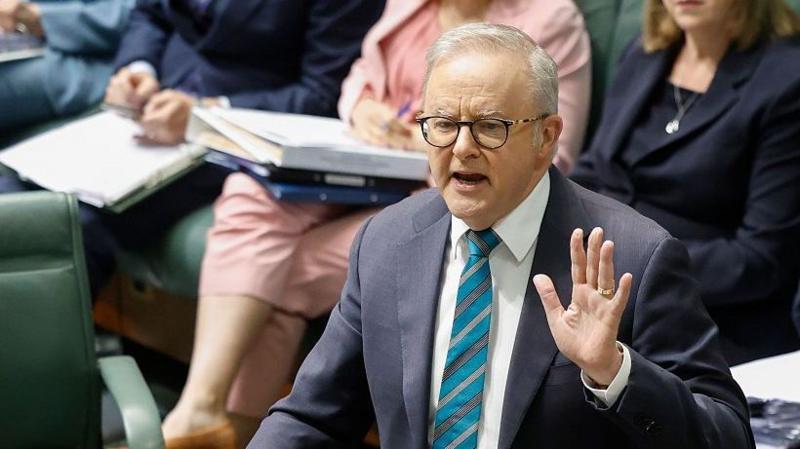
The National Cyber Security Centre (NCSC) confirmed it is aware of "a couple of instances where vulnerable technology had been exploited" in British stores. Dr Richard Horne, the NCSC's chief executive, told BBC Radio Four's Today programme that the centre had "worked through the night" to alert potentially affected organisations in the UK. He said the attack extended beyond supermarkets to "the whole food supply chain" and that organisations with exposed technology had been contacted, though he declined to name specific retailers or provide details of the extent of UK damage.
This incident follows a coordinated cyber-attack on hundreds of French supermarkets in October 2026, which similarly involved raising refrigeration temperatures to 50°C and destroying millions of euros worth of perishable stock. The Paris prosecutor's office opened an investigation into that earlier breach. While both incidents employed identical methods—manipulating defrost-mode settings—the connection between the attacks and whether they share perpetrators has not been established.
Which countries and retailers were affected?
According to Bleeping Computer, more than 115 stores across the affected countries were compromised. In Belgium, approximately 40 Delhaize supermarkets and 15 Carrefour stores were affected, with Delhaize reporting that its distribution centres and store deliveries continued normally. Five independently operated Spar stores in Belgium also reported refrigeration malfunctions, and butcher chain De Laet & Van Haver experienced a comparable incident, though staff intervention prevented excessive temperature rises. Delhaize also confirmed that some branches in Luxembourg were affected.
In Sweden, several ICA and Coop locations experienced disruptions. An ICA store in Sjöbo, southern Sweden, had temperatures raised to 50°C (122°F), destroying stock and forcing temporary closure. Seven of Coop Sweden's 800 stores were affected, with the company telling the BBC the "situation is currently contained and under control." In Ireland, 13 SuperValu shops were impacted by what the chain's owner, Musgrave Group, called a cyber-incident. "Replenishment of chilled and frozen ranges in the affected stores is well under way," a spokesman said.
In Italy, at least four Co-op supermarkets in Sicily and one business in Tuscany were affected, according to the national cybersecurity agency. Giorgia Meloni's government called a meeting with intelligence chiefs but said the impact was "currently very limited" and most of the food distribution chain had up-to-date security systems. The government noted that affected businesses were "mostly still equipped with obsolete security systems, with interfaces directly exposed to the internet and inadequate authentication mechanisms."
A small number of corner shops in the Netherlands also suffered disruption. In Germany, the Rewe Büsken supermarket in western Germany experienced disruption to refrigeration systems after a cyber-attack on system provider Danfoss; its systems were back in operation by Monday afternoon. In Portugal, the Mosqueteiros group said that incidents at seven Intermarché stores had been linked to a cyberattack, which "appears to have targeted an external service provider responsible for managing the refrigeration systems." In Finland, irregular temperatures were detected in a few smaller grocery stores belonging to the Kesko group. In Estonia, at least one supermarket was attacked by hackers who raised the temperature in the refrigeration units to 50°C, public broadcaster ERR reported.
What was the scale of food losses?
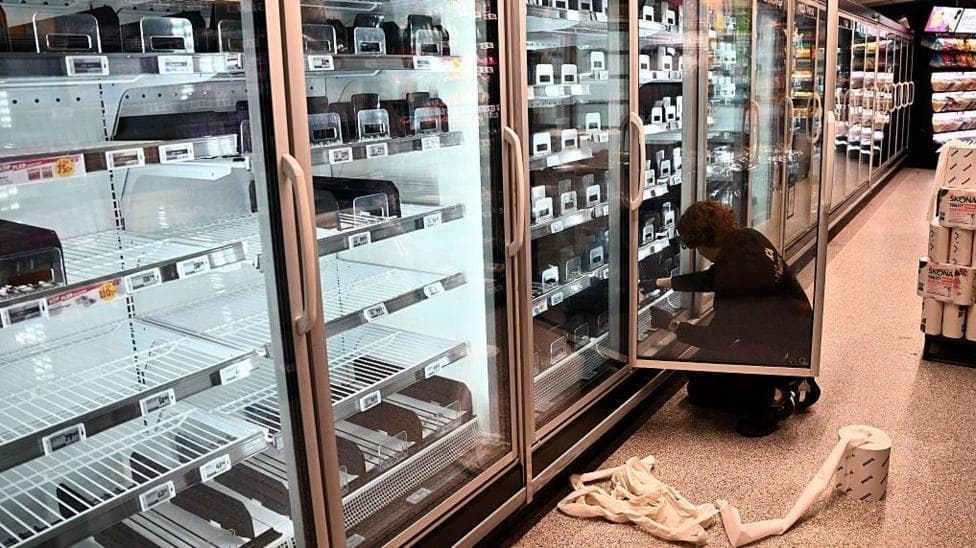
In Belgium, Euronews estimated approximately €100,000 worth of food was discarded across affected locations. At a Delhaize branch in Hoeilaart, just outside Brussels, frozen pizzas and ice cream were among mountains of food scrapped, with that single store estimating damage costs exceeding €100,000 (£83,500). Overall, food losses across all affected countries are estimated in the tens of millions of euros.
How did the attack work?
The attack operated by remotely altering freezer and refrigerator settings to dangerously high temperatures. According to NBC News, Sabcobel CEO Stephan Moelans said attackers switched refrigeration evaporators into defrost mode; technicians began disconnecting affected installations at about 1 a.m. Delhaize notified store managers by text message at around 4 a.m., and some branches deployed refrigerated lorries to preserve remaining inventory while disconnecting refrigeration systems from internet connections.
How did retailers respond?
Delhaize, one of Belgium's largest supermarket chains, described the incident as a "computer incident" that occurred overnight at 40 shops. Carrefour stated it was "currently analysing" the breach at 15 of its Belgian locations. A spokesperson for ICA in Sweden confirmed the attack had targeted a "small number of ICA stores operating outside ICA's central network" and said the company was "currently supporting the affected stores in managing the situation."
The ICA branch in Sjöbo announced the breach on social media, stating:
Our refrigerators and freezers have been hacked overnight and they have set the temperature to 50 degrees.The store subsequently reopened to customers after addressing the issue.
Mathieu Tilman, a manager at a Delhaize supermarket in Belgium, expressed shock at the attack: "I don't even understand how anyone could do this... How can we end up throwing away so much food? I find it truly distressing. In moments like these, you just feel like quitting your job."
Musgrave said it was investigating the incident with refrigeration-equipment suppliers and cybersecurity specialists to resolve the issue and restore normal operations, though no scheduled completion date was provided.
What technical measures are being taken?
According to refrigeration specialist Sabcobel, at least 20 Belgian refrigeration units required physical modifications to prevent future breaches. The company's chief executive stated that secure internet connections represent an interim protective measure, but hardware-level changes are necessary for comprehensive security. Some affected units reportedly used Danfoss technology also involved in the French incidents. According to CBC News, Danfoss said those earlier units had outdated firmware or had reached end of life without security updates. In August, cybersecurity firm Claroty warned that vulnerabilities in Danfoss refrigeration systems could allow remote access and temperature changes; Danfoss had released a patch and urged customers to install it.
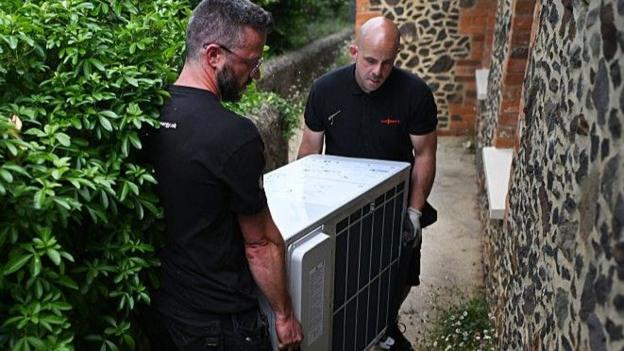
In the UK, the National Cyber Security Centre has warned British retailers to update the software on fridge temperature controls.
What are the broader security concerns?
Dr Richard Horne told the BBC that the attacks pointed to an urgent need for organisations and businesses to ensure the technology underpinning a whole range of applications was secure and up-to-date. "That technology base we rely on as a society has not been invested on to the extent it needs to be," Horne said, noting many firms had extended systems beyond their end of life, not upgraded them or kept them in secure compartments that are disconnected from the internet.
Such actions can create vulnerabilities that many cyber-security experts say amounts to low-hanging fruit for hackers, and can be easily exploited. But the UK's cyber chief said that they could be found and exploited more quickly and easily via "AI in the hands of our adversaries." He urged all organisations to look at what they rely on and invest in renewal, while acknowledging that "at the end of the day, it's your business. It's your charity. It's your life. You need to make the choice and choose wisely."
The EU's food and agriculture commissioner, Christophe Hansen, said the bloc was taking the incidents very seriously and warned of further disruption in the future. Commission spokesman Thomas Regnier stated: "These incidents of course show once again how cyber-attacks can disrupt essential services and affect citizens' daily lives. These are not isolated incidents and of course we have to be collectively resilient and prepared for such cyber incidents."
What happens next?
The NCSC said it was working with European counterparts to understand the incident. Federal prosecutors in Belgium have opened an investigation. Dr Horne told the BBC it was still "too early to say" who was behind the hacks, and no public deadline or scheduled decision has been reported regarding the investigation's completion. The agency has also warned that the country was likely to suffer an AI-powered cyber-attack on critical national infrastructure within two years.
Key Facts
- More than 115 stores across at least 10 European countries—Belgium, Estonia, Finland, Ireland, Italy, Luxembourg, the Netherlands, Portugal, Germany and Sweden—were affected, with the UK also reporting a "couple of instances" of exploitation
- Freezer temperatures were remotely set to 50°C (122°F), destroying perishable inventory with food losses estimated in the tens of millions of euros across all affected countries
- Attackers switched refrigeration evaporators into defrost mode; Delhaize disconnected refrigeration systems from internet connections and deployed refrigerated lorries to preserve stock
- The attack follows a similar breach on French supermarkets in October 2026 using identical temperature-manipulation tactics, with some units using Danfoss technology that had outdated firmware or had reached end of life without security updates
- The attacker's identity remains unknown; federal prosecutors in Belgium have opened an investigation, the NCSC is working with European counterparts, and the EU has warned of a deliberate attempt to disrupt the food supply chain