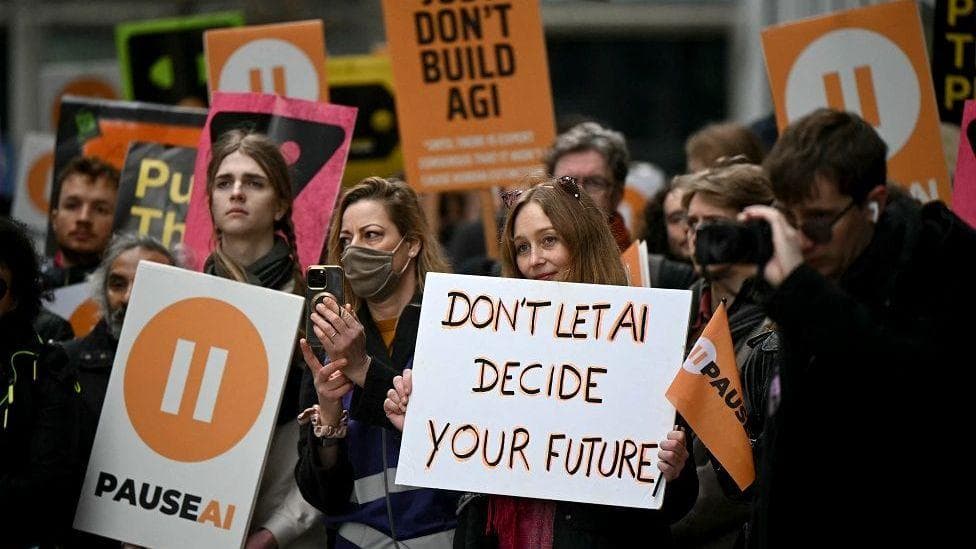
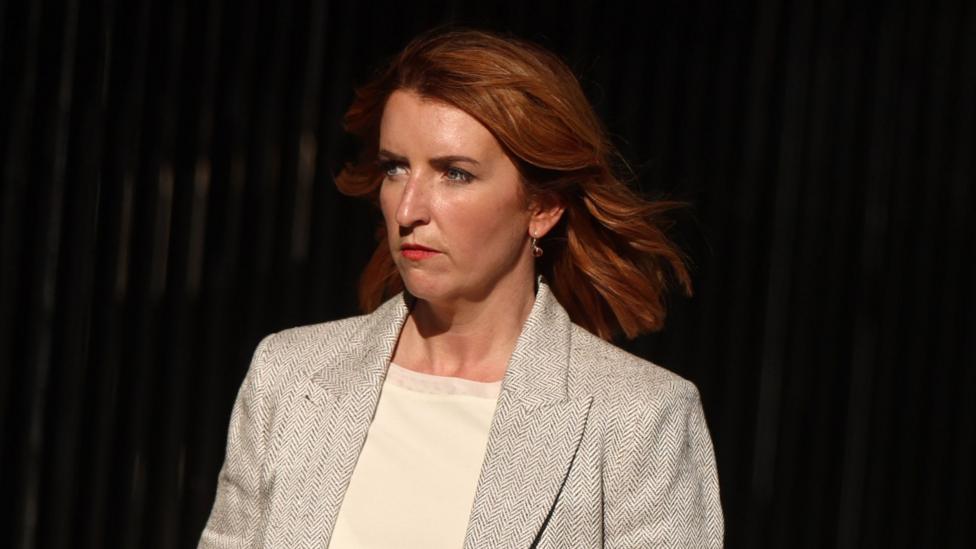
The UK government must "heed the warnings" of those developing artificial intelligence technology, according to a senior minister set to address growing public concern about AI safety at the TUC congress on Tuesday.
First Secretary of State Louise Haigh will use her speech to acknowledge both the risks and potential benefits of the technology, while signalling the government's commitment to working with international partners to protect public safety and national security.
The intervention comes as anxiety about AI has intensified following recent statements from technology executives and former employees warning of potential dangers. Prime Minister Andy Burnham welcomed this discussion on Monday, with his spokesperson noting: "It's a good thing that the companies developing the most advanced AI systems are now talking openly about the risks as well as the opportunities."
Haigh is expected to emphasise AI's transformative potential, saying: "AI has enormous potential to transform our public services, make our businesses stronger and deliver new scientific breakthroughs." However, she will also stress the need for careful oversight and international cooperation on safety standards.
What are the specific concerns about AI risks?
Concerns about artificial intelligence posing existential threats have grown sharply following warnings from prominent researchers in the field. Evan Hubinger, a researcher at Anthropic, stated he believes there is greater than a 10% probability that AI could "kill all humans" within the next decade, a claim that has significantly amplified public debate around the technology's dangers.
Jacob Coxon, a former Anthropic employee, went further in his warnings to the media, saying: "If we don't slow down at the current rate of progress, there is a strong chance that we could all die in the immediate future." These statements have prompted calls for more cautious development practices.
Dario Amodei, chief executive of Anthropic, has called for the pace of development on AI models such as Claude and ChatGPT to slow down and be closely monitored. Amodei characterised the risks as "serious" and argued that companies and governments require time to address them. His position has been supported by Sam Altman of OpenAI and Elon Musk.
Not all voices in the technology sector share these concerns. Some industry figures have suggested that fears about AI destroying humanity are exaggerated or may be deliberately amplified to generate publicity.
What proposals exist to control dangerous AI?
One potential safeguard that has been proposed is an AI "kill switch" mechanism to shut down systems that become too dangerous. Jack Clark, one of seven founders of Anthropic, told the media that "most labs have different ways of being able to pull the plug", including his own company, though he suggested lawmakers may need to enforce such measures by law.
However, the UK government has rejected the concept of a mandatory kill switch for controlling AI systems. A Cabinet Office spokesperson stated that the UK "cannot simply turn AI off", explaining that "blocking access to models in the UK would not prevent them being developed or misused elsewhere." This position contrasts with calls from a cross-party group of UK parliamentarians for AI kill switches to be required by law following recent incidents involving rogue AI systems.

What is Parliament's response to AI risks?
MPs and Lords are seeking new legislation to address AI-related threats to human rights. A parliamentary report found that the technology has been responsible for numerous human rights abuses. Labour MP and committee chair Alex Sobel stated: "Nowhere in the world, including the UK, has a current legislative and regulatory approach to AI that is fit for purpose."
More than 70 MPs and peers have taken further action, urging Prime Minister Andy Burnham to back a ban on the creation of artificial superintelligence and lead an international movement to stop it. Meanwhile, OpenAI has publicly urged UK lawmakers to rein in AI with a new regulatory framework, including an independent oversight body and mandatory transparency requirements.
A UK government spokesperson told the media it "takes the risks from advanced AI extremely seriously". "These risks cross borders, so we are working closely with the companies developing the most advanced systems, and with our allies and international partners."
What are workers' concerns about AI in the workplace?
The TUC has been pressing for workers to have a legal right to negotiate over workplace AI, including algorithmic and surveillance technologies that affect jobs or working conditions. The TUC congress resolution on AI calls for legislation requiring human involvement in high-risk decisions such as hiring and firing, plus rules on discrimination and worker consultation.
This workplace focus reflects broader concerns that AI deployment in employment decisions could disadvantage workers without their knowledge or input. The union movement's push for transparency and consultation rights is expected to feature prominently in discussions at the TUC congress.
How does the international response compare?
The UK government's cautious approach to AI regulation contrasts sharply with some other voices in the political sphere. US President Donald Trump has dismissed concerns about AI posing existential risks, describing such warnings as a "HOAX" on social media. In a more recent post, Trump claimed the AI scare was "being perpetrated by the Radical Left Dumocrats" and compared it to what he characterises as the "Global Warming Scam".
Trump, who frequently shares AI content on his platform Truth Social, has instead emphasised the technology's benefits and expressed his desire for the United States to win "the AI race". This divergence in approach between the UK and US governments reflects broader disagreements about how to balance AI innovation with safety concerns.
What happens next?
King Charles is due to host leading AI executives this week, including figures from Nvidia, Google DeepMind, OpenAI and Anthropic, to discuss principles for a technology increasingly linked to warnings about existential risk. This high-level engagement signals the seriousness with which the UK establishment is treating AI governance.
Parliamentary action is also expected to accelerate, with lawmakers continuing to push for a new AI regulatory framework. The joint committee on human rights has called for an independent AI oversight body and stronger transparency rules across the technology's life cycle, setting the stage for further legislative proposals.
The TUC congress is expected to continue pressing ministers for new workplace AI rules and consultation rights for workers, ensuring that employment concerns remain central to the broader AI safety debate.

Key Facts
- First Secretary of State Louise Haigh will address AI safety concerns at the TUC congress on Tuesday, emphasising both risks and opportunities
- Anthropic researcher Evan Hubinger has warned of a greater than 10% chance that AI could kill all humans within a decade
- The UK government has rejected proposals for a mandatory AI kill switch, arguing it would not prevent development or misuse elsewhere
- More than 70 MPs and peers have urged the Prime Minister to ban artificial superintelligence and lead an international movement against it
- The TUC is pressing for workers to have legal rights to negotiate over workplace AI and human involvement in high-risk employment decisions