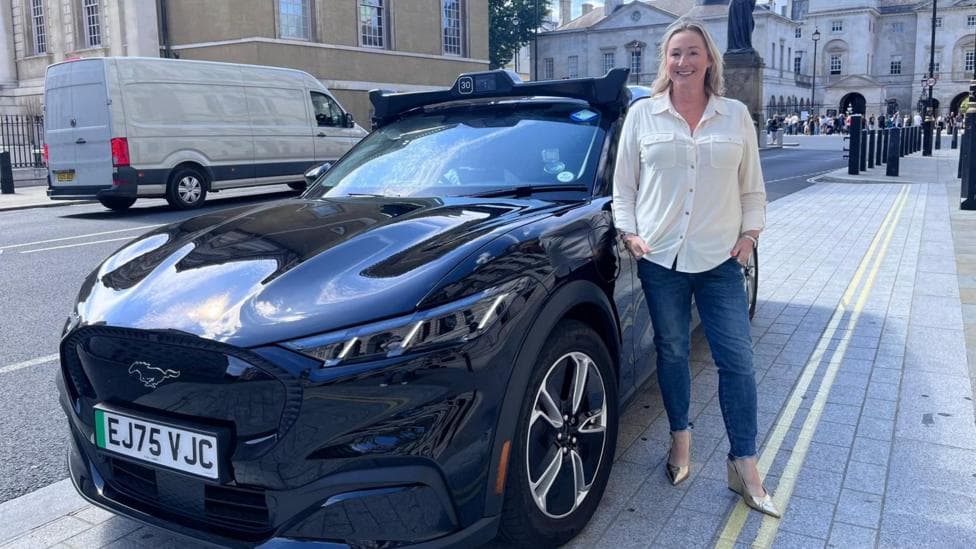
Londoners can now hail the UK's first robotaxis after Uber became the first company to operate self-driving minicabs in the capital on 5 August 2026. The service began with 15 autonomous vehicles licensed to operate in the city, each carrying a human safety driver ready to assume control if needed.
Journalist Zoe Kleinman became the first British reporter to experience the service as a customer this week. During her ride through central London, the vehicle navigated traffic and roadworks smoothly, though the safety driver did intervene once when a parked van's doors appeared to open unexpectedly.

According to , Uber and Wayve received Transport for London private hire licences allowing supervised robotaxi rides with a safety driver onboard. The service opened to sign-ups in the months prior to launch, with regulators giving the go-ahead for the trial to begin.
How much will a robotaxi ride cost?
Fares for robotaxi journeys currently match the price of standard UberX, Uber Electric, or Uber Comfort rides, with upfront pricing displayed in the app. The self-driving option only appears after a journey has been booked and a vehicle is available nearby.
What technology powers these vehicles?
The fleet consists of Ford Mustang electric vehicles equipped with driverless technology developed by Wayve, a UK-based firm using artificial intelligence to analyse real-time data from sensors mounted on the vehicle's roof and elsewhere. Unlike pre-programmed systems, the vehicles make decisions based on immediate conditions.
Wayve chief executive Alex Kendall described the development process as
the space race for our generation, while acknowledging
there were some really hard problems to solvealong the way. He added that the company had
pioneered a completely new approach to autonomous driving, making it possible to bring this to a busy and complex city like London and scale it globally.
What was the first ride actually like?
Kleinman received a 30-second safety briefing before her journey through central London's busy streets. The vehicle successfully navigated traffic lights, roadworks, and even a mini roundabout where a cyclist waved the car forward, which it obeyed.
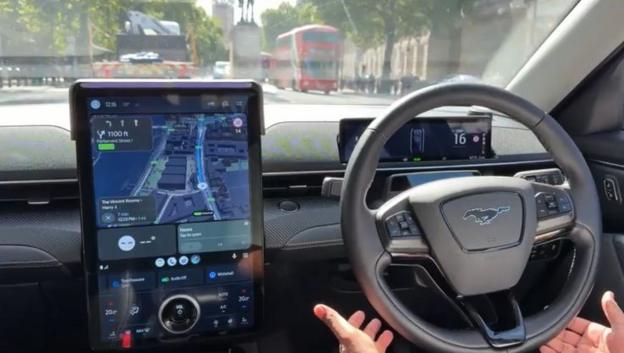
The critical moment came when the safety driver intervened as the car pulled away from a narrow side road. Back doors on a parked van beside them appeared to swing open, triggering sharp braking and an internal alarm. Wayve later stated the intervention was the driver's decision, though the company expressed confidence their AI system would have handled the situation.
Why is regulatory approval taking so long?
Earlier this year, government and industry figures suggested fully driverless cars could operate in London by the end of 2026, but this timeline has become increasingly unlikely. The Department for Transport and Transport for London are responsible for oversight and have faced criticism for moving slowly.
A Department for Transport spokesperson stated the government was
working towards a framework being put in place to ensure self-driving cars could be on the roads in 2027, though no specific date was confirmed. The department added that
these services will be introduced carefully, subject to rigorous safety testing and regulatory approval and will require local consent which can consider the potential impacts on local roads, jobs and communities.

Christina Calderator, director of transport strategy and policy at Transport for London, said the authority was
not holding up any decisionon the cars but instead
taking time to get it right. She emphasised:
This is something that's new, it's coming to London - we need to make sure it's safe.
According to reporting on TfL's authorisation, the current approval covers a one-year trial and still requires a human supervisor in each vehicle, with full unmanned operation requiring additional approvals.
What are the safety concerns?
Professor Siddartha Khastgir, head of safe autonomy at the University of Warwick's Warwick Manufacturing Group, highlighted the complexity of autonomous vehicle decision-making in urban environments. He noted that human drivers often make conscious choices that bend the rules—such as mounting the kerb to allow an ambulance through—and questioned how self-driving vehicles would handle such nuances in crowded cities like London.
David McMullen, senior organiser for the trade union GMB, called for caution in rolling out driverless cars, warning of
unprecedented levels of social and economic disruptionunless proper protections were in place. He urged Transport for London and the government to develop a plan that
protects driversand said it was
prematureto move to driverless services without one.
According to the London Assembly's investigation into autonomous passenger vehicles, scrutiny of the trials continued in 2026, with reports and hearings focused on safety and labour concerns. The Assembly said its findings and recommendations would be published in the coming weeks.
Who else is developing robotaxis in London?
Waymo, the autonomous car company owned by Google's Alphabet, has had vehicles mapping London's streets for several months. These cars currently carry a safety driver and staff members but are not yet available to the public. Unlike Uber's approach, Waymo has stated it does not intend to introduce a service that includes a human supervisor at the wheel.
Chinese tech giant Baidu is also competing to launch services in the UK. The competition between these firms is intense, with reporting earlier in 2026 that Waymo was planning a London launch later in the year.
What happens next?
Uber's global head of autonomous mobility and delivery Sarfraz Maredia said the plan was to
phase them in over a period of several years. He stated:
We always want consumers to be able to request a human ride or an autonomous vehicle, and because the market's growing, we expect that there will be human drivers on Uber London for a long time to come.
Further approvals from Transport for London and the UK government are still needed before any fully driverless, no-supervisor service can begin. Operators were targeting broader commercial rollout by the end of 2026, though regulatory timelines suggest this may slip into 2027.
Uber surveyed London-based customers via its app and found that more than 100,000 said they would choose a self-driving taxi if available, despite incidents of driverless rides malfunctioning in US cities where they already operate.