From Wind Turbines to Sustainable Products
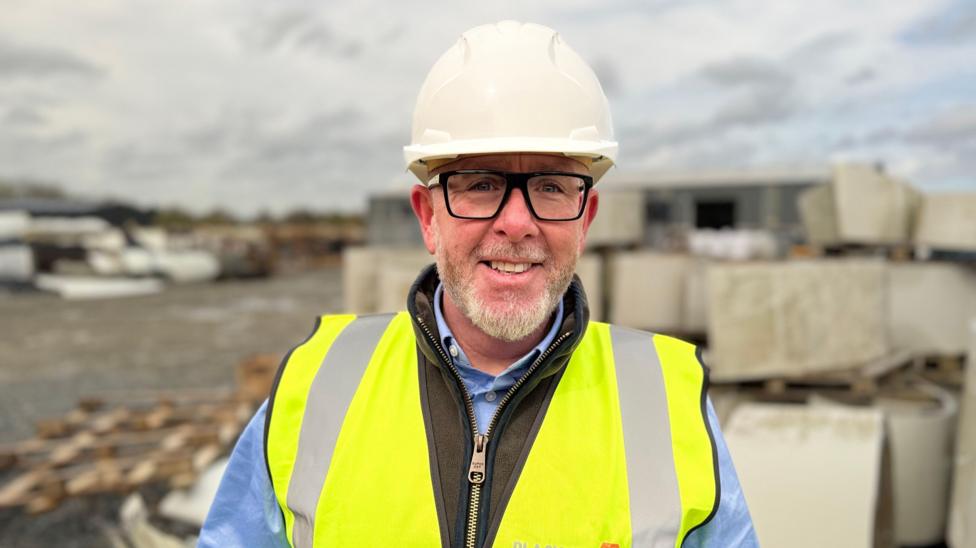
Andrew Billingsley of Lurgan-based Plaswire Ltd stated the company is "preventing the incineration of plastics" by repurposing old wind farm blades into alternative products.
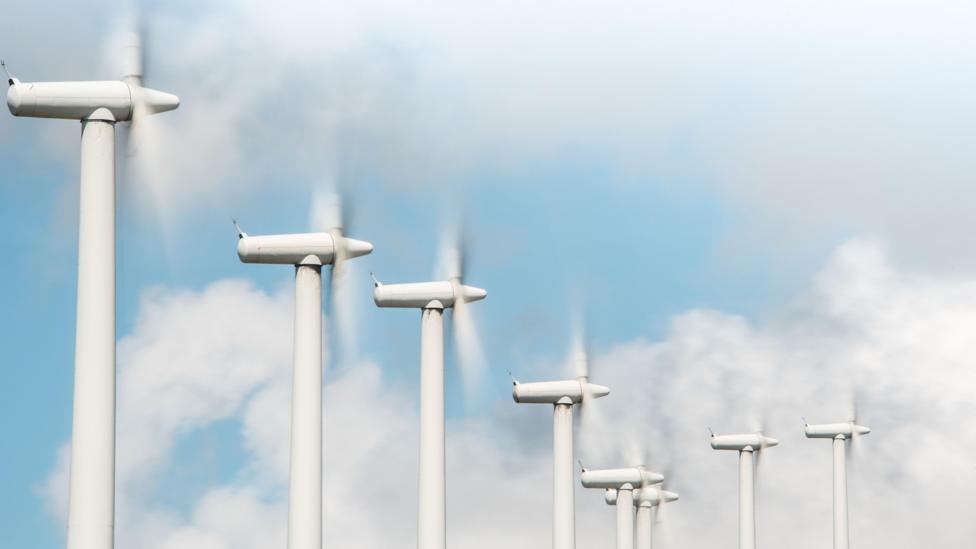
As wind turbines across the island approach the end of their operational lifespan, the wind farm industry faces the challenge of maintaining environmental sustainability when replacing these renewable energy assets.
By 2030, thousands of tonnes of wind turbine blade materials will require replacement, raising concerns about their disposal. Currently, most decommissioned blades are sent to landfill or incineration.
The Bellacorrick wind farm in County Mayo, the first commercial wind farm on the island of Ireland, was decommissioned earlier this year. Two Northern Ireland companies are collaborating to ensure the disposal of its blades is as environmentally responsible as possible.
From Blades to Building Material
Disused turbine blades can be transformed into reusable materials for manufacturing fence posts and transport pallets.
Over the next 15 years, it is estimated that more than 400 turbines in Northern Ireland will require replacement, resulting in significant quantities of currently non-recyclable materials potentially destined for landfill or incineration.
Global scientific research has focused on converting decommissioned blades into useful products. Studies conducted by Queen's University Belfast (QUB) demonstrated that these materials can be safely utilized in constructing bridges and other street furniture.
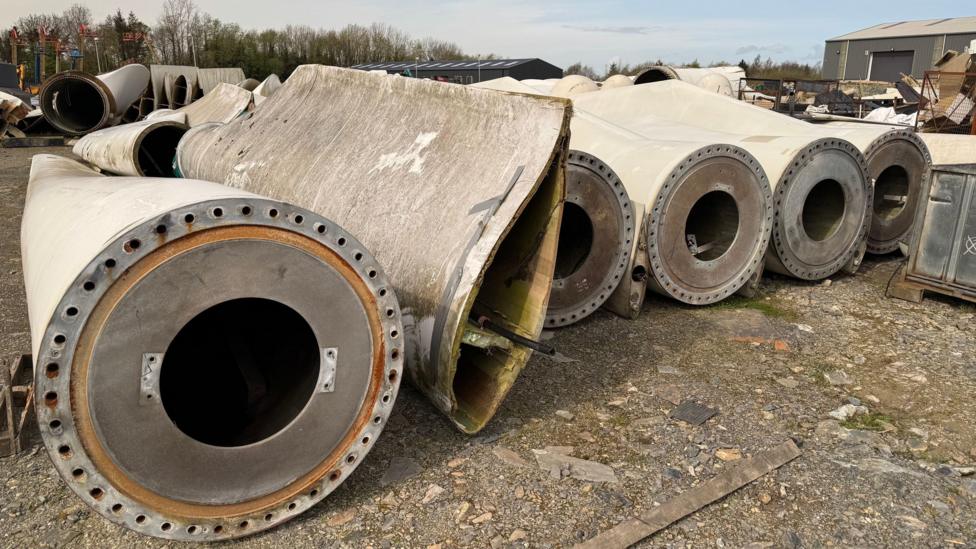
Various companies are exploring alternative solutions. At Plaswire Ltd's facility in Lurgan, County Armagh, the yard is filled with wind turbine components and other large-scale industrial materials awaiting sustainable repurposing.
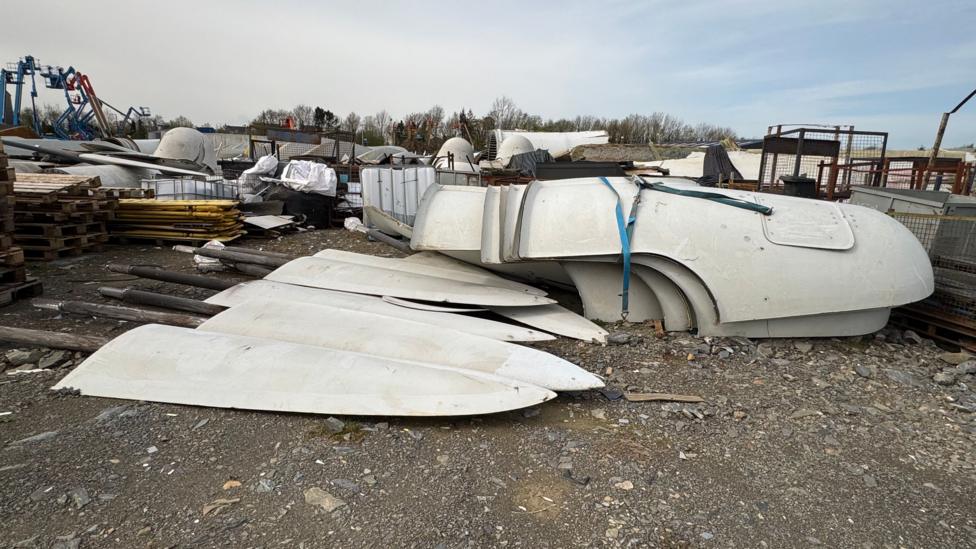
Blade Waste Issue is 'Colossal'
Andrew Billingsley, Chief Executive of Plaswire Ltd, emphasized the importance of finding sustainable solutions for blade waste to support a green, circular economy.
"The issue today is, I could say, colossal.
"The blades are big - they have been going to landfill and they've been disappearing into quarries and so forth.
"At present, there's somewhere in the region of 125,000 tonnes of blades across the world getting disposed of by one means or another, but very rarely is it done in a sustainable way."
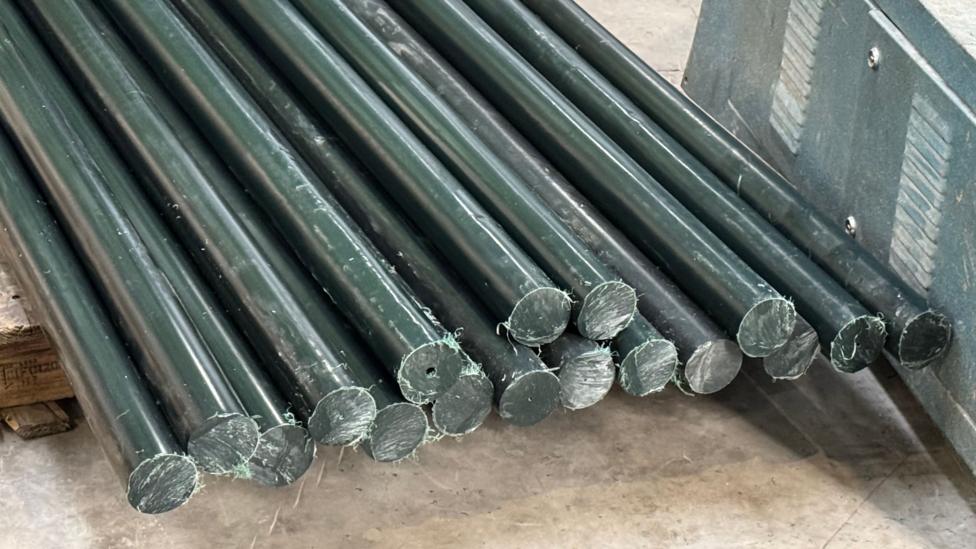
The company converts blades into a durable reusable material that serves as an alternative to timber for fence posts and reusable transport pallets.
Billingsley also suggested the material could potentially replace precast concrete and timber in some applications.
"Typically, a tonne of virgin plastic needs about three tonnes of CO2 in the manufacturing.
"We're preventing the incineration of plastics, and burning plastics produces between 2.7 and 2.9 tonnes of CO2 for every tonne burned."
However, verifying these environmental benefits remains a challenge.

Giving a 'Voice' to a Blade
Kieran Kelly, founder of the Scarva-based company Ubloquity, employs technology to "communicate" with recycled blades and other products.
Ubloquity attaches QR codes or radio frequency identification (RFID) technology to products, enabling tracking throughout their entire supply chain journey.
"Hold your phone close to the product and the product will actually transmit and tell you the story through a mobile device, through your phone, or through an RFID scanner that will tell you when it was made, who made it, what production line it came off, where it originated, and what it is in its final product," he explained.
"And to be able to give a brand and a product a story and a voice on the global stage is totally transformational."
Recycled blades can be repurposed as fencing posts with a life expectancy of at least 30 years.
Similar tracking technology is used for post-Brexit freight checks crossing the Irish Sea border.
With increasing demands for traceability, Kelly noted growing interest in technological solutions addressing sustainability challenges.
"It's extremely remarkable to take a legacy industry to show the circular economy, to promote green and to use Northern Ireland's triple market access for positive economic growth, creating jobs.
"And being able to use technology to transform basically a very, very static product from source all the way through to the end user is completely transformational and a first of its kind for the sector, but also for Northern Ireland."
Why Are Wind Farms Being Replaced?
Bigger blades enable more efficient energy production.
When Bellacorrick opened in 1992, it featured 21 turbines generating 6.5 megawatts of power, sufficient for approximately 4,500 homes annually. The wind farm was expected to operate for 25 years, a lifespan it has surpassed.
The blades measured between 46 and 53 metres at their tips. Modern turbine blades can reach heights up to 200 metres.
Larger blades allow for more efficient energy generation with fewer turbines.
The 21 turbines at Bellacorrick will be replaced by 18 larger turbines, each capable of producing more power than the entire original wind farm combined.
The site will be integrated with the adjacent Oweninny wind farm, which currently operates 60 turbines producing 192 megawatts of electricity, powering up to 140,000 homes and businesses.
Upon completion of the expansion, the addition of 18 turbines will increase capacity to power 220,000 homes and businesses.