

Despite decades of searching, scientists have found no confirmed evidence of extraterrestrial life or technology anywhere in the universe, even though the sheer number of stars and planets suggests that alien civilisations should be common. The puzzle, known as the Fermi paradox, has shaped research in radio astronomy, exoplanet science and astrobiology since the mid-20th century. New findings on distant worlds and on Mars have added fresh clues in 2025 and 2026, but none has resolved the underlying mystery of why the cosmos appears so empty.
The question traces back to a lunchtime conversation in 1950 at the Los Alamos National Laboratory, where physicist Enrico Fermi, who had helped build the atomic bomb, was talking with colleagues about flying saucers. According to accounts of the exchange, Fermi suddenly asked:
Where is everybody?
One colleague later recalled the phrasing slightly differently, remembering Fermi asking whether anyone ever wondered where everybody was. Either way, the remark captured something that had shifted in how scientists thought about the possibility of life beyond Earth.

Why did Fermi's question matter so much?
Fermi's remark turned extraterrestrial life from an idle philosophical musing into a genuine scientific puzzle. Before the mid-20th century, people speculated about life on the moon or Mars but generally accepted they would never know for sure, since contact with another world seemed impossible. That changed as rocket technology advanced and scientists began building instruments capable of detecting radio signals from stars light years away.
Since Nicolaus Copernicus demonstrated in the 16th century that Earth does not sit at the centre of the cosmos, science has increasingly treated our planet as unremarkable in cosmic terms. If Earth is statistically ordinary, logic suggests it should not be the sole home of intelligent life, particularly given that the universe is billions of years old — old enough, in principle, for civilisations far more advanced than our own to have emerged. Yet no confirmed trace of any such civilisation has ever surfaced.
That absence held true in 1950, and it still holds true today, notwithstanding a wave of publicised claims to the contrary. Interest in UFOs surged after 2017, when reports emerged that the US military held records of pilots encountering unidentified aircraft. Aliens have since become a mainstream topic, and the House of Representatives has held hearings on what officials now call unidentified anomalous phenomena, treating them as a potential national security concern. Even so, the grainy military videos that fuelled this attention have not been followed by clear imagery of non-human craft, echoing earlier UFO sighting waves that likewise produced no unambiguous proof. For most scientists, the deeper puzzle is not the persistence of these sightings but the total absence of confirmed extraterrestrial signals.
How did the search for alien radio signals begin?
The first rigorous attempt to detect radio transmissions from alien civilisations came in 1960, when astronomer Frank Drake launched what he called Project Ozma. Working from a telescope at the National Radio Astronomy Observatory in West Virginia, Drake targeted a specific point on the electromagnetic spectrum: 1420 MHz, the so-called hydrogen line, emitted by hydrogen atoms.
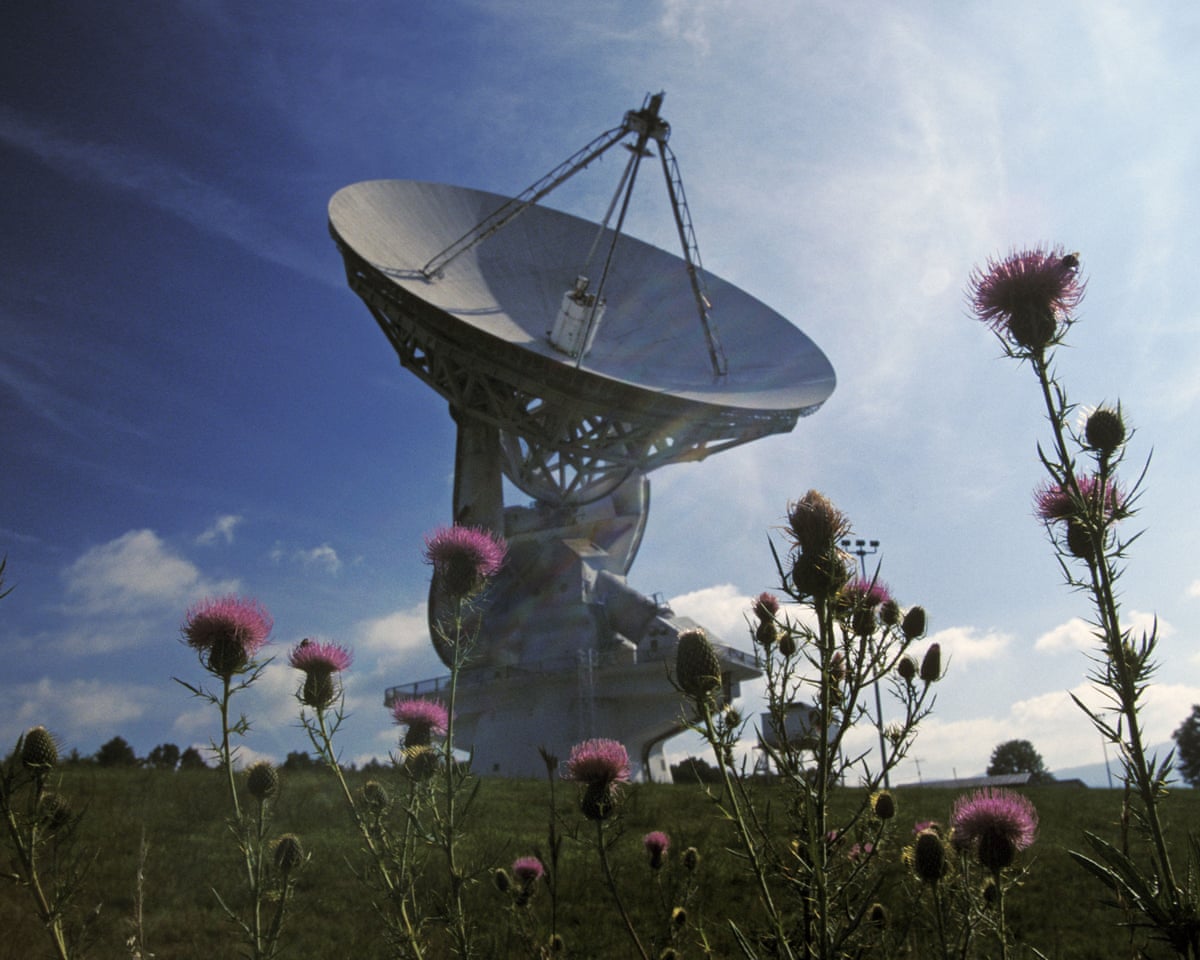
Because hydrogen is so plentiful throughout the universe, this frequency is relatively easy for radio telescopes to pick up. Astronomers Giuseppe Cocconi and Philip Morrison argued in a 1959 paper that any technologically capable civilisation would likely discover the hydrogen line early in its development of radio astronomy, just as humans had. They reasoned that a civilisation hoping to signal its presence to cosmic neighbours would therefore be likely to transmit at that frequency. Despite spending 150 hours monitoring two sun-like stars, Project Ozma detected nothing unusual there.
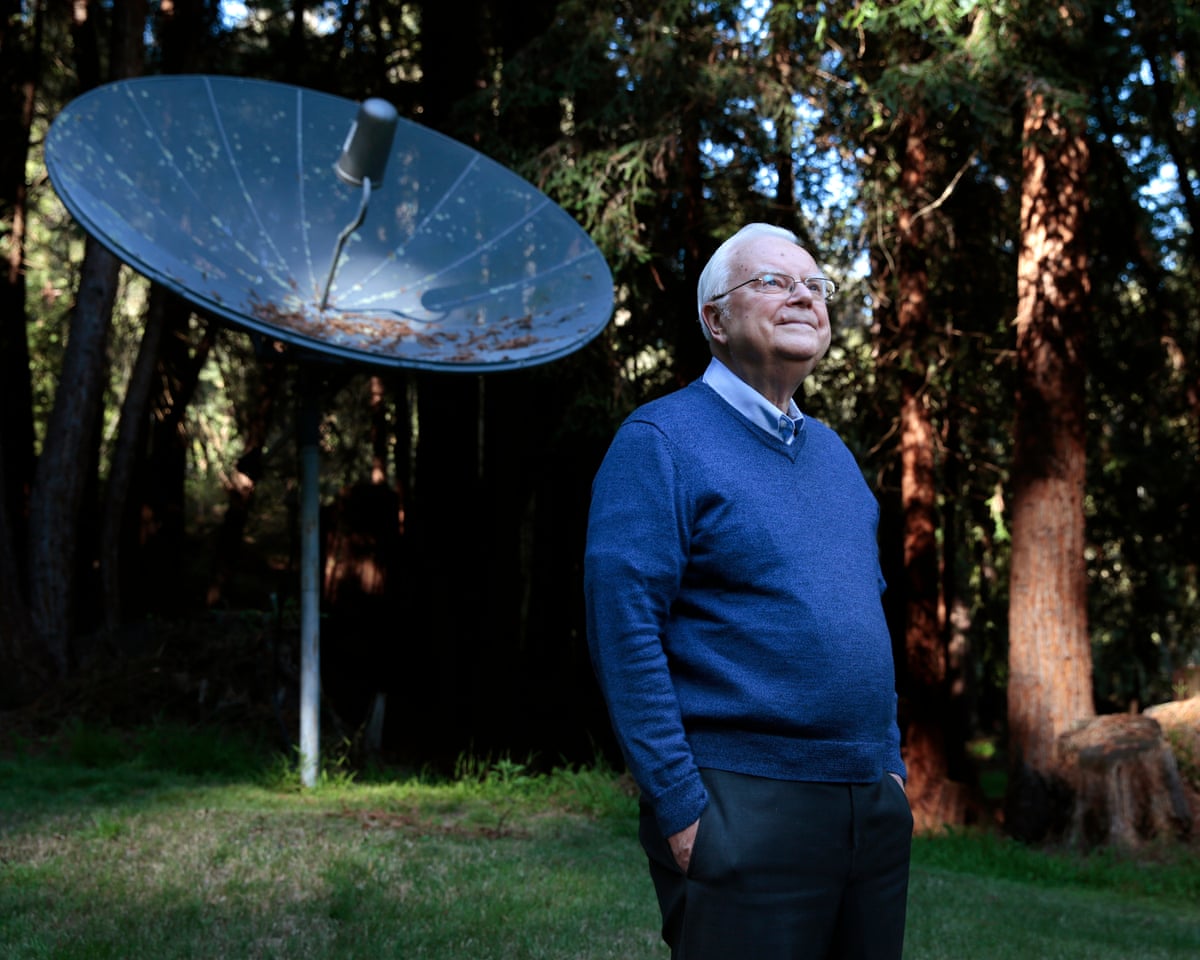
In 1971, a panel of experts convened to determine the most effective strategies for detecting extraterrestrial intelligence, publishing their findings the following year as the Project Cyclops report. That document has functioned as something like a foundational text for the search for extraterrestrial intelligence, commonly abbreviated as Seti, ever since. It proposed building a vast array described as
an 'orchard' of antennas 10km to 10 miles in diameter and containing 1,000 to perhaps 2,500 antennas
Such a system, the report claimed, could scan the sky roughly 200,000 times faster than Ozma had managed. The projected cost ran from $10bn to $25bn — equivalent to roughly $77bn to $192bn today, putting it on a similar financial scale to the Apollo moon programme. The array was never built, and in 1993 Congress cut off Nasa's modest Seti funding altogether. Since then, American Seti work has relied on private money, notably from Microsoft co-founder Paul Allen and from a Soviet-born entrepreneur. Modern computing has made today's searches vastly more capable than those of the 1970s, capable of scanning millions of radio channels across tens of thousands of galaxies. The outcome, however, remains unchanged: no artificial signal attributable to an alien civilisation has ever been confirmed.
Some in the field argue this proves little. Seti Institute astronomer Seth Shostak has written that the project's
failure is tempered by the fact that the number of star systems sampled is still quite small
Astronomer Jill Tarter, a long-standing leader in the field, illustrated the scale problem in 2010 by comparing the search to scooping a single glass from the ocean to check whether it contains fish. It remains possible that a genuine alien signal could be detected at any moment, but after more than 65 years of listening, such a discovery remains just as hypothetical as a landed spacecraft. There is no evidence anyone out there is trying to reach us — and no confirmed evidence that anyone is out there at all. That absence, more than any UFO sighting, is what troubles researchers who assumed Earth could not be unique.
Recent research suggests part of the explanation could be technical rather than existential. According to earlier Seti-focused research, disturbances in space weather may distort or scatter alien radio transmissions en route to Earth, meaning that signals could exist without ever being detected in a usable form — a reminder that a silent sky does not necessarily mean an empty one.
What is the Drake equation, and what has changed since 1961?
A year after Ozma's null result, Drake gathered a dozen scientists in October 1961 to discuss Seti's future. To frame the discussion, he devised a formula estimating how many civilisations in the Milky Way might currently be broadcasting radio signals. His calculation rested on seven variables, including questions such as
How many planets in an average system are capable of supporting life?
and
On planets where life exists, how often does an intelligent species like humanity evolve?
Multiplying these variables together yields an estimate of potential Seti targets within the galaxy, a formula now known as the Drake equation. In 1961 none of the seven values could be pinned down with any confidence; Drake's rough guess put the number of transmitting civilisations at around 50,000, though he treated this as speculative rather than definitive. The equation's real value lay in defining a research agenda — a checklist of questions astronomers could work toward answering as instruments improved.

Progress on the first variable, the rate of new star formation in the Milky Way, has been substantial. Current estimates put it at 10 to 20 new stars annually, a much slower pace than in the galaxy's younger, gas-rich era. The Milky Way is thought to contain around 100 billion stars, and the observable universe as a whole may hold roughly 2 trillion galaxies, implying about 100 sextillion stars in total. These figures remain subject to revision as instruments improve, but they establish a staggering starting point for the equation.
Detecting planets is far harder than detecting stars, and in 1961 nobody could answer how many stars host planets, or how many of those planets might be habitable. The situation changed once telescopes became sensitive enough to detect the faint dimming caused when a planet passes in front of its star. The first exoplanet was confirmed in 1992, followed by a second in 1995; discoveries accelerated sharply in the 2010s with dedicated space telescopes. By 2025, roughly 6,000 exoplanets had been catalogued in the Milky Way, including at least three orbiting Proxima Centauri, the star nearest our own sun. A 2012 study published in Nature estimated a minimum of 100 billion planets across the galaxy — and that figure likely understates the true total.
How do scientists judge whether a planet could support life?
Answering Drake's third variable — how many planets actually develop life — gave rise to astrobiology, a discipline built almost entirely on inference, since no confirmed example of extraterrestrial life yet exists to study directly. Astrobiologists instead study the physical conditions life requires and try to determine which distant planets might satisfy them.
Because exoplanets are too far away for surface imaging, scientists infer their size, orbital distance, likely atmosphere, temperature and, indirectly, magnetic field. Since Earth remains the only confirmed example of a life-bearing planet, exoplanets that resemble it along these dimensions are treated as the strongest candidates.
This has pushed researchers to study the outer limits of life on Earth itself. The discovery of extremophiles — organisms that survive under nearly two miles of ice or in hot springs reaching 208F (98C) — shows that life can persist in conditions once assumed to be lethal, raising the possibility that even hostile-seeming planets could harbour some form of biology. Mars, for instance, has no liquid water on its surface today, but frozen remnants of ancient oceans are thought to lie beneath it, and some scientists suspect a future probe could detect extremophile-like life there.
In 2025, researchers reported that a rock sample collected by the Perseverance rover contained vivianite and greigite, two minerals that on Earth typically form as byproducts of bacterial activity. According to a report from a national broadcaster, Nasa announced in September 2025 that mudstones examined by Perseverance contained these same minerals, strengthening the case that microbial life may once have existed on Mars billions of years ago. Nasa's own account of the mission notes that the sample, drawn from a rock called "Cheyava Falls" in Jezero Crater and referred to as "Sapphire Canyon," is considered to contain potential biosignatures, according to Nasa's science division. If verified, the discovery would carry enormous weight. As astrobiologist David Catling has written:
Even the simplest microbes native to Mars … would change the balance of probabilities that life exists elsewhere in the galaxy, for they would demonstrate that life can originate twice within one solar system.
Confirmed Martian microbes would not necessarily prove that life arose independently on two planets, however. It remains possible that life originated on one world and travelled to the other embedded in meteorite debris or dust — support for the "panspermia" theory, which holds that life began in only a handful of places in the cosmos before spreading naturally across vast stretches of time.
What makes a planet part of the "Goldilocks zone"?
On Earth, any organism more complex than bacteria depends on liquid water, which means a habitable exoplanet cannot orbit too close to its star, where heat would boil water away, or too far, where cold would freeze it solid. Planets orbiting within the temperature range that keeps water liquid are said to sit in the "Goldilocks zone," and are treated as the strongest life candidates.
The first such planet identified was Kepler-452b, spotted by the Kepler space telescope in 2015. Somewhat larger than Earth, it completes an orbit in 385 days, close to our own 365-day year.
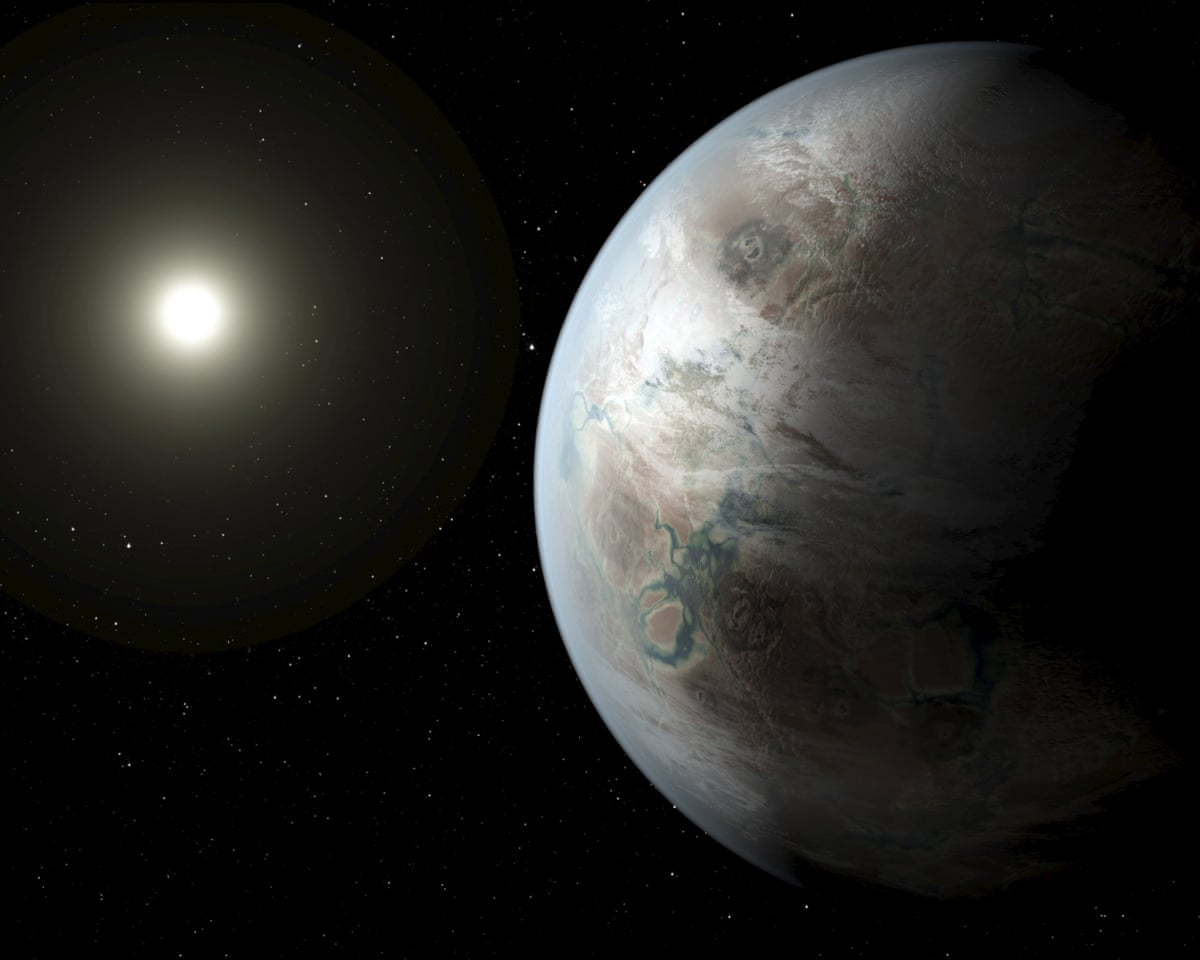
By 2025, a database maintained by the University of Puerto Rico listed 29 Earth-like exoplanets, with many more expected as detection methods improve. A 2020 study in the Astronomical Journal estimated that the Milky Way alone may contain between 300 million and 6 billion Goldilocks-zone planets.
Astronomer Sara Seager has summarised the state of play by noting that:
the first three factors … are measurable; the other four are not, and arguably never will be
Can scientists actually detect signs of life on distant worlds?
The closest researchers can get to answering whether a planet actually hosts life is to search for biosignatures — chemical traces in a planet's atmosphere that, on Earth, are strongly associated with living organisms. In 2025, a research team reported detecting dimethyl sulfide in the atmosphere of K2-18b, an exoplanet within the habitable zone of a star 124 light years away. Because that compound is produced on Earth largely by ocean plankton, its presence was floated as a possible organic signature, though other scientists quickly disputed whether the data actually confirmed the molecule's presence.
Subsequent analysis has sharpened, rather than settled, the debate. According to a report from a national broadcaster, the Cambridge-led team's latest results on K2-18b were described as reaching "three sigma, or 99.7%" confidence, with the researchers saying confirmation could plausibly arrive within one to two years. Earlier reporting on the same findings, in April 2025, described the detection of dimethyl sulfide and dimethyl disulfide as the strongest evidence yet offered for possible biological activity beyond our solar system, with the two chemical signals said to overlap in the data. Nasa notes separately that the James Webb Space Telescope, launched in 2021, is capable of detecting atmospheric mixtures such as oxygen, carbon dioxide and methane on Earth-sized exoplanets, according to Nasa's science division.
K2-18b illustrates just how many hurdles stand between detecting a planet and confirming life on it: finding an exoplanet is difficult, confirming it sits in the habitable zone is harder, and identifying a credible biosignature harder still. Even a confirmed biosignature would only indicate that life may exist, not that it does, let alone what form it takes.
Scientists are also exploring entirely new detection strategies beyond single molecules. A 2026 study described a life-detection method based on hidden statistical patterns across amino acids and fatty acids rather than any one chemical marker, arguing such patterns could be identified through statistical analysis alone, according to ScienceDaily. A related proposal argued for comparing statistical patterns across many planets simultaneously, on the theory that life could leave detectable traces spread across numerous worlds even when a single biosignature remains ambiguous, according to a separate ScienceDaily report. Separately, according to a report from Nautilus, a new search effort identified 45 exoplanets worth targeting, of which 24 were flagged as the most promising candidates for habitable surfaces.
Astrobiologist Lisa Kaltenegger has captured the paradox of this progress, writing:
We have learned that the universe is teeming with a fascinating variety of planets, more types than we could have imagined.
Yet for all this discovery, the tally of confirmed extraterrestrials found through exoplanet science matches the tally found through radio astronomy: zero. The more astronomers learn about the universe's scale, the sharper the Fermi paradox becomes.
What is the "great filter," and why might it explain the silence?
To explain the silence, researchers increasingly focus on Drake's final three variables: how often intelligent species evolve on life-bearing planets, how many of those species develop the technology to broadcast into space, and how long a broadcasting civilisation typically survives before vanishing. These questions sit outside astronomy's reach entirely — no telescope, however powerful, can answer them, because doing so would require a catalogue of civilisations across the cosmos that simply does not exist.


