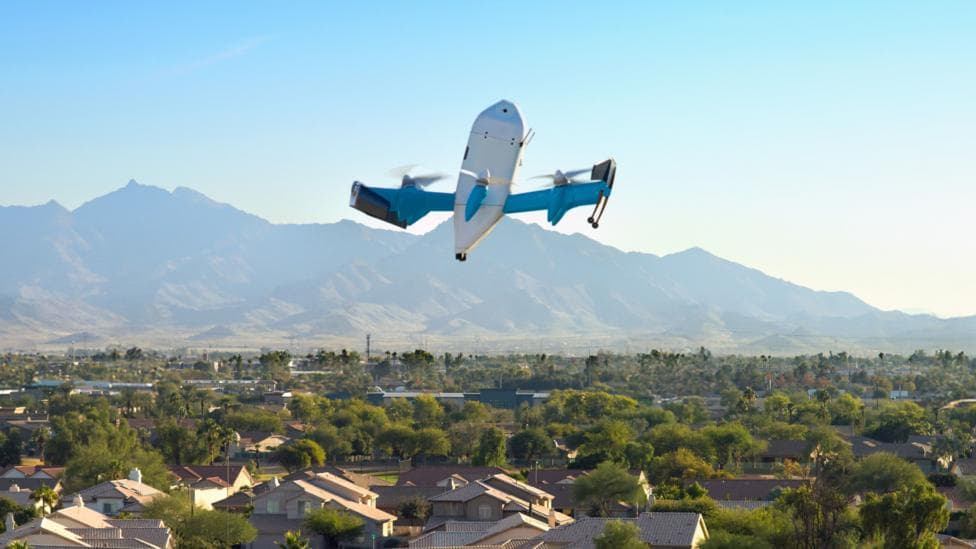
As delivery drones become a fixture in hundreds of American towns and cities, residents are increasingly frustrated by the high-pitched whine of the aircraft passing overhead. According to BBC News, the noise has prompted a growing search for quieter propeller designs and acoustic engineering solutions, with companies from Amazon to startup Greenjets working to muffle the irritating sound that disrupts daily life.
The expansion of drone delivery services represents a significant shift in how packages reach consumers. BBC News reports that Amazon Prime Air is rolling out to nearly 500 cities and towns across the United States, while also operating in the Darlington area of northern England. Walmart and other retailers are deploying their own fleets, and smaller operators now offer pizza and ice cream deliveries by air in select urban markets.
Amazon has previously applied to expand its UK drone delivery trial from a limited area to cover the entire town of Darlington after completing over 500 successful flights since February 2026, signalling the company's commitment to scaling the service internationally.
Why drone noise bothers people differently
The sound of delivery drones provokes a distinctly negative reaction from many residents, even in areas accustomed to aircraft noise. Ashley Schmidt, a 44-year-old administrative assistant living in a Dallas suburb, has abandoned her garden and stopped cycling to local parks because of the drones flying overhead.
They emit this very annoying buzz. It triggers my fight or flight response,she says, noting that
you can hear the drones on approach and you can hear them inside your home when they pass directly overhead and then you hear them as they leave.
Antonio Torija Martinez, a professor of acoustic engineering and psychoacoustics at the University of Salford, explains why drone noise stands out so sharply. The sound tends to be
particularly noticeable, even when overall sound levels are relatively low,he says. Unlike commercial aircraft, which operate at higher altitudes, drones fly low and may pass directly over homes, exposing communities that have never experienced significant aircraft noise to a new and unwelcome intrusion. Research shows that people respond most strongly to sounds they perceive as novel, intrusive or frequent—and for those not benefiting from drone deliveries, the noise carries all three qualities.
Torija Martinez warns that complaints will intensify as the sector expands.
At the moment we are seeing some of these problems localised in some areas, but… as the drone sector expands, more and more of these complaints will happen.
What regulators are doing about the noise
In the United States, the Federal Aviation Administration oversees commercial drone operations but has faced criticism for permitting noisy delivery services to operate. The FAA maintains that operators and local community leaders bear primary responsibility for addressing noise concerns. Testing conducted by the FAA and cited by Axios measured delivery noise at 50 feet as 79 decibels for Zipline, 84 for Wing, and 88 for Amazon, revealing significant variation in acoustic performance across providers.
How companies are designing quieter drones
Several technology companies are pursuing fundamentally different approaches to reducing drone noise. Greenjets, a London-based startup, has engineered a propulsion system that the company claims reduces drone noise by at least two-thirds. Rather than using exposed spinning propellers that create a high-pitched buzz by slicing through open air, Greenjets encloses the blades inside a pod that muffles sound and directs noise away from the ground. The system also employs slower rotor speeds and vibration-dampening materials to further suppress noise.
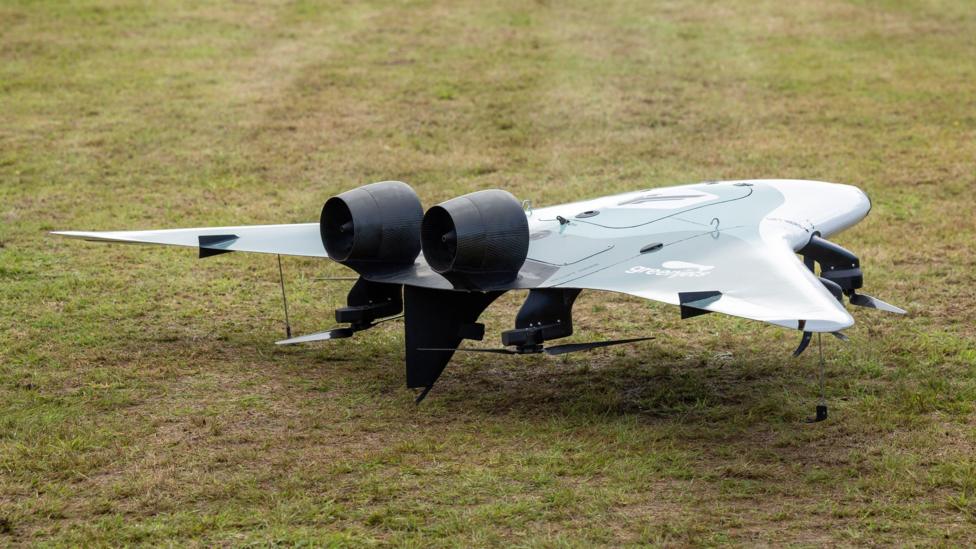
Greenjets' technology has found applications beyond residential delivery. Police and harbour security teams in Germany have used the system, and conservationists in Africa have deployed it to track poachers from above without alerting them to the aircraft's presence. Military operators also value quiet drones, though Robert Tollast, a research fellow at the Royal United Services Institute think tank in London, notes that speed rather than stealth typically takes priority for larger drones used in active conflict.
Make it faster, not less quiet, seems to be the approach,he says, referring to drone use in the Russia-Ukraine war.
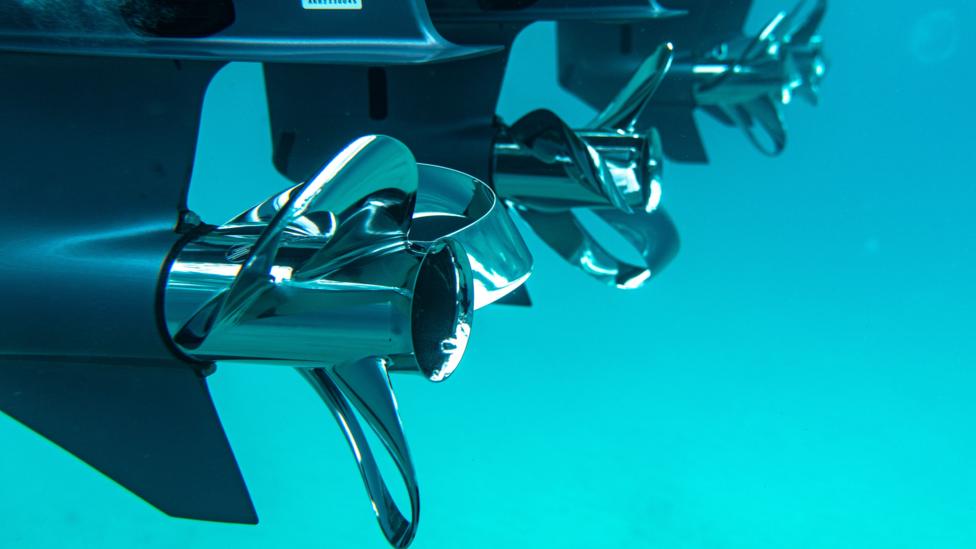
Detroit entrepreneur Greg Sharrow took a different path after facing a practical challenge in 2012: he needed to film a violinist from an unusual angle for a classical music broadcast, but any drone would be too loud. Realising that propeller tips generated most of the noise as they swept through the air, Sharrow asked himself a simple question:
what would a tipless propeller look like and how would it function?His answer was a propeller with twisted, loop-shaped blades that have no points. Testing the design proved easier in water than in the air, leading him to initially develop a quieter boat propeller, but his company, Sharrow Engineering, now focuses on
ultra-quietdrone rotors.
We have validated that the technology works in drone applications and that it is dramatically quieter,Sharrow says.
What the major delivery operators are doing
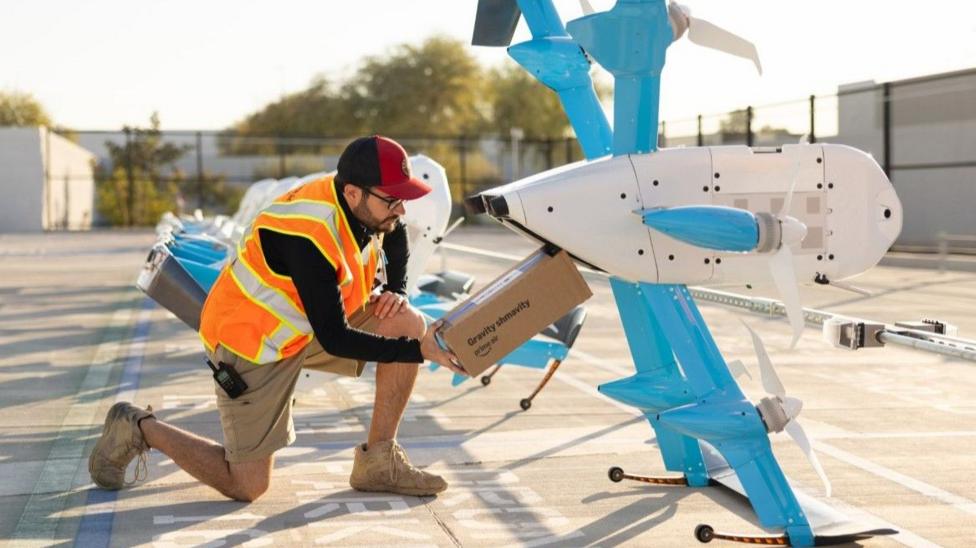
Amazon has made measurable progress on noise reduction. The company reports
measurable sound improvementsto its drones, with its latest designs using custom-designed propellers that
produce almost half the perceived sound of the prior generation, with a milder tone.Amazon's MK30 drone is half as noisy as its previous delivery drone and has double the range, according to the company. Amazon Prime Air vice president David Carbon reported that the service had delivered
hundreds of thousands of packagesin 2026, with most orders arriving about 60 minutes after checkout.
Wing, the drone maker that supplies aircraft for Walmart deliveries, has also prioritised acoustic design. The company's propellers are engineered to minimise noise, and it varies flight paths to prevent repeated overflights of any single home or neighbourhood, reducing the cumulative impact on residents.
Beyond the established players, new entrants are entering the market with noise reduction as a core design principle. DoorDash unveiled its own delivery drone and said it plans to launch in Northern California in the coming months, with the company emphasising that its aircraft weighs under 55 pounds and uses slow-spinning propellers designed with acoustics in mind. Meanwhile, Zipline announced a flight-control update on October 27, 2026, that it says reduced sound exposure per flight by 68% and peak volume by 24% compared with its 2025 fleet, based on company modelling. Zipline's design keeps its drone roughly 330 feet above the ground while lowering a delivery device, compared with about 32 feet for other delivery drone services, a difference that may contribute to lower perceived noise levels.
What residents want
For Ashley Schmidt and others living under drone flight paths, technological improvements may not be enough.
I would like them to completely stop until they figure out how their services stop being a nuisance,she says, expressing the sentiment of residents who see no acceptable level of drone noise in their neighbourhoods.
What happens next
Amazon plans to bring Prime Air to nearly 500 U.S. cities and towns by the end of 2026, significantly expanding the number of residents exposed to delivery drone noise. DoorDash's Northern California launch is expected in the coming months, though the company has not announced a specific date. As the sector grows, the tension between the convenience of rapid drone delivery and the acoustic quality of residential life will likely intensify, making the success of noise-reduction technologies crucial to the industry's long-term viability.