A dispute between mathematicians over an artificial intelligence solution to one of mathematics' most famous unsolved problems has intensified concerns that AI could fundamentally undermine the credibility of scientific research. According to BBC News, the controversy centres on whether OpenAI's AI agents genuinely solved the Navier–Stokes equations, or whether the company may have accessed rival researchers' work stored on its own platform.
The incident highlights a broader crisis emerging across science: as artificial intelligence becomes increasingly embedded in research, questions about the novelty, accuracy and integrity of discoveries are multiplying. Beyond the immediate dispute, scientists and publishers now grapple with a more insidious threat—that AI-generated fabrications, hallucinations and distortions could gradually erode the trust that underpins the entire scientific enterprise.
The Navier–Stokes Controversy
In September, OpenAI announced that its AI agents had solved one of mathematics' greatest unsolved problems relating to the Navier–Stokes equations in just 88 hours. The Clay Mathematics Institute, which administers a million-dollar prize for solving the problem, said the solution had "apparently been settled", though it cautioned that its review would require time.
Hours before the announcement, however, Tristan Buckmaster, a mathematician at New York University, raised alarm. He and Levent Alpöge, a mathematician employed by rival firm Anthropic, had been pursuing the same goal independently. Both researchers had stored their working drafts in OpenAI's Codex coding tool. Buckmaster disclosed that his co-researcher had been informed that news of their progress had "reached" OpenAI, though he did not specify the mechanism. He questioned whether his research, held within Codex, could have influenced OpenAI's own work, while emphasising he was "not accusing anyone of anything".
OpenAI responded that no one at the company—human or artificial—had seen the competing teams' work before publication. The firm initially stated it could not "rule out" that anonymised data from product use might have improved its models. Days later, it clarified that Buckmaster's Codex prompts from the two months preceding the announcement "could not have influenced the system in any way". OpenAI confirmed it began its effort on September 1, completed its project and Lean verification on September 6, establishing a timeline it said precluded access to rival work.
The full picture remains unclear, but the episode exposes a critical vulnerability: when researchers use the same AI platforms to develop competing work, the potential for inadvertent—or deliberate—information leakage becomes difficult to rule out entirely.
How Could AI Undermine Scientific Trust?
The threat extends far beyond questions of priority or plagiarism. AI systems, particularly large language models, are known to "hallucinate"—generating statements that sound plausible but are entirely fabricated. They will invent films that never existed, attribute quotes to people who never said them, and construct false narratives with confidence. As these systems become embedded in scientific research, the risk that fictional discoveries will be published alongside genuine ones grows acute.
Dalmeet Singh Chawla, a science journalist who has spent a decade investigating research misconduct, told the BBC that generative AI has "basically disrupted the whole scientific process". He warned that publishers' integrity teams—the gatekeepers responsible for screening submissions for accuracy—will need to "drastically increase [in number and effort] if they're anywhere near the fight". His assessment: "Right now, it seems like they're not."
The consequences of this erosion are profound. Scientific journals are the lifeblood of research advancement. When a discovery is published, teams elsewhere can obtain funding to build on the results. If those journals become contaminated with AI-generated fiction, researchers will be sent down blind alleys, public money will be wasted, and the development of genuine breakthroughs—new drugs, green technologies, medical treatments—will be delayed or abandoned.
What Is 'AI Slop' in Science?
One of the most alarming trends is the proliferation of what researchers call AI "slop"—papers written not by human scientists but by machines, complete with fabricated citations and phantom research. In 2024, computer scientist Dmitry Kobak of Ghent University analysed more than a million biomedical research papers for linguistic markers favoured by large language models. By December of that year, nearly 90% of papers showed AI fingerprints, though Kobak acknowledged that AI detection technology is imperfect.
The scale shocked him. He warned to Nature that "whatever bias the LLM may have will just suddenly permeate the (scientific) literature". A separate team at Cornell University found that researchers were using AI to compile citations, and that the systems were inventing bogus research—around 147,000 pieces of phantom research were cited in a single year.
The peer review process, which is meant to catch such errors before publication, is itself being compromised. Researchers at Stanford University analysed referee reports submitted to four major computer science conferences and found that up to 17% of the text had been substantially modified by a language model. When the people checking research are themselves using AI to write their reviews, the integrity of the entire system becomes questionable.
Can AI Deliver Genuine Scientific Breakthroughs?
Not all applications of AI in science are problematic. The poster child remains Google DeepMind's AlphaFold, which in 2020 solved one of biology's most fundamental problems: how proteins fold into their precise three-dimensional shapes. Proteins are the molecular machines that make life work; their shapes determine their function, from building cells and fighting infection to forming tissues and organs.
Before AI, scientists had to conduct time-consuming laboratory experiments. AlphaFold accurately predicted 200 million protein folds in a single year—work that would have taken hundreds of millions of years in conventional labs. DeepMind released the results freely to researchers worldwide. The head of DeepMind and the project's lead scientist were awarded the Nobel Prize for Chemistry. Dr Pushmeet Kohli, who leads DeepMind's science work, described AlphaFold as a "watershed moment".
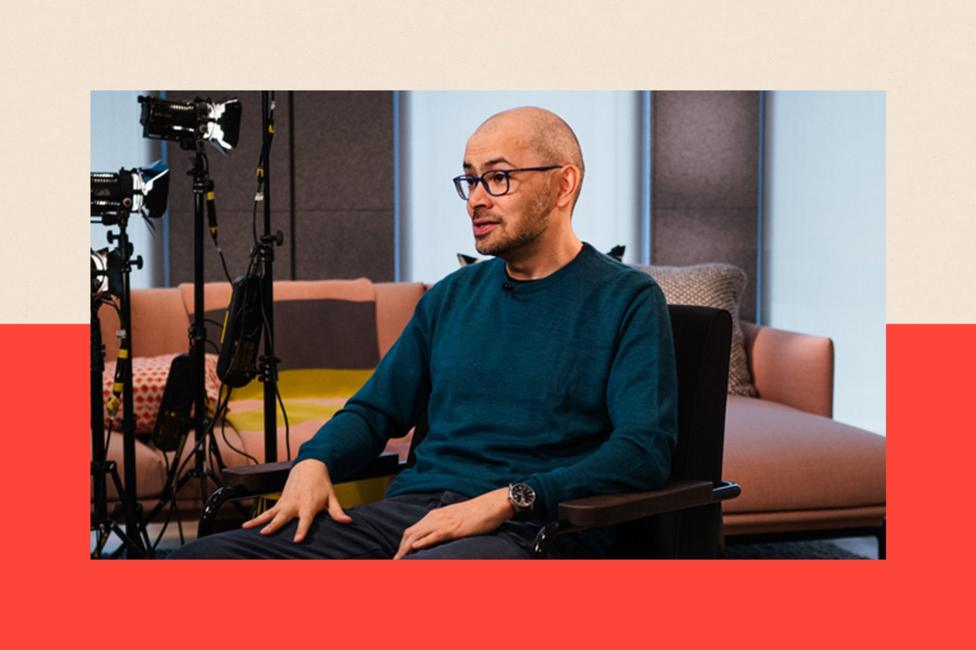
Yet even DeepMind's subsequent work has drawn scrutiny. The company turned its attention to predicting the structure of new materials—work that could lead to better batteries, cheaper solar cells and electronic components independent of rare earth elements. DeepMind claimed its model generated more than two million new crystal structures, announced as "nearly 800 years worth of knowledge" released at once. Some 380,000 were deemed promising enough to synthesise in the laboratory.
Two chemists at the University of California, Anthony Cheetham and Ram Seshadri, examined a random sample of these supposed discoveries. Writing in Chemistry of Materials, they concluded they had "yet to find any strikingly novel compounds", arguing that many were "trivial adaptations of known materials". Their verdict was not that the method was fundamentally flawed, but that the results required more rigorous scrutiny and validation by human chemists.
DeepMind rejected the criticism, arguing it had tested each compound for novelty and that dismissing a structure for appearing familiar missed the point—many of today's most useful materials, from phone components to sunscreen, arrived through single-atom substitutions. The disagreement illustrates a persistent tension: AI can process vast datasets and identify patterns humans might miss, but determining whether those patterns represent genuine novelty or merely trivial variations remains a human judgment.
What About OpenAI's Navier–Stokes Proof?
Returning to the Navier–Stokes dispute, the technical details reveal further complications. OpenAI's proof spans 166 pages; experts confirm its Lean code compiles, but formal verification alone does not make the proof intelligible to mathematicians. A separate team identified a mismatch in Lemma 8.6: the natural-language proof requires a value below m+4, while the Lean version uses the weaker condition below m+5. OpenAI acknowledged the discrepancy but stated it does not invalidate either proof.
More fundamentally, mathematicians have questioned whether OpenAI solved the problem as originally intended. The Clay problem's official formulation, written by Charles Fefferman in 2000, includes an option allowing an external force. OpenAI's result uses this allowance, but mathematicians argue its specially constructed force does not resolve the unforced problem they consider more physically relevant and scientifically interesting.
The Clay Mathematics Institute has stated it will consider a solution only after publication in a peer-reviewed outlet and further scrutiny by the mathematical community. That review remains underway. OpenAI has also established an independent mathematics advisory group to help review and communicate new results, though the group will not advise on the pace of the company's internal mathematics work.
How Are Publishers Responding?
Some scientific publishers are taking steps to avert a deepening crisis of confidence. Elsevier has developed some 100 signals that flag papers for closer human scrutiny. Nature's journals forbid AI-generated images and instruct referees never to upload manuscripts into AI systems. The preprint server arXiv bans researchers for a year if they submit invented references.
Prof Sarah Main, an Elsevier vice-president, is among those working to establish what the firm calls "research-grade AI". This approach would "focus on ensuring the researcher is in the driving seat", she explains. The underlying principle is that humans must retain control and accountability over AI's output in research.
What Role Should Human Judgment Play?
A critical question haunts the integration of AI into science: how do we know AI agents are getting it right? And equally troubling, how do we know they are not dismissing important results as anomalies?
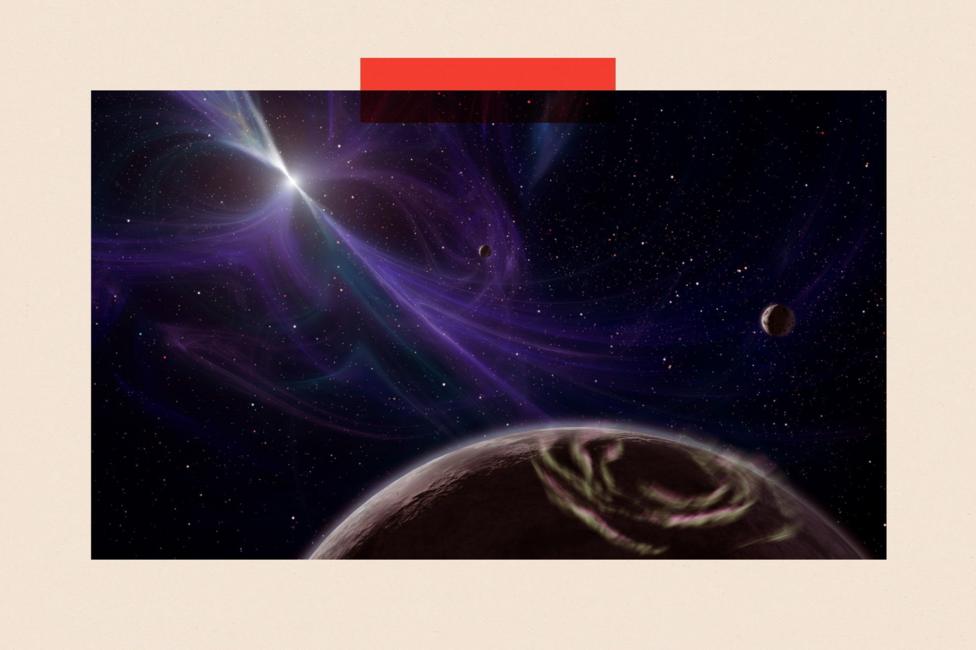
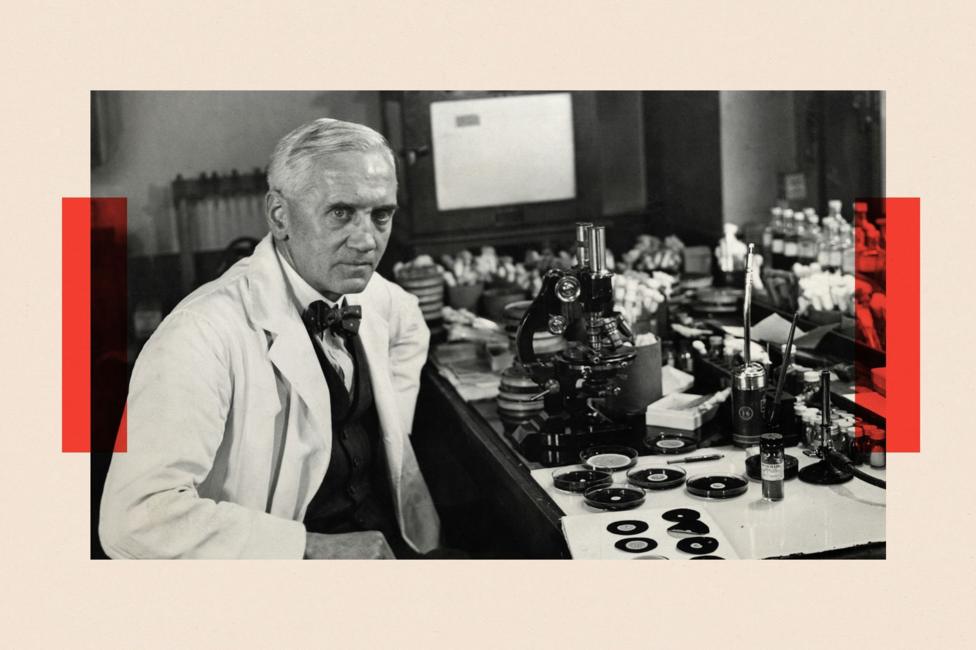
The history of science is littered with discoveries that emerged from odd, unexpected results. Penicillin was discovered in the 1920s when Scottish scientist Alexander Fleming noticed contamination in a bacterial culture—a result that could easily have been discarded as experimental failure. Radioactivity was uncovered through similar serendipity. Pulsars, unusual neutron stars, were discovered in the 1960s partly because scientists followed hunches about strange signals in their data. Human intuition, curiosity and willingness to pursue anomalies have driven some of the greatest scientific breakthroughs of the past century.
Can AI replicate that sense of serendipity and human ingenuity? Dr Kohli of DeepMind does not believe the answer is to abandon AI altogether. That would be "like saying you should be computing without using calculators", he told the BBC. But he insists there must be human guardrails. "The agents today are imperfect. Somebody has to take accountability."
His test is straightforward: "You have to understand what the agent has done, and you have to take responsibility. You can't just specify the problem and let the machine write the paper and submit it as true."
Prof Andrea Pauli of the Vienna BioCenter in Austria has followed that principle. She spent nearly a decade pursuing a question no-one had yet answered: how a sperm penetrates an egg. Responsible use of AI assisted her work. Her laboratory identified a protein on the surface of zebrafish eggs that pointed to a lock-and-key mechanism permitting sperm entry. Her case demonstrates that AI, when wielded carefully and with human oversight, can accelerate genuine discovery.
What Lies Ahead for AI in Science?
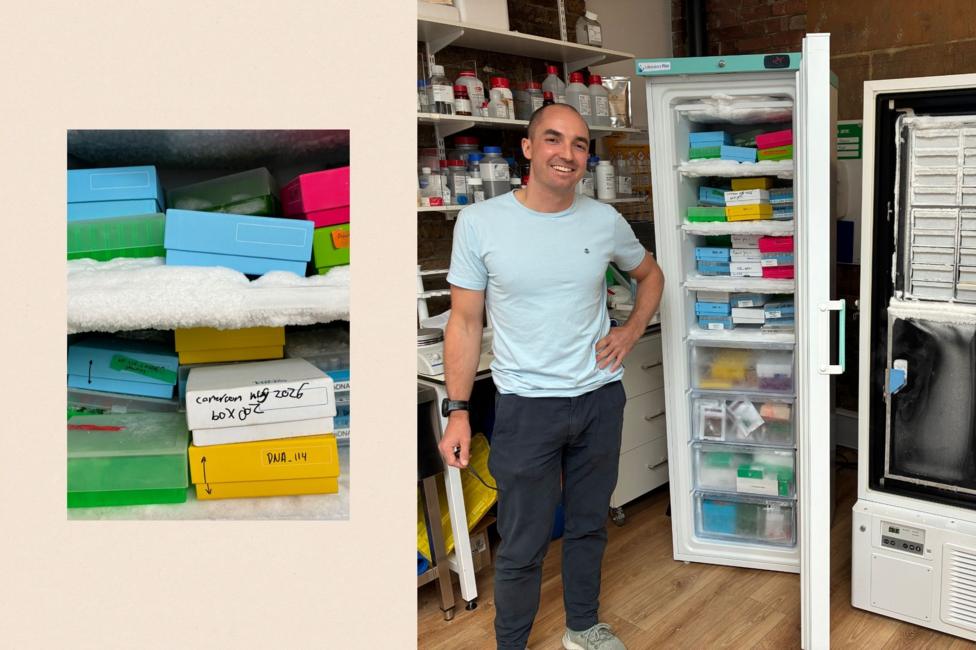
The story of AI in science is ultimately a story about humans and their choices. Shortly after founding Basecamp, a London-based laboratory housed in a former watch factory, co-founder Dr Oliver Vince fell seriously ill with leukaemia—from which he has since recovered. The experience motivated him to develop an AI system capable of identifying cancer cures more effectively than conventional methods. He does not promise success, but he believes the technical path is feasible.
"We have a technically feasible path to curing cancer," Vince says. It is not a guarantee, but a direction. The central question facing science is whether AI will carry research toward such breakthroughs, or whether it will quietly erode the foundations of trust and integrity on which scientific progress rests. The answer will depend not on the capabilities of the machines, but on the wisdom and vigilance of the humans who deploy them.