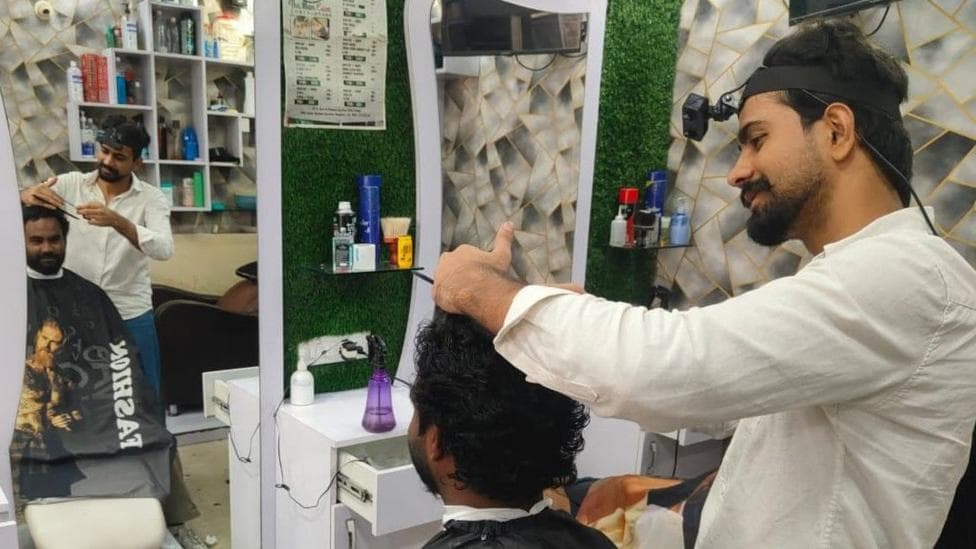
Hundreds of thousands of workers across India are strapping cameras to their heads to record their daily tasks—from hairdressing to garment-making—generating footage that trains artificial intelligence systems controlling robots globally. According to BBC News, this emerging industry pays workers between $5 and $10 for eight to ten hours of recorded labour, though compensation varies widely depending on the complexity of the recording setup and the nature of the work being documented.
The practice reflects a growing demand for real-world human activity data—what researchers call "embodied" footage—that cannot be replicated in computer simulations. Physical AI systems, which enable robots to perform tasks in unpredictable environments, require training on authentic video of human hands, fingers, wrists and the precise force application involved in everyday work. This has created a new labour market in India and across Southeast Asia and Latin America, where workers are compensated for turning their workplace activities into training material for machines.
How does the data collection process work?
Mohammed Ashim, a 22-year-old barber in Bengaluru, has been recording his haircuts and beard trims for several months. The camera mounted on his head captures only his hands and fingers; client faces are automatically blurred to protect privacy.
"The routine is simple, but you have to be disciplined about how you move. The operations team taught me that my hands always have to stay cleanly inside the frame, the lighting has to be sharp, and I can't tilt my head too abruptly while working,"Ashim explains. He wears the camera for five or six hours daily.
Companies like Rashdan Technologies act as intermediaries, collecting footage from hundreds of workers and processing it before selling it to robotics firms and AI research organisations. Shahil Baig, the company's co-founder and CEO, emphasises that worker consent and comfort are central to operations.
"We record hands, not faces, and where multi-camera rigs do capture more of the body or environment, we blur faces out. No names, no contact details, nothing that identifies them personally goes into what we hand off,"he says.
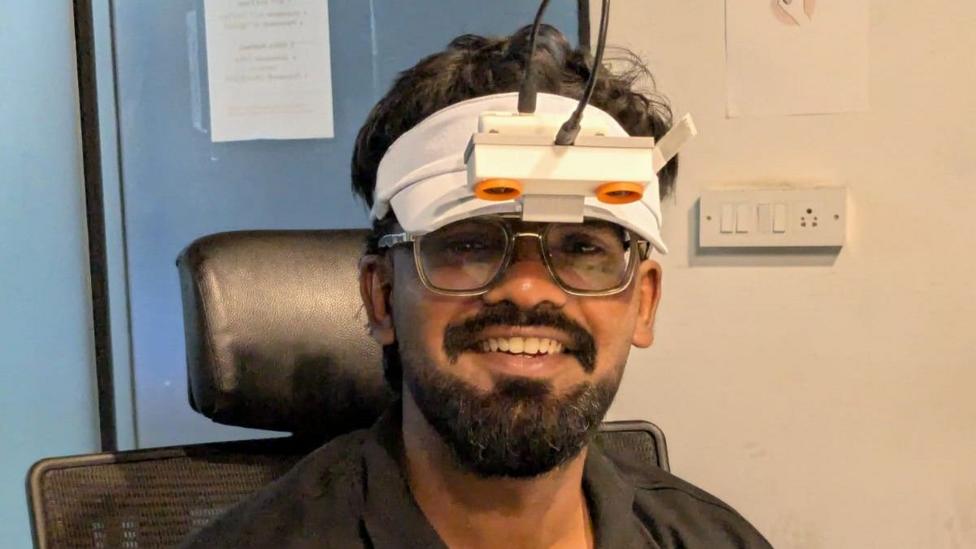
However, client demands are intensifying.
"Now clients are asking for four to six cameras rigged around a person's head to cover the entire scene, not just the hands. Getting someone to agree to one small camera is one conversation. Getting them to agree to wearing what's effectively a five-camera headset is a completely different, and harder, one. We pay more for that tier of data collection because of what we're asking of people,"Baig notes. The industry is expanding rapidly, with dozens of new competitors expected to emerge in India this year.
Why is this footage so valuable to AI companies?
Manish Agarwal, founder of Humyn Labs, explains that robots cannot learn to navigate the real world through computer simulations alone.
"Physical tasks require high-quality signals involving limb movements, fingers, wrists, elbows, shoulders and dynamic force application. For example: applying the correct grip force so a plastic bottle doesn't crumble versus a steel glass,"he says. His company currently operates with 96,000 data collectors across Latin America and Southeast Asia.
Until recently, no comprehensive archive of embodied human activity existed.
"There is no existing internet archive of embodied human activity - no dataset of a kitchen being cleaned, or a car being assembled by hands that know exactly how much force to apply. That data has to be captured from scratch, in the real world, across diverse environments,"Agarwal explains. According to a July 2026 analysis, first-person human video helps robotics models generalise to unfamiliar tasks, offering scale and variety that robot-collected data cannot match.
Humyn Labs filters thousands of hours of video supplied by its collectors, selecting the most useful content and labelling it so AI systems understand what they are observing. The company then packages this data in formats usable by clients.
"You need to source across a variety of factories, a variety of tasks, in different geographies because if you want to build deployment for US factories or US houses, you'd want environments that are a proxy for that. Residential houses in India may not be the right context for building a robotics use case for the US,"Agarwal notes.
What are workers earning from this work?
Compensation structures vary significantly across the industry. Rashdan Technologies pays $5 to $10 for eight to ten hours of work, though Human Archive, a competing data collection firm, offers a base rate of $1 per hour to participating workers. A report published in October revealed that raw first-person footage from India can fetch more than $7 an hour, while annotated footage—cleaned, structured and validated—may command $15 to $30 per hour or more, depending on quality and complexity.
For Mohammed Arman, a textile worker in Bangalore with ten years of experience in garment stitching and cutting, the additional income is essential.
"For me, it's simple. This is survival. I have a family back home in Bihar, and every rupee I send back matters. If someone offers me extra money to wear a camera while I do the exact same work I've been doing for 10 years, I'm not going to say no. It doesn't cost me anything. I'm already doing the stitching, already doing the cutting. Now I just get paid a little more for it,"he says.
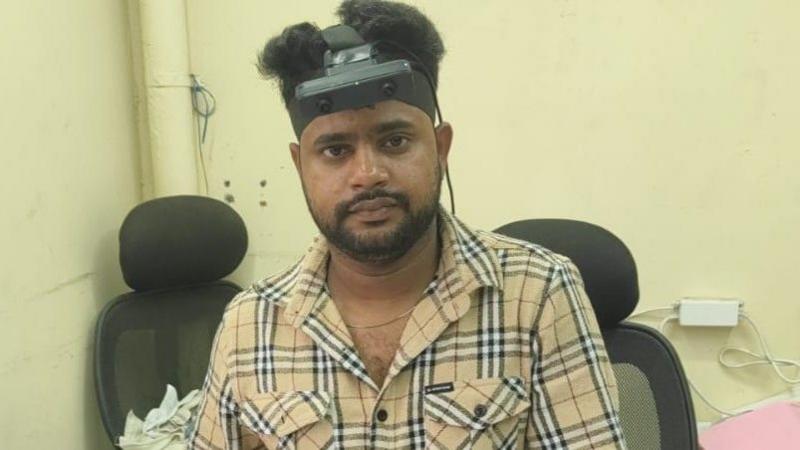
For others, the work offers flexible income alongside other employment. Jolly Arifur, a science teacher in Guntakal, Anantapur, began recording her domestic activities—scrubbing, cooking, sweeping and folding laundry—seven months ago to supplement her teaching income.
"I get paid two to three dollars per hour. If I record three to five hours a day, that's a good amount in hand it's become an extra source of income for me, on top of teaching. I'm managing both honestly, fantastically,"she says.

Are workers aware of how their footage will be used?
Transparency and informed consent remain significant concerns. A July 2026 analysis reported that workers at a Gurugram garment factory wore recording headbands for approximately one week without being informed how the footage would be used. The same report documented data collection spanning recycling, garment work, fishing and construction, noting that some workers may not fully understand the applications of their recordings.
India's Ministry of Electronics and Information Technology is currently examining consent mechanisms and data-collection practices employed by startups gathering first-person footage through home-service workers, signalling growing government scrutiny of the sector's practices.
Could AI eventually replace these workers?
Bino Paul, senior professor at the School of Management and Labour Studies at the Tata Institute of Social Sciences in Mumbai, cautions that the long-term consequences remain uncertain. For some workers, AI may become a useful tool, but robots could automate other jobs entirely.
"By the time workers realise what they have participated in, things may have gone too far,"he warns.
Paul advocates for government regulation of AI development.
"AI cannot be viewed merely as a technical system. We need to develop a socio-technical system in which ethics is upheld through human agency, ensuring that AI delivers beneficence rather than maleficence,"he argues.
The Philippines' outsourcing sector, which employs approximately 1.9 million people, is already experiencing pressure from AI, with workers reporting that they trained systems that subsequently replaced them—a cautionary precedent for India's emerging data-collection workforce.
What is India's role in the global AI supply chain?
Currently, India functions primarily as a supplier of raw footage to AI labs abroad. Manish Agarwal argues this position is unsustainable.
"India's current role in this industry is largely as a supplier of raw material - people strap on cameras, record themselves doing ordinary tasks, and that footage gets shipped off to labs abroad,"he observes.
"India can't afford to stay a footage supplier. It needs to move up the value chain: from recording raw video to owning the pipeline that turns that video into something usable - cleaning it, structuring it, validating it, and ultimately setting the standards for what counts as high-quality training data,"he argues.
As demand for such footage continues, the industry will expand. Human Archive raised $8.2 million to collect first-person footage through Indian home-service, hotel and restaurant workforces, demonstrating investor confidence in the sector's growth potential. However, Agarwal warns that as more companies compete for collection contracts, the value of raw footage collection will erode unless India develops the infrastructure and expertise to process and validate data domestically, capturing greater economic value from the work its citizens perform.