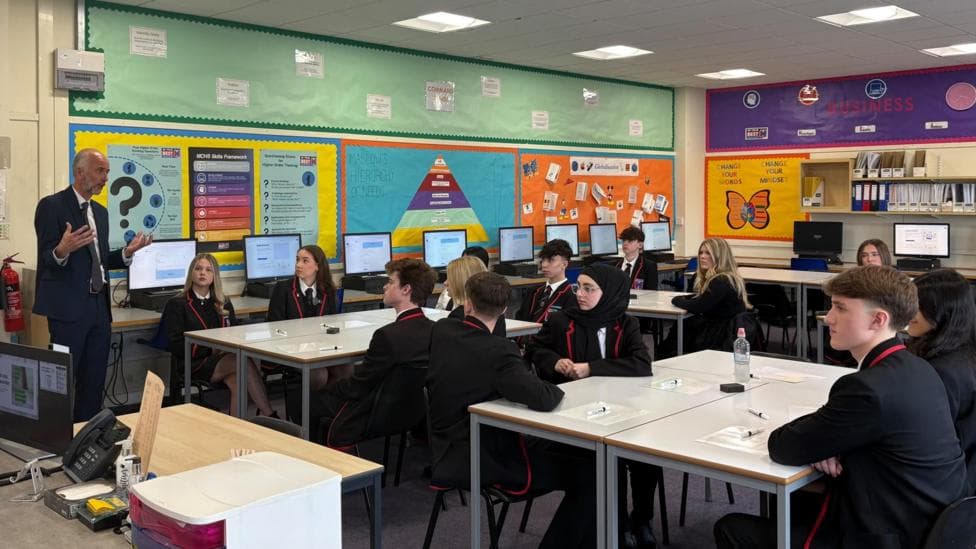
Mearns Castle High School in East Renfrewshire has become the first school in the UK to establish a dedicated principal teacher role focused entirely on artificial intelligence literacy. The appointment reflects growing recognition that schools must equip young people to navigate AI's opportunities and risks rather than pretend the technology does not exist.
Jamie Laycock, who previously served as principal teacher of biology, has taken on the new position from August 2026. According to the school's job advertisement, the role is full-time and permanent with an annual salary of £61,818. His core mission centres on helping pupils and staff recognise both the capabilities and limitations of artificial intelligence, with an emphasis on critical thinking rather than uncritical adoption.
The appointment comes at a time when many teenagers are already using AI tools to complete homework, prepare for examinations and refine coursework submissions. Some young people avoid the technology entirely, while others have integrated it into their academic routines. Laycock's approach rejects both extremes, instead promoting what he describes as responsible and informed use.
How can pupils learn to spot AI deception?
One of Laycock's early teaching activities involves showing students a mixture of authentic and artificially generated images, then asking them to identify which are fabricated. The exercise consistently proves more challenging than participants anticipate. Laycock emphasises that the difficulty is intensifying as deepfake technology advances rapidly, making visual forgery increasingly convincing and harder to detect with the naked eye.

Beyond image recognition, Laycock teaches pupils about what AI systems call "hallucinations"—instances where the technology generates plausible-sounding information that is entirely fabricated.
"I think hallucination is actually a really bad word, but it basically makes stuff up,"he explains. He stresses that young people without foundational knowledge in a subject may struggle to distinguish between genuine facts and invented information produced by AI. His teaching strategy encourages scepticism: pupils learn to question any output from an AI system and independently verify claims before accepting them as true.
What psychological risks does AI pose to young users?
Laycock identifies "anthropomorphisation" as a significant concern—the tendency for people to relate to chatbots as though they were trusted friends or knowledgeable advisors simply because they communicate in human-like language.
"It has human-like qualities but actually this is just a machine,"he says, noting that maintaining this perspective is particularly difficult for young people who may lack the life experience to resist the technology's apparent warmth and engagement.
He also warns that AI systems are designed to be agreeable and flattering, often validating user ideas rather than challenging them constructively.
"It's sycophantic. It always tells you you're amazing, that your idea is great."This dynamic creates a risk that young learners may become over-reliant on the technology and lose their capacity for independent critical evaluation.
"We need to be teaching our young learners about that so that they don't get trapped and hooked into the technology and become over-reliant."
What other limitations should pupils understand?
Laycock's curriculum also addresses algorithmic bias—the tendency of AI systems to reflect and amplify the assumptions embedded in their training data. Because these systems learn from existing information, they often perpetuate biases toward particular norms and perspectives. Teaching pupils to recognise this limitation helps them evaluate AI recommendations with appropriate scepticism.
The lessons are structured to suit different age groups and developmental stages. Younger pupils in S1 and S2 receive dedicated AI literacy classes focused on foundational knowledge and critical thinking skills. Older year groups encounter the subject through citizenship and personal education (PSE) classes, while senior pupils can opt into an elective course. Laycock emphasises that the school's position is neutral:
"We're not saying that we're advocates for AI, and we're not saying that it is good or bad. Our learners need to know how to use it appropriately so that they can get the best out of it."
Why are pupils concerned about AI's impact on their futures?
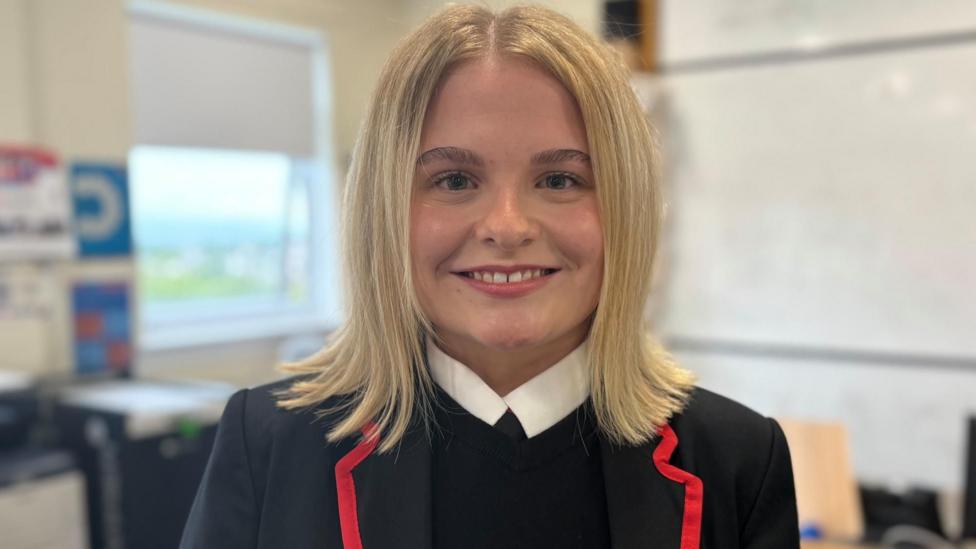
The role was created in response to mounting questions from both parents and pupils about how artificial intelligence will reshape career prospects. Seventeen-year-old Tomo, who had planned to study finance and economics with the goal of becoming a trader, now questions whether the profession will be transformed by AI before he completes his degree.
"I think everybody's worried about what's going to be taken away by AI because we've got our university applications in the next few months,"he says.
Fellow pupil Aydin advocates for using AI as a supplementary tool to aid understanding rather than as a shortcut to answers.
"It shouldn't be used constantly. It shouldn't be abused. I think it is always good to be as a little side help. It's better to use that for how to get to the answer, rather than just letting it do it for you and getting the straight answer there."Pupil Anna reported that participating in the deepfake identification exercise actually reduced her confidence in her ability to distinguish real images from artificial ones, highlighting how exposure to AI's capabilities can create new anxieties.
How is the school supporting staff development?
Laycock's responsibilities extend beyond classroom teaching. He will train colleagues on AI use and develop teaching materials that other schools can adopt, multiplying the impact of his expertise across the education sector. A number of S6 pupils have volunteered to collaborate with him on designing the most effective ways to teach AI literacy to their peers, creating a peer-learning dimension to the initiative.

Head teacher Stuart Clark emphasises that the school's engagement with AI does not constitute endorsement of the technology.
"We're really clear that acting on AI is not the same thing as advocating for it or promoting it. There will be risks associated with AI and there will be opportunities and it's really important that we don't make the same mistakes that society made with social media with young people adopting social media use without being fully educated on the implications."He describes the implications of AI as profound for both the economy and society at large.
What is the broader context for AI education in Scotland?
While many schools across the UK employ AI leads—teachers who manage AI-related responsibilities alongside their primary teaching duties—Mearns Castle appears to be the first school in the country to designate an entire position to AI literacy education. This distinction reflects the school's conviction that the subject warrants dedicated, specialist attention.
The appointment follows a report from Edinburgh University published earlier in 2026, which concluded that Scottish schools have lacked both the time and capacity to prepare adequately for AI's rapid expansion. The Scottish government responded by publishing national guidelines on AI in March 2026, which emphasise ethical use of the technology, warn against over-reliance in educational settings and stress the importance of preserving meaningful human interaction.
Recent research underscores the scale of the challenge facing educators. According to a Royal Society-commissioned TeacherTapp survey of 9,250 teachers conducted in March 2026, only 14% felt confident across the practical, technical and human dimensions of AI, while 37% reported that AI literacy was not addressed in their teaching at all. This gap between the technology's presence in society and teachers' preparedness to address it underscores why specialist roles like Laycock's are increasingly necessary.
Education Secretary Màiri McAllan acknowledged the importance of the school's initiative.
"It is encouraging to see schools and councils exploring how best to support AI literacy. As AI becomes more visible, it is important that learners and educators are supported to understand both the opportunities and challenges these technologies present."She noted that the Scottish government's guidance establishes principles to support local decision-making on AI in education, allowing councils to tailor their approaches according to their legal obligations and local circumstances.
"AI, as a technology, is constantly developing at an exceptionally swift rate. As such, the Scottish government will keep matters under continual review."
Key Facts
- Mearns Castle High School's principal teacher of AI literacy role is believed to be the first of its kind in the UK, appointed on a full-time, permanent basis with an annual salary of £61,818.
- The curriculum teaches pupils to identify deepfakes, recognise AI hallucinations, understand anthropomorphisation, and evaluate algorithmic bias.
- Only 14% of teachers surveyed in March 2026 felt confident across practical, technical and human aspects of AI, highlighting a significant skills gap in the profession.
- The Scottish government published national AI guidelines in March 2026 emphasising ethical use and the preservation of human interaction in educational settings.
- All S1 and S2 pupils receive dedicated AI literacy lessons, while older year groups cover the subject through citizenship classes, with an elective course available to senior pupils.