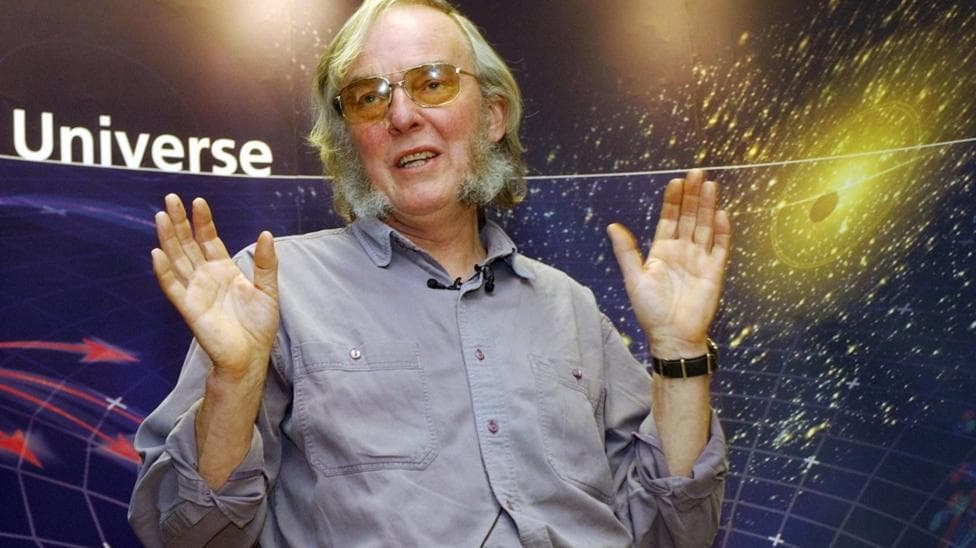
A commemorative plaque has been unveiled at the M Shed in Bristol to recognise the achievements of Professor Colin Pillinger, the Bristol-born scientist who designed and led the Beagle 2 probe—the first British and European spacecraft to successfully land on another planet. The tribute marks the historic touchdown on Mars on Christmas Day 2003 and celebrates Pillinger's pivotal role in the mission, which fundamentally changed the trajectory of British space exploration.
The plaque was unveiled on Monday, 5 October 2026, in the People Gallery at the M Shed by Pillinger's sister, Doreen Lindegaard, and his daughter, Shusanah Pillinger. The ceremony forms part of a wider national recognition: 13 plaques have been installed across the UK at organisations and companies that contributed to the mission or continue to advance space exploration.
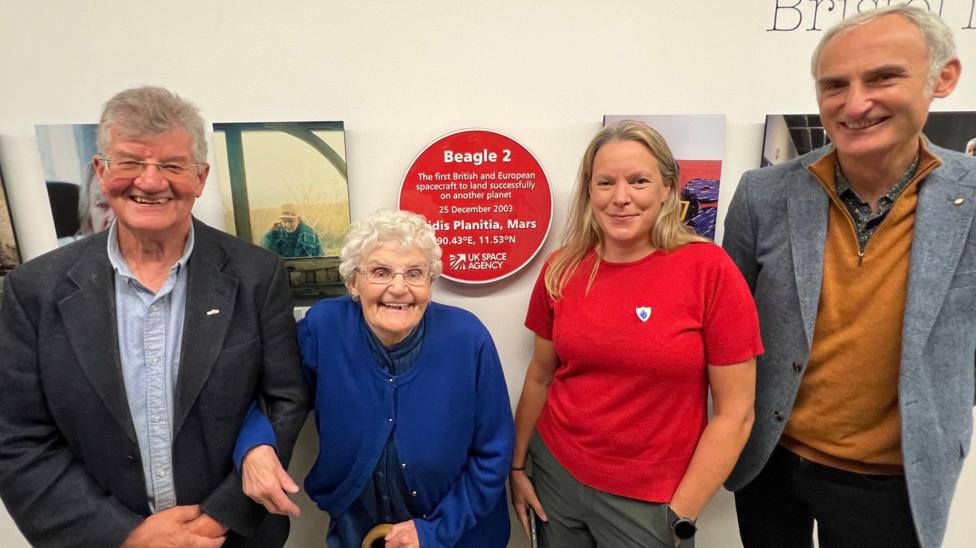
Chris Lee, former chief scientist of the UK Space Agency, worked alongside Pillinger on Beagle 2 and later became a leading figure in British space science. He described Pillinger's impact with admiration:
He was exceptional. He managed to get everybody excited about space exploration.Lee, who was part of the Filton space crew that contributed to the mission, recalled how Pillinger's approach transformed the team's perspective.
He was always very positive, one of those can-do figures. Where we would see problems, he would see solutions.
Lee explained that Pillinger approached Filton because of the site's established expertise in space engineering.
We were at the time the principal place for space exploration in the UK and Colin came to us because of our experience.
What was Beagle 2 designed to do?
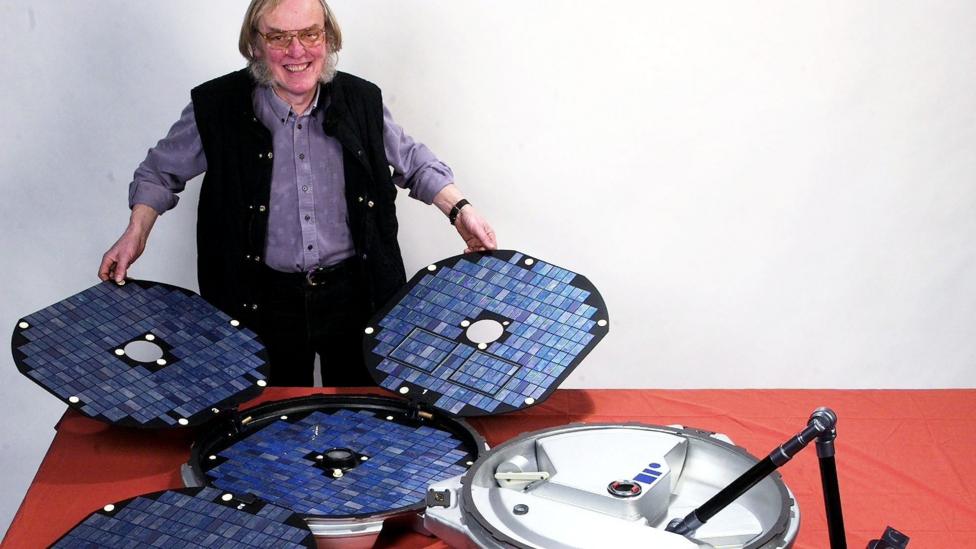
The probe was engineered to search for evidence of past or present life on Mars and to investigate the planet's water, geology and atmosphere. Its scientific instruments included a robotic arm called the Payload Adjustable Workbench and a sample-retrieval tool nicknamed "the mole," designed to burrow up to 1.5 metres into the Martian surface. This capability would have allowed researchers to access subsurface material potentially shielded from the planet's harsh radiation.
Why was the mission considered a failure?
Although Beagle 2 landed successfully on Mars, it was unable to establish communication with Earth after touchdown, which led to it being classified as a failed mission at the time. Pillinger died in 2014, before the truth about the landing emerged. In 2016, analysis using 3D modelling of orbital imagery concluded that Beagle 2 had deployed at least three, and possibly all four, of its solar panels, with an incompletely deployed panel potentially blocking the communications antenna.
An investigation by the European Space Agency identified credible possible causes for the loss of contact but found no single definitive technical failure. The inquiry noted that programme and organisational factors had increased the risk of failure during the mission.
What was Beagle 2's lasting legacy?
Despite the communication failure, Beagle 2 is regarded as a historic success for the European Space Agency and fundamentally shaped the future of British planetary exploration. Professor Mark Sims, who managed the Beagle 2 mission, emphasised its significance:
Beagle 2 started the UK down the line of being able to do planetary missions and knowing it could engineer them.
In the years following the 2003 landing, the UK made substantial contributions to major space projects, including the Rosetta comet-chaser and the James Webb Space Telescope. Bristol City Council's Head of Culture, Philip Walker, highlighted Pillinger's broader contribution:
It's great to be able to celebrate his contribution to the city.Pillinger grew up in Kingswood and became one of Bristol's most celebrated scientists.
The mission's influence continues to shape contemporary space science. The ExoMars Rover, Rosalind Franklin, is scheduled for launch in 2028 as a joint European Space Agency mission.
The rover was built in Stevenage and it will land on Mars hopefully in 2030 and look for signs of life which is what Beagle 2 was aiming to do,Sims explained, demonstrating how Pillinger's pioneering work established a template for future Mars exploration.
What happens next?
The National Space Centre unveiled one of the 13 Beagle 2 plaques on 7 June 2026 at its Lander Operation Control Centre, as part of the centre's 25th-birthday celebrations. The remaining plaques mark locations across the UK where organisations played key roles in the mission's development and success, ensuring that Pillinger's legacy and the contributions of the entire team are recognised for generations to come.
Key Facts
- Beagle 2 landed on Mars on Christmas Day 2003, making it the first British and European spacecraft to reach another planet
- The probe was unable to communicate with Earth after landing, but 2016 imagery confirmed it had landed successfully
- Thirteen plaques across the UK honour the mission and the organisations that contributed to its development
- The ExoMars Rover, Rosalind Franklin, is scheduled to launch in 2028 and will continue the search for Martian life that Beagle 2 pioneered