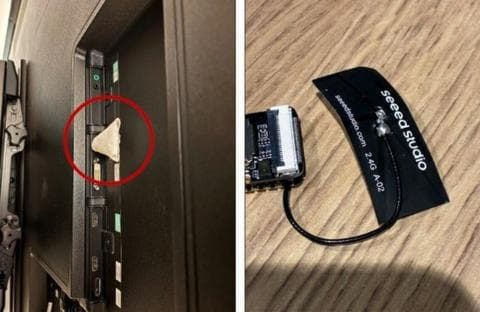
A Saudi national employed as an engineer at OpenAI faced federal charges this week after authorities discovered a concealed audio recording device hidden behind a television in one of the company's conference rooms. Abdulrahman Alfozan, 35, was arrested by the FBI and charged with using or attempting to use a device to intercept oral communications. The discovery raised questions about his motives and what he intended to do with any recordings obtained from the room.
How did the engineer plan the surveillance?
Alfozan allegedly sought assistance from artificial intelligence tools to gather information about the company's meeting spaces and to learn how to construct and install recording equipment. Between 17 August and 16 September, he reportedly posed multiple questions to a productivity AI assistant about conference room locations and scheduling, including inquiries such as "how about external partners, where would they usually meet with OpenAI at" and "can you list today's meeting in this room".
In September, according to court documents, Alfozan used a chatbot associated with his spouse to ask for instructions on building and installing a recording device and accessing it remotely. He had been employed at OpenAI for approximately one year at the time of the alleged attempt.
What was the target of the surveillance?
The conference room where the device was discovered served as a venue for discussions involving highly confidential technical, commercial and strategic information, as well as OpenAI's government engagements and commercial relationships, according to the complaint. Alfozan held no authorization to access the room or participate in meetings held there, yet surveillance footage showed him near the conference room on eight separate occasions during September.
How was the recording device discovered?
On 30 September, OpenAI staff found a concealed audio recording device positioned behind a television set, where it had been wrapped in toilet paper. A camera was subsequently installed in the conference room, and on 5 October, Alfozan was recorded entering the space and appearing to examine the area behind the television where the device had been placed.
That same day, Alfozan allegedly left an unattended bag in a separate room. When security personnel examined it, they discovered another recording device matching the first one, along with his wallet and identification. OpenAI stated in a post on social media that it had employed its own AI models to analyze the device and determine its origins.
Did the surveillance compromise OpenAI's security?
OpenAI reported that it had found no evidence that Alfozan had improperly accessed or extracted model weights, source code, or customer data. The company's statement indicated that its security measures had prevented any unauthorized data theft, though the investigation into the full scope of his activities remained ongoing.
Who is Abdulrahman Alfozan?
Alfozan had been working as an engineer at OpenAI since July 2025. According to court filings, he received his education in the United States and obtained legal permanent resident status in 2020. He was arrested by the FBI on 9 October, and OpenAI terminated his employment contract immediately following his arrest.
William Pernik, Alfozan's attorney, stated:
Like countless Americans, Mr Alfozan came to this country years ago as a young person with a dream. These allegations appear wholly out of character for him, and we will relentlessly investigate all evidence produced by the government in this case to understand what actually happened, who was responsible and any possible reasons why.
Pernik further remarked:
In the meantime, we respectfully ask everyone to withhold judgment until full facts become known. Like every one of us, Mr Alfozan is presumed innocent, and what has been made public is an accusation, not a finding of guilt.
What are the legal consequences?
If convicted, Alfozan faces a maximum penalty of five years in prison and a $250,000 (£190,000) fine, along with three years of supervised release. He made his initial appearance in federal court in California on 13 October and remains in custody according to prosecutors.
What happens next?
A detention hearing before U.S. Magistrate Judge Alex G. Tse is scheduled for 19 October to determine whether Alfozan should remain in custody while legal proceedings continue. The FBI investigation into the matter is still active, and additional details may emerge as the case progresses through the federal court system.