Artificial intelligence is reshaping how graduates approach job hunting, but a growing tension exists between using the technology as a legitimate tool and crossing into misconduct. As more jobseekers turn to AI for assistance with applications, employers face mounting pressure to manage both the volume of submissions and the authenticity of candidates' abilities.
The question of whether AI use in recruitment is acceptable has become increasingly complex. Graduates, employers and recruiters acknowledge that the technology is now widely deployed throughout the application process, yet disagreement persists about where the line between helpful assistance and unethical behaviour should be drawn.
How are jobseekers using AI in their applications?
Tom, 22, from Maidstone, graduated last year with a geography degree and applied for over 200 positions before securing a role as a restaurant manager last month. He describes the process as "exhausting" and "demoralising", with many employers failing to respond to his submissions. Without assistance from AI, he says he would not have managed the volume of applications required.
"Employers want you to put your absolute best into the application, but if I'm applying for 10 to 20 jobs in a day, the reality is you can't do that."
Tom used AI to refine his cover letters and CVs, identifying the specific terminology that automated screening systems recognise during early-stage recruitment filtering. He never deployed the technology during assessments or interviews, but he recognises the dilemma facing candidates in a saturated market.
A recently employed trainee accountant, who requested anonymity, applied for 50 graduate positions and used AI in every application. He limited his use to researching roles, improving his CV formatting and generating practice questions for video interviews. However, he acknowledges knowing others who have crossed into using the technology to complete assessments—a practice he would not consider himself.
"I know people who have applied for 100 jobs and after a while they become desperate. If they see everyone else is using AI, they think how can I compete?"
What do employers say about AI use?
This summer, the Institute of Student Employers (ISE) surveyed 155 of the UK's largest graduate employers and discovered they were becoming "more accepting" of candidates using AI during recruitment at certain stages. Writing cover letters or CVs emerged as the most commonly accepted application, followed by completing online application questions.
However, the same survey revealed a troubling trend: 92% of employers had encountered or suspected AI misconduct in the job selection process, up from 85% the previous year. The most frequent violations involved using AI as a real-time assistant during video interviews or to complete online assessments.
Stephen Isherwood, joint chief executive of the ISE, warns that the technology is "driving up the competition and pressure on students" in an already competitive graduate recruitment market. The widespread practice of submitting multiple applications simultaneously—known in the industry as "spray and pray"—has intensified this pressure.
Is the playing field level for all candidates?
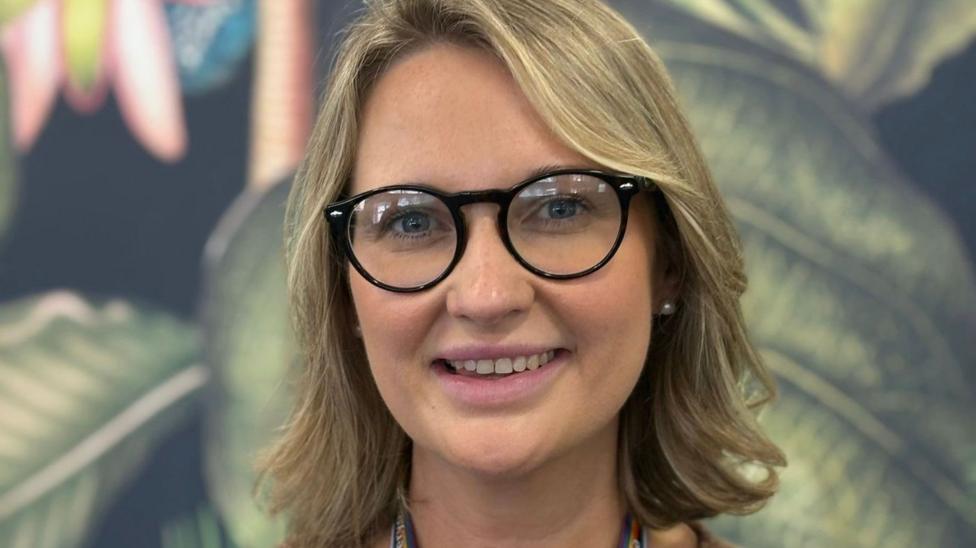
Hollie Moody, head of early careers recruitment at energy company EDF, acknowledges that she does not blame graduates for turning to AI given how "brutal" the current jobs market is. Nevertheless, she believes the trend is becoming problematic.
EDF opened its graduate recruitment scheme three weeks ago but closed it early after receiving 12,000 applications—a 10% increase compared with the previous year. Moody attributes this surge partly to AI, which she says is being deployed "a lot more freely" throughout the selection process.
"What we don't have is a level playing field, because what you'll find is that some candidates will absolutely use AI throughout the whole process, and other candidates won't."
Like many organisations, EDF has issued guidance on appropriate AI use in applications and is attempting to make its recruitment process as "AI-proof" as possible. The company reads CVs only in later hiring stages and relies on skills and behaviour-based online assessments and video interviews to evaluate candidates more thoroughly.
Despite these precautions, Moody reports that some applicants still attempt to circumvent the rules, particularly during video interviews.
"A lot of the answers [we hear] are the same. Or people might pause whilst they wait for AI to come back to them with an answer. It's almost like people are reading a script."
Tom argues that companies are being hypocritical when they discourage candidates from using AI while deploying the technology themselves to screen applications.
"That's where it feels like a weird tightrope. You can't use AI too much because otherwise you're not human. But if you don't write like an AI, you may get skipped by the AI screening."
What does the data reveal about the graduate job market?
According to the ISE, the graduate market has stabilised following a sharp decline the previous year but remains highly competitive. Graduate roles currently attract an average of 141 applications each. The 155 employers surveyed in the ISE's recruitment study received more than 1.8 million applications collectively and hired over 31,000 students, though graduate hiring fell 8% year-on-year.
Graduate vacancies have averaged 140 applications each for the past two years, the highest level recorded by ISE since it began collecting the data in 1991.
Currently, only 16% of employers surveyed are using AI to screen candidates, but more than half plan to introduce it in response to the large volumes of applications they receive. EDF does not presently use AI screening, though Moody suggests they may need to adopt it in the future.
How are employers responding to the challenge?
Employers are taking action to address the AI dilemma. According to ISE's 2025 survey, 33% of employers were redesigning selection processes because of generative AI, up from 23% the previous year, while another 46% were reviewing their processes.
However, significant gaps remain in employer preparedness. The ISE reported that 45% of employers had given applicants no guidance on appropriate AI use, and 30% said they had no approach to detecting or addressing cheating.
Moody emphasises that AI cannot replace what EDF seeks in new recruits, describing the situation as a "moral dilemma" that employers and employees will continue to navigate.
"It's about authenticity, but also personality. We want diversity of thought in the business."
What lies ahead for AI in recruitment?
The trajectory is clear: AI's role in recruitment will expand significantly. Over the next five years, 62% of employers expect to use AI in recruitment and 70% expect to increase automation in selection.
As this shift unfolds, both jobseekers and employers will face difficult questions about authenticity, fairness and the future of graduate recruitment. The challenge will be establishing clear standards that allow candidates to use AI responsibly while ensuring that hiring decisions reflect genuine capability rather than technological sophistication.