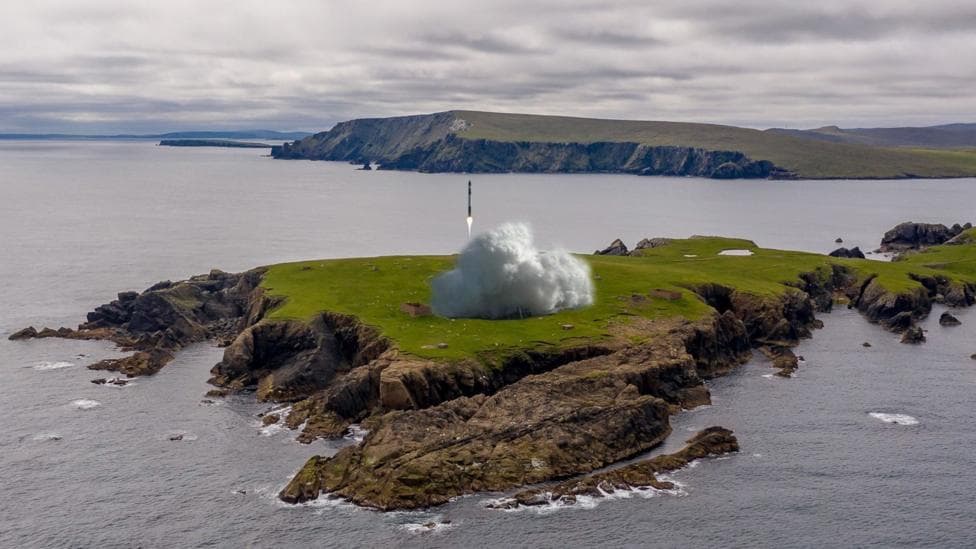
The UK and German governments have announced plans to use SaxaVord Spaceport in Shetland as a cornerstone of expanded cooperation between the two nations. The agreement emerged following a meeting between Prime Minister Andy Burnham and Chancellor Friedrich Merz in Berlin last week, with both governments committing to deepen strategic partnership across civil, commercial, security and defence dimensions of space activity.
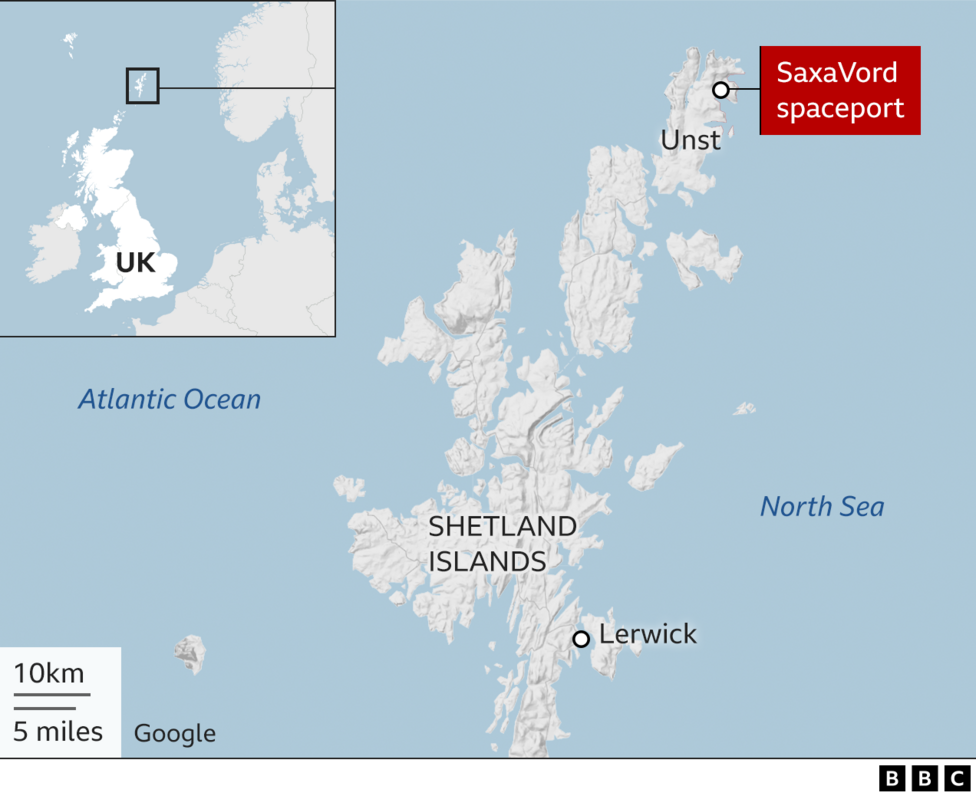
SaxaVord in Unst is the UK's first fully-licensed spaceport and holds regulatory approval for up to 30 rocket launches annually. According to the joint statement from both governments, the two countries will deepen cooperation on launch capability and assured access to space, with SaxaVord explicitly identified as a facility to support more resilient European access to orbit.
What does the agreement include?
The joint statement does not announce specific SaxaVord missions, launch contracts or additional funding commitments at this stage. However, the UK government announced £30 million in investment for the spaceport last month as part of a new national space strategy. According to SaxaVord's investment plan, this contribution is subject to due diligence and final sign-off, with the wider programme intended to fund all three launchpads, mission-management infrastructure and a second integration hangar. SaxaVord described the funding as a "hugely significant" vote of confidence that would unlock a further £30 million of private investment.
Which companies are involved?
Two German companies have already signed launch agreements with the spaceport. Rocket Factory Augsburg (RFA) is advancing towards its first vertical orbital test flight from UK soil. In August, SaxaVord paused plans for a test launch after RFA reported it had "encountered an issue". A five-week launch window had been scheduled, with temporary traffic restrictions prepared in case of a flight attempt.
A second operator, HyImpulse Technologies GmbH (HyImpulse), intends to conduct the second flight of its SR75 suborbital launch vehicle from Shetland this year. The German firm recently secured investment exceeding €50 million (£43 million). According to HyImpulse's plans, the company aims to conduct its first European suborbital launch from SaxaVord in spring 2027.
Why is Shetland's location important?
SaxaVord's northern position makes it well-suited to polar and sun-synchronous orbits, which are used for Earth observation, environmental monitoring and defence applications. This geographic advantage positions the facility as a strategic asset for both UK and European space capabilities. The cooperation between RFA and SaxaVord, announced in March 2025, specifically focused on rapid vertical launch capability for intelligence-monitoring and commercial satellites, reflecting the facility's role in supporting sovereign European space launch for security purposes.
What happens next?
The UK and Germany intend to sign a formal space-cooperation memorandum of understanding during bilateral government consultations scheduled for early 2027. This agreement will formalize the framework for ongoing collaboration on space launch and access initiatives, with SaxaVord positioned as a key operational hub for these efforts.
Key Facts
- SaxaVord is the UK's first fully-licensed spaceport, approved for up to 30 launches annually
- The UK government committed £30 million in funding, expected to unlock a further £30 million in private investment
- Two German companies—Rocket Factory Augsburg and HyImpulse Technologies—have signed launch agreements with the facility
- Shetland's northern latitude makes it ideal for polar and sun-synchronous orbits used in Earth observation and defence
- A formal UK-Germany space-cooperation memorandum is planned for early 2027