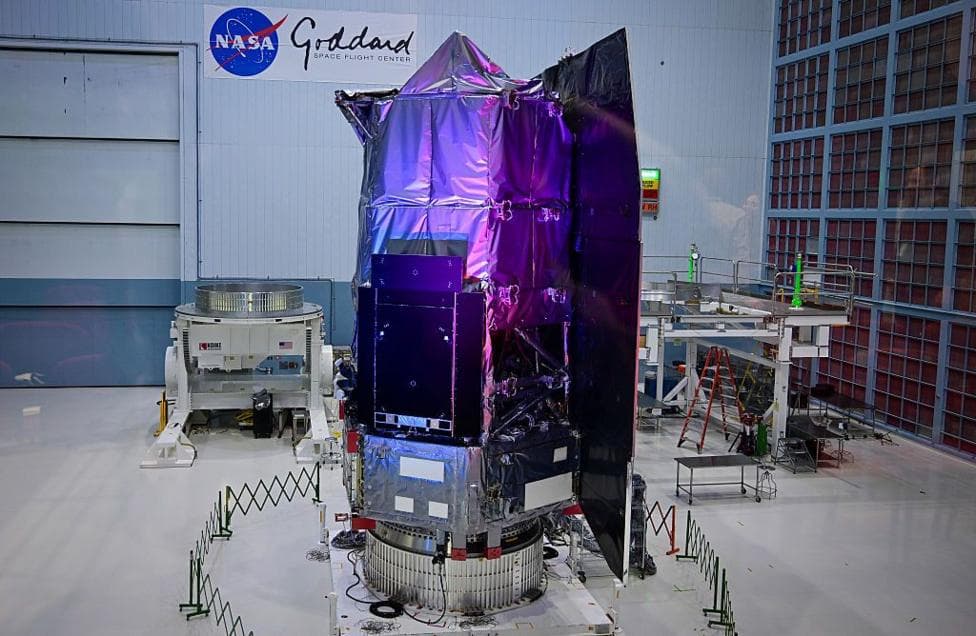
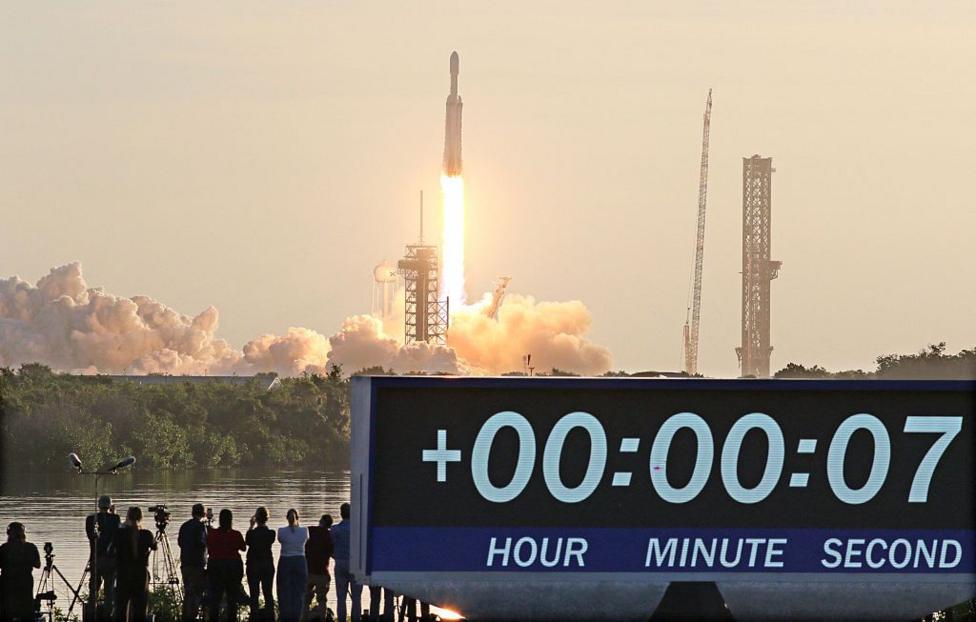
A next-generation space observatory lifted off on Sunday, August 30, 2026, from Kennedy Space Center in Florida, beginning its mission to investigate dark energy, black holes, and the search for potentially habitable worlds beyond Earth's solar system. The Nancy Grace Roman Space Telescope separated from its SpaceX Falcon Heavy rocket approximately 30 minutes after launch at 7:26 a.m. EDT from Launch Complex 39A, according to NASA's mission page, and is now traveling toward its operational vantage point roughly one million miles from Earth.
The mission represents a significant acceleration in NASA's timeline. According to NASA's launch countdown updates, the telescope was slated to launch eight months ahead of schedule and earlier than previously targeted, reflecting the agency's commitment to advancing its scientific capabilities.
The observatory will capture panoramic views of space with a field of vision at least 100 times larger than the Hubble Space Telescope, fundamentally changing how astronomers observe the cosmos. Over a 100-day transit period, Roman will reach the Sun-Earth L2 orbit, where it will begin its primary mission of cataloging exoplanets, investigating the nature of dark energy and dark matter, mapping billions of galaxies, studying black holes, and exploring objects ranging from our own solar system to the edge of the observable Universe.
"Roman is going to change the way we look at the universe,"said Nicky Fox, a NASA administrator.
"It is going to discover tens of thousands, maybe even 100,000 new exoplanets."
US President Donald Trump participated in NASA's news conference on Sunday morning to acknowledge the achievement.
"You're the hottest in space, and we have the hottest country anywhere in the world. So let's keep it all going. You're a big part of it,"Trump said.
The telescope carries significant historical weight through its naming. It honors physicist Nancy Grace Roman (1925–2018), who served as NASA's first chief astronomer during the 1960s and its first female executive. Roman earned recognition as the "mother of Hubble" for her instrumental role in securing congressional approval for the Hubble Space Telescope and advancing its development.

During her tenure at NASA, Roman identified dark energy as the most intriguing discovery made by Hubble, a phenomenon the new telescope will investigate in unprecedented depth. The Nancy Grace Roman Space Telescope is expected to revolutionize understanding of the Universe through its advanced capabilities, with a planned five-year primary mission and a goal to operate for 10 years.
What scientific mysteries will Roman investigate?
NASA describes Roman's mission as mapping the sky and probing dark energy through wide-field infrared surveys. The origins of dark matter and dark energy remain unknown, yet scientists believe these phenomena comprise approximately 95% of the Universe. Dark matter functions as a gravitational binding force, while dark energy is theorized to be a repulsive force driving the Universe's expansion.

"One of our main goals at NASA is answering the question: are we alone in the universe?"Fox stated at the Sunday morning news conference.
"With Roman, we are going to make this giant leap forward... that is going to allow us to look at these distant, distant worlds and start to really resolve the atmosphere around them to let us know: could they be habitable?"
NASA's mission description emphasizes that Roman's crisp, sweeping surveys will enable scientists to investigate dark energy and dark matter, discover and characterize exoplanets, map billions of galaxies, study black holes, and explore objects from the solar system to the observable Universe's edge.
How does Roman compare to other space observatories?
Roman joins an elite group of space-based observatories. NASA's James Webb Space Telescope, launched in 2021, also orbits the Sun approximately one million miles from Earth but possesses a narrower field of vision than Roman. The older Hubble Space Telescope, launched in 1990, maintains an orbit roughly 300 miles above Earth's surface and has served as the gold standard for astronomical observation for over three decades.
The Roman telescope's expanded field of view represents a fundamental advancement in observational capability, enabling simultaneous examination of vast cosmic regions that would require multiple observations with existing instruments.
What was the path to launch?
The mission's journey to launch involved overcoming budgetary obstacles. According to reporting on the project, the telescope survived two rounds of proposed White House budget cuts before reaching launch, demonstrating sustained commitment to the mission despite fiscal pressures.
Pre-launch preparations proceeded according to schedule. NASA and SpaceX conducted a launch readiness review on Friday, August 28, 2026, before the liftoff attempt, with launch coverage beginning at 6:20 a.m. EDT on launch day, according to NASA's countdown information.
What happens next for the mission?
Following successful separation from the launch vehicle, Roman will undertake its 100-day journey to the L2 orbit. According to mission planning documents, the telescope's first images and science operations are expected to begin approximately three months after launch, assuming checkout procedures proceed as planned.
The successful launch builds on NASA's broader commitment to space exploration. Earlier in 2026, NASA launched a pioneering mission to rescue the Swift space telescope, which was descending toward Earth, demonstrating the agency's dedication to preserving its scientific assets and capabilities.
Key Facts:
- The Nancy Grace Roman Space Telescope launched on August 30, 2026, from Kennedy Space Center aboard a SpaceX Falcon Heavy rocket
- Roman's field of vision is at least 100 times larger than Hubble's, enabling simultaneous observation of vast cosmic regions
- The mission will operate from a Sun-Earth L2 orbit approximately one million miles from Earth with a planned five-year primary mission and 10-year operational goal
- Roman is expected to discover tens of thousands to potentially 100,000 new exoplanets and investigate dark energy, dark matter, black holes, and billions of galaxies
- First images and science operations are anticipated approximately three months after launch