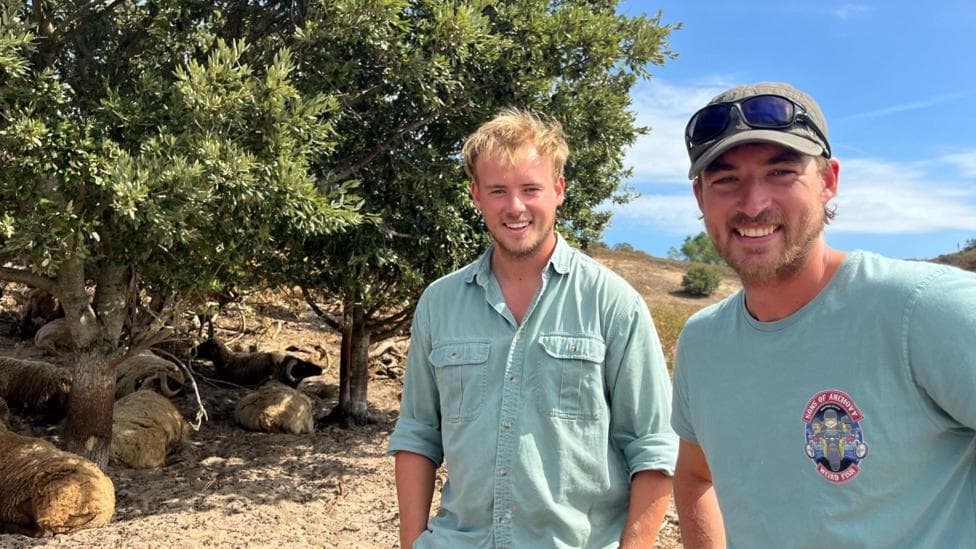
Brothers Ben and Josh Voak work for the conservation initiative The Grazing Project, which has been using GPS collars to manage livestock on Jersey's cliffsides for three years. The technology is reshaping how shepherds control grazing animals across challenging terrain, and the project is now expanding the system to cattle in a bid to rewild new areas of the island.
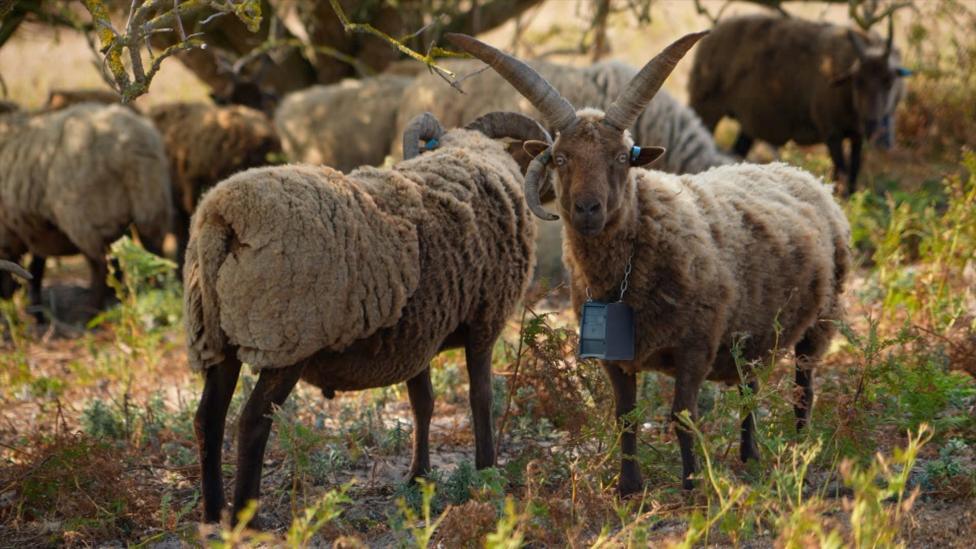
The Grazing Project has become a pioneer in deploying GPS-enabled collars at scale, managing approximately 600 sheep across Jersey using the system. The collars use satellite positioning to establish invisible boundaries drawn via a smartphone application, triggering an audio warning and mild electric stimulation if animals approach the perimeter. The technology was developed in Norway and has undergone extensive testing throughout the United Kingdom before being adopted locally.
The system gained wider recognition in 2025 when it featured on Clarkson's Farm, Jeremy Clarkson's documentary series following his Cotswolds agricultural operation Diddly Squat, where the collars were deployed to contain a herd of goats.
How have the collars changed shepherding work?
The collars have dramatically reduced the physical labour required to manage flocks in difficult locations. Josh Voak explained that the technology allows shepherds to access steep cliffs and areas dense with bracken or gorse that would otherwise be impractical for grazing. The system also provides real-time tracking, enabling shepherds to locate animals quickly using the smartphone app rather than conducting time-consuming manual searches.
"We got our first 70 collars about three years ago now, since then we've been getting more and more because it makes our job so much easier. It means we can graze more challenging areas, so steep cliffs, areas with heavy bracken or gorse... it means we can also track the sheep as well, so every day when we go looking and counting the sheep we've got them already on the app and we can find them very easily."
Before adopting GPS collars, the team relied on traditional electric fencing, a labour-intensive process requiring workers to carry fence poles, wire, and batteries up and down cliffsides—a task that could consume hours. The new system eliminates this burden entirely.

"We used to lay electric fencing before the GPS collars came in. That means lugging fence poles, wire, batteries up and down the cliff. It could take hours. But now with the GPS collars all we have to do is upload the site on to the app, put sheep in and then we're done."
What makes The Grazing Project's approach distinctive?
Ben Voak characterised the project's work as notably pioneering, particularly in the volume of collars deployed simultaneously. The initiative has generated significant interest from other farming operations, especially those managing sheep prone to escaping. The Grazing Project maintains close collaboration with Nofence, the technology provider, to refine collar design and functionality. According to Nofence's current offerings, the sheep and goat collars now include a first-year subscription at no cost and a five-year warranty, with reduced pricing available in 2026.
"We certainly speak to a lot of people about it and they're very interested. For a lot of farmers who do struggle with sheep who love to escape, it can be a really useful tool. We speak to Nofence a lot about the design of the collar itself and how to improve that because if we ever come across an issue they're really good at taking in that feedback, learning it and sending us maybe a new type of chain or a new type of strap that can increase how usable it is."
The collars themselves are compact devices: according to Nofence's technical specifications, each collar weighs approximately one pound and is rated IP67 for water resistance, using either 2G or 4G cellular connectivity depending on regional availability. The system provides continuous GPS tracking with reports sent every 15 minutes and immediate notifications following an electric pulse or escape attempt.
Why are cows being trained to use the collars?
The Grazing Project is currently training four cows to wear GPS collars, opening possibilities for combined sheep and cattle grazing operations. Ben Voak indicated that the trial aims to test whether the two species can coexist on the same sites with collar management, potentially enabling rewilding efforts across new areas of Jersey.
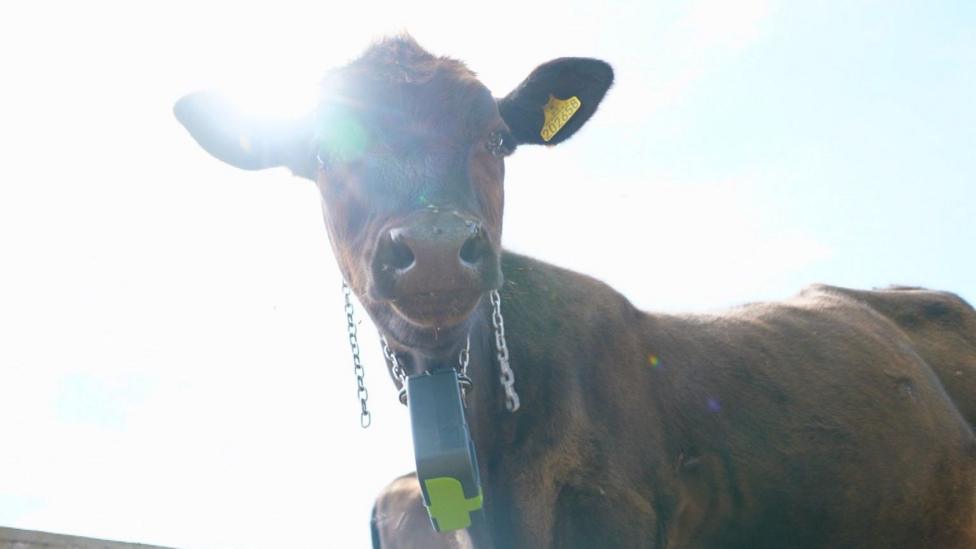
"They're currently being trained at the farm as we speak and the plan is to put them on certain wetland sites or up on the north coast, not letting them on the cliffs. We're in a trial period seeing how the cows and the sheep work together, if we can put the collars with cows and sheep on the same site, so it's quite an exciting time for us because we're just testing those possibilities."
This expansion reflects broader interest in virtual fencing technology across the UK. Earlier trials have demonstrated the system's effectiveness in other regions—for instance, virtual fencing has been tested at Mendip Hills in Somerset with 60 cattle at Crook Peak, showing the technology's versatility beyond sheep management.
How does the technology work?
The GPS collar system operates without buried wire or base station infrastructure, instead relying on satellite positioning and cellular networks to establish and maintain virtual boundaries. Shepherds define grazing areas using a smartphone application, and the collar's GPS receiver continuously monitors the animal's location. When an animal approaches the boundary, the collar first emits an audible warning, giving the animal time to retreat. If the animal continues toward or crosses the boundary, the collar delivers a mild electric stimulus to discourage further movement.
Pricing for the system reflects its subscription-based model: according to Nofence's pricing structure, sheep and goat collars cost $269 per unit for orders of 0–24 collars, with the first year of subscription included at no charge and subsequent annual subscriptions at $45 per collar per year. The collars support multiple connectivity standards including GPS and GLONASS satellite systems, alongside LTE Cat-M1, 2G, and Bluetooth protocols.
Key Facts
- The Grazing Project manages approximately 600 sheep across Jersey using GPS collars, with the technology in use for three years
- The system eliminates the need for traditional electric fencing, reducing labour-intensive tasks such as carrying poles and wire across cliffsides
- Four cows are currently undergoing training to use the collars, with trials planned for wetland sites and the north coast to test combined sheep and cattle grazing
- Each collar weighs one pound, operates on 2G or 4G networks, and provides continuous tracking with 15-minute reporting intervals
- The technology was featured on Clarkson's Farm in 2025 and has been tested extensively across the United Kingdom before adoption in Jersey