The UK government has confirmed that selected provisions of the European Union's Artificial Intelligence Act will apply in Northern Ireland, though the broader regulation of AI systems will remain primarily under UK and Northern Ireland authority.
According to BBC News, EU rules will only extend to physical goods that contain embedded AI systems. This arrangement stems from the Windsor Framework, the post-Brexit agreement that maintains Northern Ireland's position within the EU's single market for goods. On 4 November 2026, the UK and EU agreed arrangements on AI that create no new regulatory barriers, meaning no Northern Ireland Assembly vote will be required.
The EU's AI Act, which entered force in 2024, was proposed by the European Commission in 2025 to apply its goods-related provisions in Northern Ireland. The government clarified the scope of this application in a statement:
The EU AI Act does not apply to NI in full. It applies only where an AI system is closely integrated with a tangible physical product that is placed on the NI market. It would not affect an NI business simply because it uses online or downloadable AI tools to manage work, analyse data, or carry out business functions. It would also not place obligations on the developers of those tools for their use in NI, unless the AI is closely integrated into a physical product placed on the NI market.
Which products will be affected?
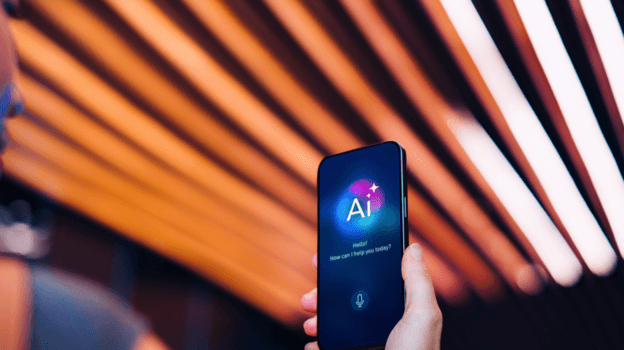
Physical goods with embedded AI will face EU regulation under this framework. Products covered include smart speakers with built-in AI voice assistants and smartwatches that require manufacturer-supplied AI health monitoring applications. Officials acknowledged uncertainty about the full scope of affected products, noting that AI-enabled toys and, depending on use, phones could potentially meet the definition of AI embedded in a physical product.
What types of AI systems could be banned?
The EU's regulatory approach centres on assessing AI according to its potential to cause societal harm. Stricter rules apply to higher-risk applications, with certain uses prohibited entirely. The government provided examples of products that could face bans: a connected toy embedding AI that encourages children to undertake increasingly risky activities in exchange for reward or praise, or an AI-connected camera with voice recognition that detects employee emotions.
How will this interact with UK regulation?
The broader regulation of AI systems in Northern Ireland will remain the responsibility of the UK government and the Northern Ireland administration. When the EU updates its rules on goods regulation, the UK government must decide which updates should apply in Northern Ireland. In certain circumstances, the Northern Ireland Assembly also votes on such matters. However, the recent agreement means Stormont is bypassed on this particular decision.
The UK government's position has been that the EU AI Act itself is not formally listed in Annex 2 of the Windsor Framework, and the government had not previously decided whether the Act should apply in Northern Ireland. The Digital Omnibus on AI, which entered into force on 27 July 2026, simplified parts of the AI rulebook; its machinery-related amendments are relevant in Northern Ireland through the Machinery Regulation, independently of whether the wider AI Act applies.
What happens next?
The European Commission must adopt delegated measures reflecting relevant AI safety requirements in the Machinery Regulation by 2 August 2028, and those measures are expected to apply in Northern Ireland. This timeline will shape how AI-embedded physical products are governed in the region over the coming years.