A murder that went unsolved for three decades has finally been cracked through a combination of investigative genetic genealogy and artificial intelligence tools. According to BBC News, the case of Randy Gail Sperino, whose body was discovered in Illinois in 1993, demonstrates how modern forensic techniques are revolutionising the investigation of cold cases across the United States.
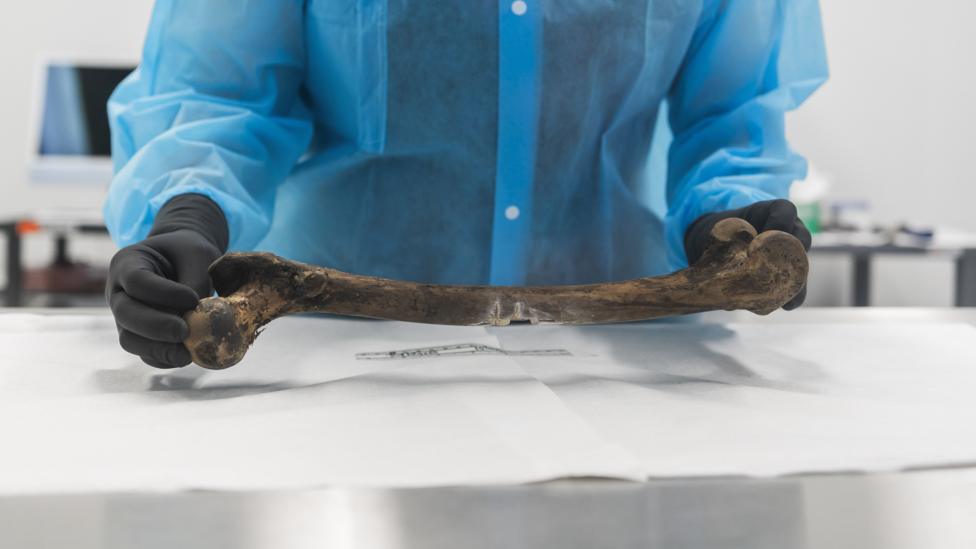
Sperino, 34, was last seen alive on the evening of 9 November 1993 as she entered a pickup truck in Granite City, Illinois. Her body was recovered hours later in a nearby field, bearing evidence of blunt force trauma. For thirty years, investigators from the Madison County Sheriff's Office pursued hundreds of leads without identifying a suspect, despite DNA evidence collected from the crime scene.
The breakthrough came when detectives submitted genetic material to Othram, a Houston-based company specialising in forensic genetic genealogy. This technique, which gained prominence following the 2018 identification of the Golden State Killer Joseph James DeAngelo, works by identifying distant genetic relatives of an unknown individual through DNA data voluntarily submitted to commercial ancestry platforms. Unlike traditional forensic DNA testing, which requires a direct match to a known person, investigative genetic genealogy constructs family trees to narrow down suspects.
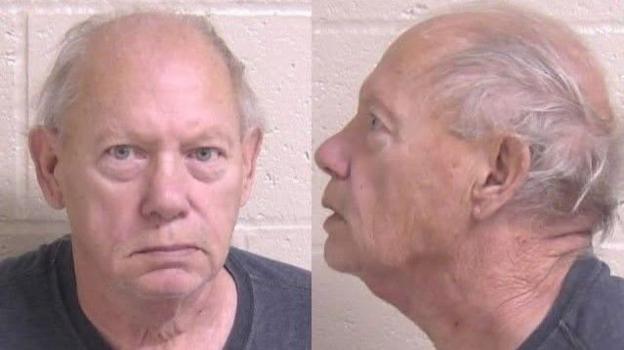
Othram's analysis identified a male family member connected to the killer's DNA profile. This crucial lead directed investigators to Albert "Buddy" Zigler, 70, who subsequently confessed to the murder and was charged in May 2026. According to the Belleville News-Democrat, prosecutors stated that Zigler told investigators he picked up Sperino, engaged in consensual sexual activity with her, then struck her following an argument over money. At a pretrial detention hearing, a judge ordered Zigler held in Madison County Jail until trial, citing his confession and what the judge described as "30+ years of deceptive and deceitful behavior."
Wes Sperino, Gail's son, expressed relief at the resolution:
I finally get closure and I finally know who did this.
How does investigative genetic genealogy work?
The technique functions by using public records, obituaries, and census data to construct family trees and establish connections between different genetic profiles. David Mittelman, chief executive of Othram, describes investigative genetic genealogy as resembling a GPS system:
The DNA profile is the GPS signal and it says 'you belong here.' But to understand where 'here' is, you need a map.However, Mittelman emphasises that DNA technology has inherent limitations and that
a cascade of investigative stepsare necessary before a case can be solved. According to Othram's case database, the Sperino case represents the 13th publicly announced Illinois case solved using the company's technology.
What role did artificial intelligence play?
Investigators faced an additional challenge: the sheer volume of evidence accumulated over three decades. The case file contained more than 2,000 pages of reports and interviews alongside over 300 pieces of physical evidence. Officers employed Centerline AI, a platform developed by Florida software company CentralSquare, to analyse and organise this material. The AI system helped reconstruct timelines, organise witness information, and identify which evidence warranted DNA testing.
Captain Tim Lawrence of the Madison County Sheriff's Office explained the practical benefits:
It's so much easier than having a detective have to read through 2,000 pages.His team could interact with the AI platform conversationally, similar to a chatbot. The technology also assisted when detectives interviewed Zigler after locating him, allowing investigators to cross-reference his statements against the accumulated evidence. However, Lawrence stressed an important boundary:
the technology is only as good as the investigator. There comes a point where you leave the technology behind and you have to go track people down and talk to them.
What are the limitations and ethical concerns?
Despite its success, investigative genetic genealogy cannot resolve all cases. Mittelman notes that
it can't solve every case. If you have no DNA, you can't really use this technique.He adds that
this technique is a lot more powerful and a lot more likely to yield identities than having to rely on the chance that you find a match somewhere in a database.
Privacy concerns remain significant. Denise Syndercombe Court, professor of forensic genetics at King's College London, points out that while one individual may have consented to their DNA being used by law enforcement, their genetic relatives may not have provided such consent. Although companies like Othram only use ancestry platforms where users have explicitly agreed to law enforcement matching, the broader ethical implications of using familial DNA data continue to generate debate.
What funding challenges exist?
Financial constraints present another obstacle to wider adoption. Mittelman observes that
every law enforcement agency wants to do it. There's just not a lot of funding for it.Some cases receive funding through public donations or crowdfunding campaigns, with Othram maintaining a website listing cases that members of the public can help finance.
How is this technology being adopted internationally?
Investigative genetic genealogy has been adopted in countries including Sweden, Denmark, and Australia. However, it remains unused in the United Kingdom. The Home Office is currently conducting a study to evaluate whether the technique should be implemented in British investigations.
Syndercombe Court suggests that the UK may not require the same approach due to its existing forensic infrastructure.
We have such an efficient DNA database that if you can get any DNA out of a crime scene, you've got over a 65% chance of putting a name to that person, which is enormously powerful,she explains. This high success rate with traditional DNA matching may reduce the immediate need for investigative genetic genealogy in British law enforcement, though the technique's proven effectiveness in solving longstanding cases like Sperino's continues to influence discussions about its potential adoption.