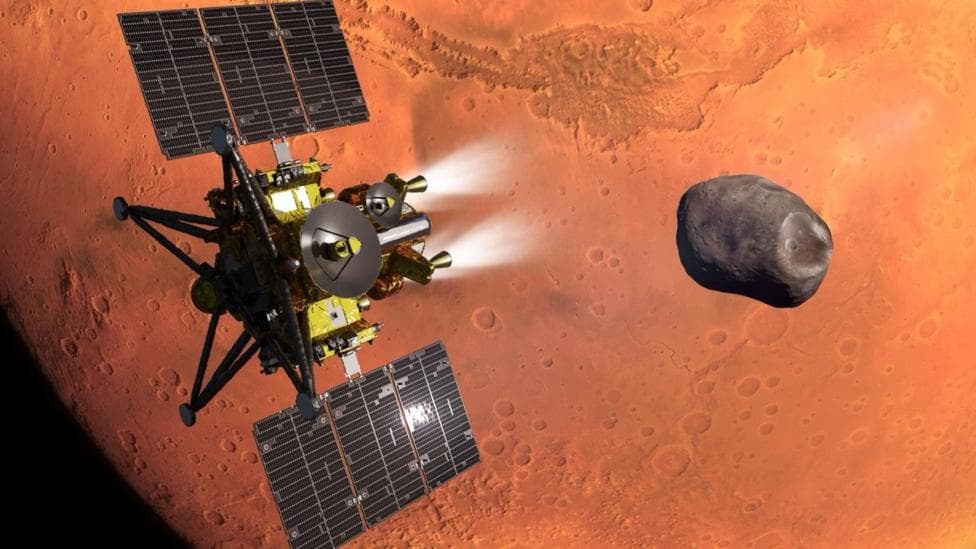
A robotic spacecraft is preparing to launch toward Mars's larger moon, Phobos, in an attempt to collect material from its surface and return it to Earth for scientific analysis. According to BBC News, if successful, this will mark the first time a sample has been retrieved from Mars or its moons and brought back for laboratory study on Earth.
The spacecraft will depart from Japan's Tanegashima Space Center on 20 October 2026 at 04:41:03 Japan Standard Time, with a backup launch window extending through 9 November 2026. The Mars Moons Exploration (MMX) mission, led by the Japanese Space Agency (JAXA), is a joint effort involving JAXA, NASA, CNES, DLR and ESA, and is expected to reach Phobos in August 2027.
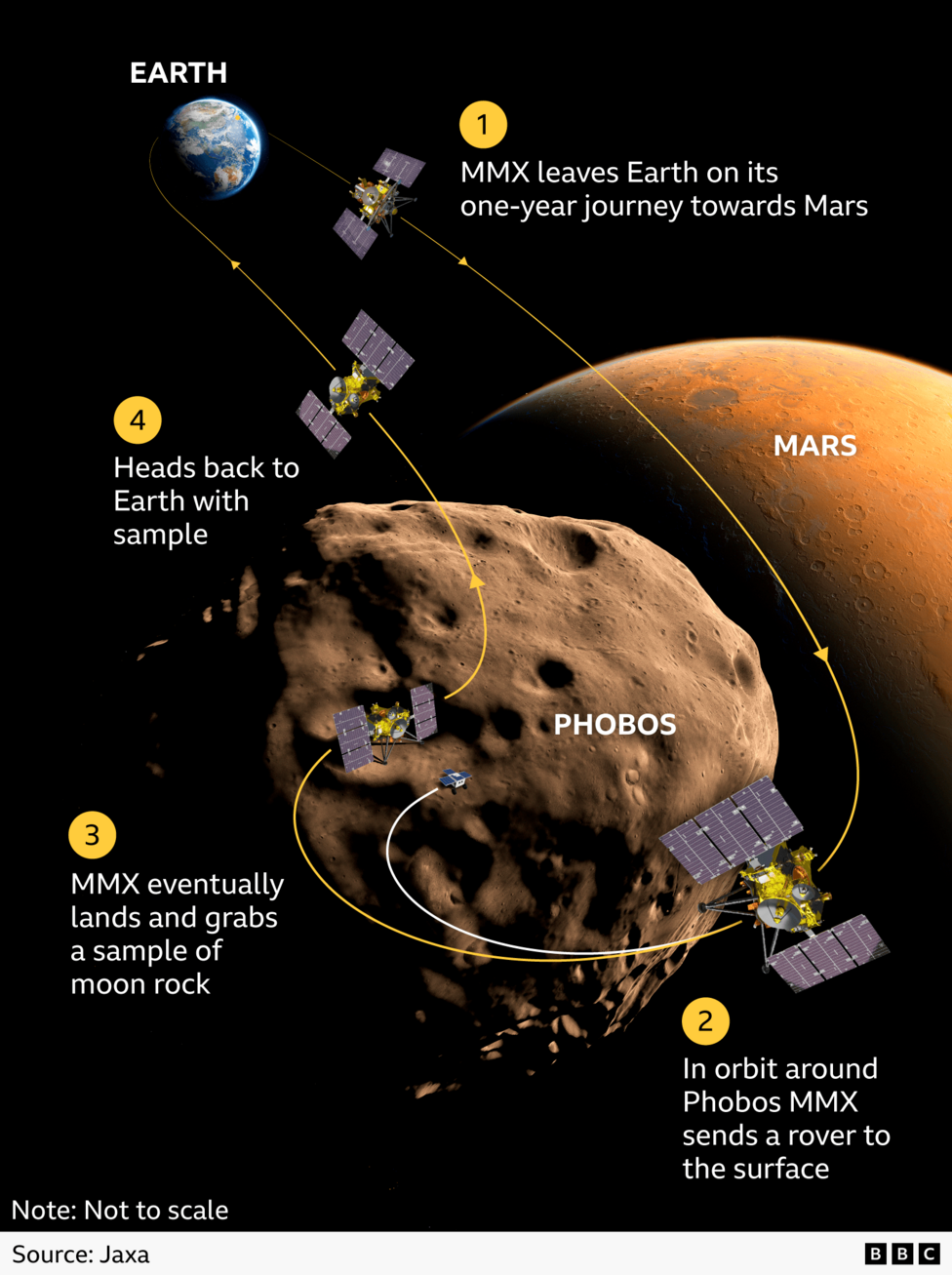
The mission aims to solve a longstanding puzzle in planetary science: the origin of Mars's two moons. Prof Sara Russell from the Natural History Museum, who serves as the MMX mission's deputy for sample analysis, described the undertaking as ambitious.
"There hasn't yet been a successful mission to go to Phobos and bring a bit back to Earth. I think this is an incredibly ambitious and fun mission,"she said.
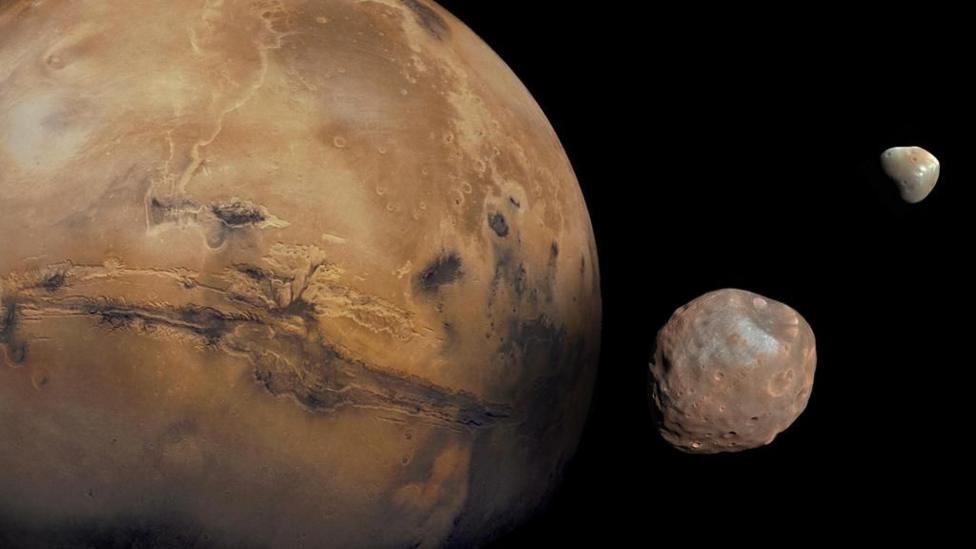
Mars possesses only two moons in the inner Solar System—Phobos and Deimos—both extraordinarily small and irregularly shaped. Phobos measures approximately 20 kilometres (12 miles) across, while Deimos spans roughly 10 kilometres (six miles). Their potato-like forms present unique challenges for exploration.
How did Mars acquire its moons?
Scientists have proposed two competing theories about the formation of these celestial bodies. Mars obtained its moons approximately 4.5 billion years ago, yet their origin remains unknown. One hypothesis suggests that a space rock collided with Mars early in the planet's history, creating Phobos and Deimos from the resulting debris. The alternative theory proposes that both moons are captured asteroids from the outer Solar System, drawn in by Mars's gravitational pull.
The sample analysis will provide definitive answers.
"When we get the sample back, we'll be able to look in detail at its chemistry and its mineral composition - and the two hypotheses will produce very distinct results. It should be pretty much immediately obvious whether it's the product of this dramatic impact or whether it's a captured asteroid. So we'll find that out really quickly,"Russell explained.
What will the mission accomplish on Phobos?
The spacecraft will first study Deimos as it approaches the Mars region, then concentrate its efforts on Phobos. A small rover will be deployed to explore the terrain and identify an optimal landing site for the main spacecraft—a task of considerable difficulty given Phobos's minimal gravity and proximity to Mars's much stronger gravitational field.
"The moon itself doesn't have very much of its own gravity. But it's next to an enormous planet that's got a much higher gravity, and that makes it much harder to get a rover onto the surface,"Russell noted. No rover has ever successfully landed on such a small moon before.
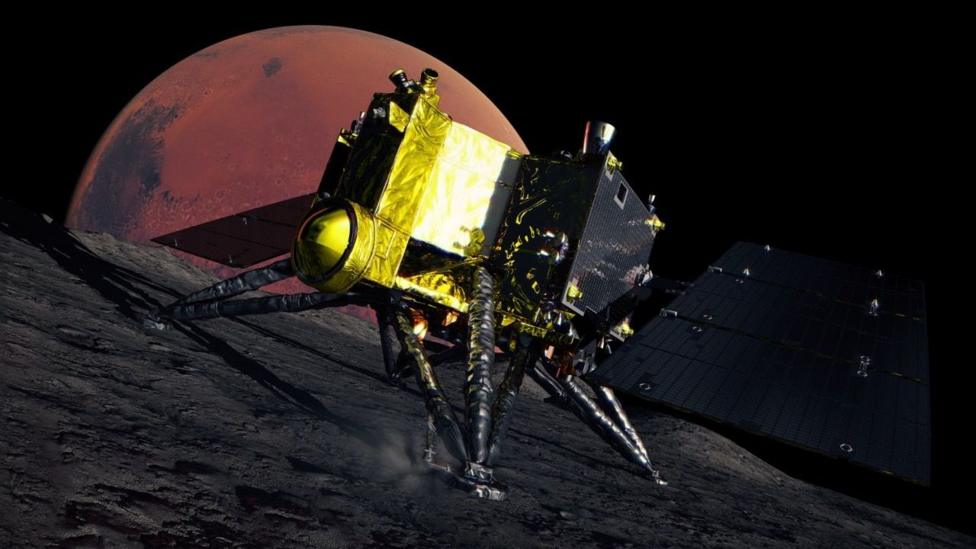
Once the main spacecraft touches down on Phobos's surface, it will deploy a robotic arm and two samplers to collect lunar dust. According to NASA's Lindsay Hays, sample collection could begin as early as December 2028, with the spacecraft expected to make two collection landings. The collected material will be sealed in a small capsule destined for Earth, arriving in 2031 at the Woomera desert in South Australia.
How much material will return to Earth?
The quantity of material returning is remarkably modest—just 10 grams of moon dust. Dr Chrysa Avdellidou from Leicester University, who collaborates with the Japanese mission, emphasised the scientific value of this small amount.
"It's a very small [amount] actually. However we can do several studies even on individual grains… You don't need to have kilos back from a surface in order to do science. So it's worth every gram,"she said.
Could the sample contain material from Mars itself?
Scientists anticipate an additional scientific bonus from the mission. Because Phobos orbits extremely close to Mars's surface, impacts striking Mars can propel small grains onto Phobos itself.
"One of the really exciting things is that Phobos is so close to the Mars surface that whenever there's an impact into the Mars surface, little grains might actually become implanted into Phobos itself. And that means that the sample we get back may actually contain grains of Mars as well. So it can give us really direct information about the composition and history of Mars,"Russell explained.
Why is a pristine Mars sample so valuable?
Bringing material from Mars back to Earth has long represented a primary objective for space scientists. The NASA Perseverance rover, which has been exploring Mars since 2021, has been methodically collecting samples and storing them in sealed canisters. However, a joint NASA and European Space Agency mission called Mars Sample Return, which would have retrieved and transported these canisters, was effectively cancelled after the United States Congress halted its funding.
Earth does possess some Martian material in the form of meteorites—fragments blasted from Mars's surface by asteroid impacts and subsequently directed toward Earth. Yet these specimens become contaminated immediately upon arrival, mixing with atmospheric gases, dust, soil and water. A pristine sample collected directly from Mars or its moons would preserve its original composition and provide uncontaminated scientific data.
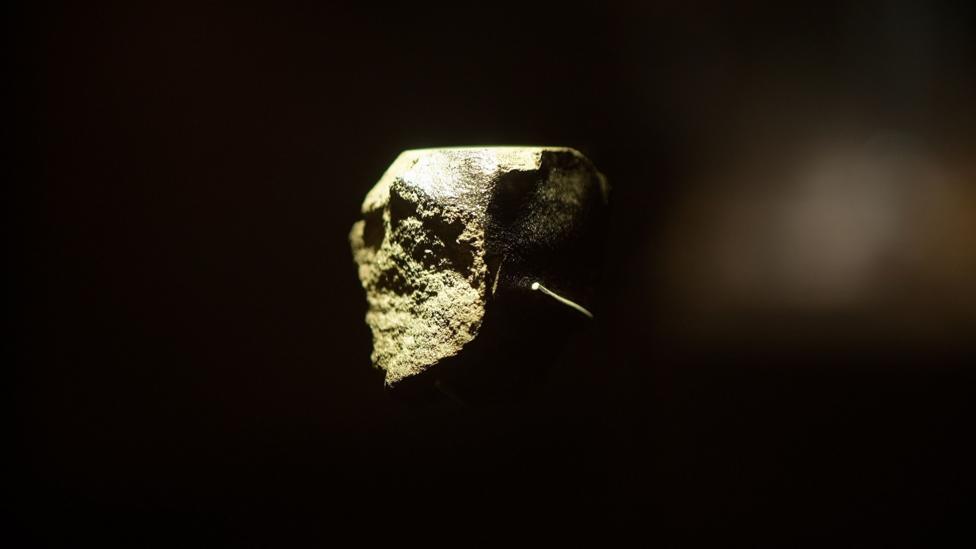
What other Mars sampling missions are planned?
China is developing its own sampling mission to Mars, scheduled for launch in 2028, with plans to return Martian material to Earth in 2031. Japan's approach builds upon the success of its Hayabusa2 mission, which returned asteroid Ryugu samples to Earth, providing a precedent for MMX's sample-return approach.
What happens next?
Following the launch on 20 October 2026, the MMX spacecraft will undertake its multi-year journey to Mars. ESA indicates the spacecraft is expected to release its Idefix rover in early 2029. The sample capsule is scheduled to return to Earth in 2031, concluding a mission that could fundamentally reshape scientific understanding of Mars and its moons.
Key Facts
- MMX will attempt the first-ever retrieval of material from Mars or its moons, collecting 10 grams of dust from Phobos's surface
- The mission launches on 20 October 2026 from Japan and arrives at Phobos in August 2027, with the sample returning to Earth in 2031
- The sample may contain grains of Mars itself, knocked onto Phobos by ancient impacts, providing pristine data about the Red Planet's composition
- Two competing theories about Phobos's origin—impact debris versus captured asteroid—will be tested through chemical and mineral analysis of the returned sample
- This mission follows Japan's successful Hayabusa2 asteroid sample-return mission and precedes China's planned Mars sampling effort in 2028