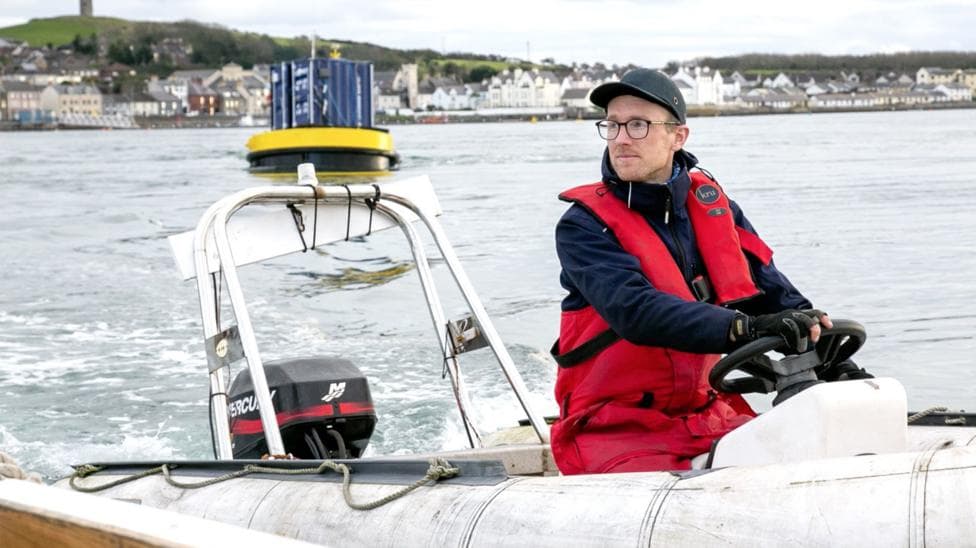
An engineer working on compact tidal power generators believes his technology could transform energy independence in coastal communities across the UK. According to BBC News, David Mummery's Swimmer Turbine—a 50-kilowatt device that sits invisibly beneath the water surface—can generate enough electricity to power approximately 30 homes and can be assembled and launched by local workers without heavy industrial equipment.
Mummery's journey into tidal energy began over a decade ago in a remote Highland river, where he immersed himself in fast-flowing rapids to understand water dynamics firsthand. By gripping a cord and feeling the current rush over him, he visualised a new approach to small-scale tidal generation that would differ fundamentally from the massive utility-scale projects dominating the sector.
How did the Swimmer Turbine concept emerge?
The turbine takes its name from Mummery's unconventional research method. Lying in the powerful rapids, he worked to visualise how a generator could interact with the turbulent environment and harness the water's movement.
"As an engineer we do the maths and stuff," he explains, "but sometimes you can get a lot more from actually touching the water and feeling it."This hands-on approach led him to design a fiberglass and steel device anchored to the sea floor, where it operates without visible surface infrastructure.
Mummery began testing prototypes in the early 2010s at a secret Highland location, chosen deliberately to keep the experimental technology away from public attention.
"You're trying to be quite discreet because you're working with new technology," he says.This period coincided with the early years of his company, Flex Marine Power, established well before Britain faced the energy crisis that would later grip the nation.
What makes this turbine different from other tidal projects?
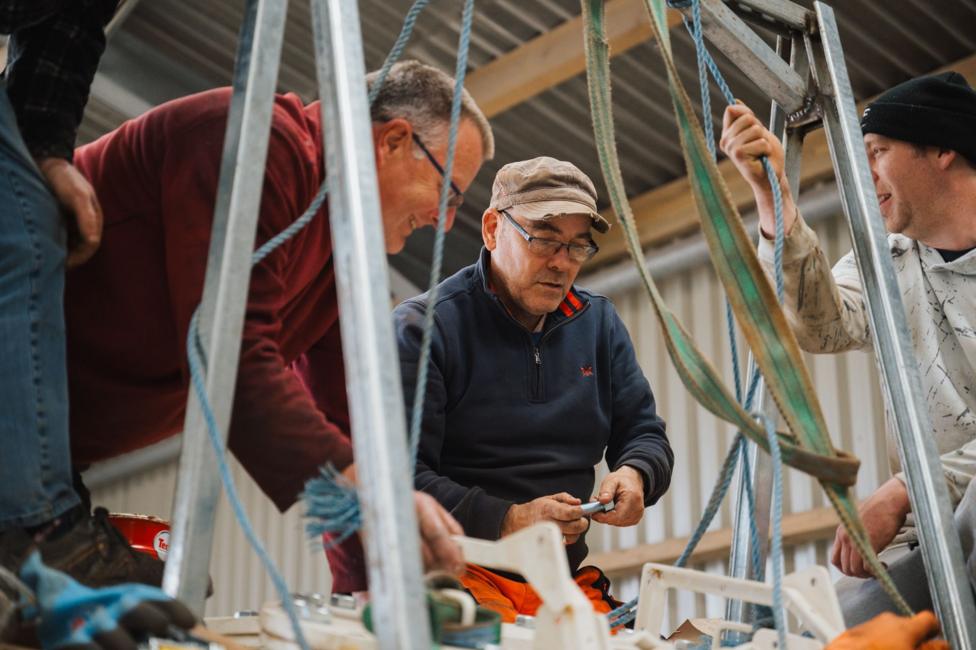
Scotland hosts several world-leading tidal installations that dwarf Mummery's device. Nova Innovation deployed the world's first tidal stream array in 2016 at Bluemull Sound in Shetland. MeyGen operates the world's largest tidal array with four 1.5-megawatt turbines on the seabed of the Pentland Firth. Orbital O2 anchors the world's most powerful floating turbine, generating 2 megawatts, at Fall of Warness in the Orkney Islands. By contrast, Mummery's turbine is ultra-compact and low-cost, designed so that fishermen and local workers can assemble and install it themselves from their own village harbour without requiring specialist contractors or heavy machinery.
The assembly process mirrors flat-pack furniture.
"Can you imagine like an Ikea furniture kit? You get a shipping container and you'll open it up and it will be about 20 components. You'll bolt them all together and then you've got your turbine ready. There'll be a launch plan, you follow these instructions, then you'll be in the water."
What is Mummery's background in engineering?
Originally from Guildford, Mummery studied mechanical engineering at Surrey University and became a sought-after consultant in the UK energy sector before founding Flex Marine Power. He specialised in nuclear work and decommissioning, designing robots for extracting material from contaminated tanks. His move to Scotland came after falling in love with a woman studying at Glasgow University; Jo became his wife, and they now live in the city suburbs with three young children.
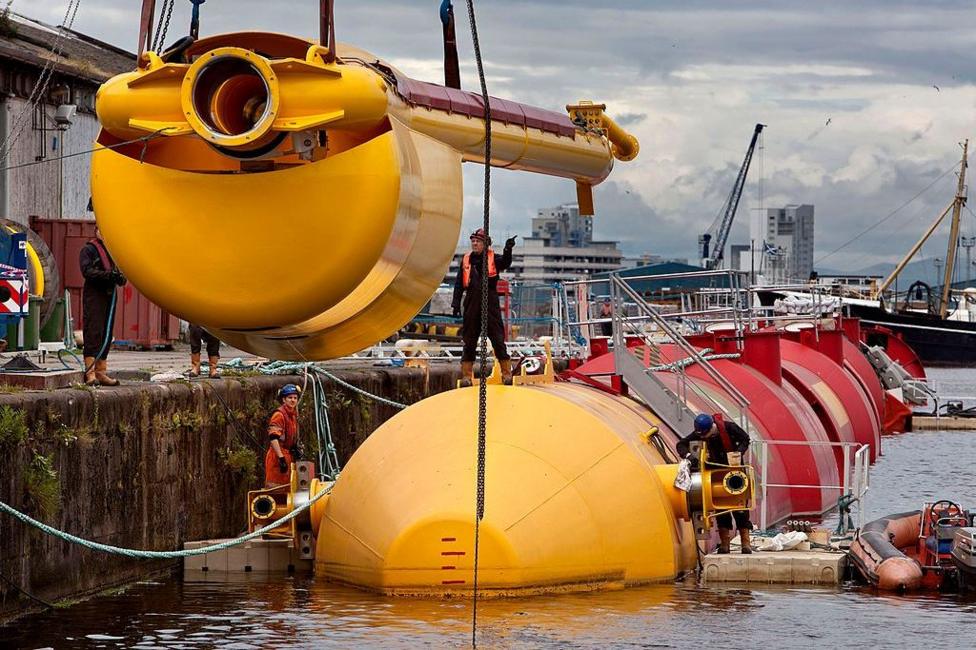
Mummery's relocation coincided with Scotland's emergence as a centre for marine power expertise. In 2010 he took a secondment at Scottish Power Renewables on the groundbreaking Pelamis project in Orkney. The 180-metre-long Pelamis P2—nicknamed the sea snake—was the first deep-water, floating wave energy machine to generate power for the national grid. Although Pelamis entered administration in 2014, the device remains celebrated as a milestone in marine power innovation.
"The industry is littered with these examples of fantastic technologies and teams that do brave things that take decades,"Mummery reflects.
"But at some point the market doesn't step up and they falter. Some really good ones have lasted the course, but others have not and it's sad."

What drove him to develop a smaller-scale approach?
Despite appreciating the UK's "phenomenal waters for tidal power" and enjoying major projects, Mummery felt uncomfortable with the disconnect between industrial-scale technology and the communities where it would operate.
"I'd be going out on boats around Scotland doing sonar surveys with all these really expensive pieces of kit. But the equipment was all really big, utility-scale stuff that would weigh hundreds of tonnes, shipped by people from the mainland."
The fishermen and local workers he met in harbours and pubs possessed deep knowledge and genuine interest in marine energy, yet the technology being deployed excluded them from participation.
"I thought 'we've got to do this in a way that they can take the lead'."This realisation motivated his Swimmer Turbine concept, designed to place power generation in the hands of coastal communities rather than distant corporations.
How did Flex Marine Power develop the prototype?
In 2011 Mummery left large-scale projects to establish Flex Marine Power and focus entirely on his turbine concept. He spent countless hours sketching and calculating how to make the technology smaller and lighter. With a student employee and a sleek glass office space outside Glasgow, he quickly discovered that conventional office environments were unsuitable for prototype development.
"It was a lovely place, but I wasn't allowed to take a hammer drill into the office. We were trying to make prototype turbines under the desk so the landlord wouldn't see them when he came in."
Seeking a more practical workspace, Mummery turned to Clydeside's shipbuilding heritage. He presented a plan to convert former shipyards for marine technology research and was invited to Greenock by Inverclyde's redevelopment authority.
"There were lots of empty sheds that hadn't been used for years," he says. "They basically said 'we'll walk you around, you can pick a shed'. So I got the pick of the bunch right on the quayside."This location provided direct access to the River Clyde for sea trials.
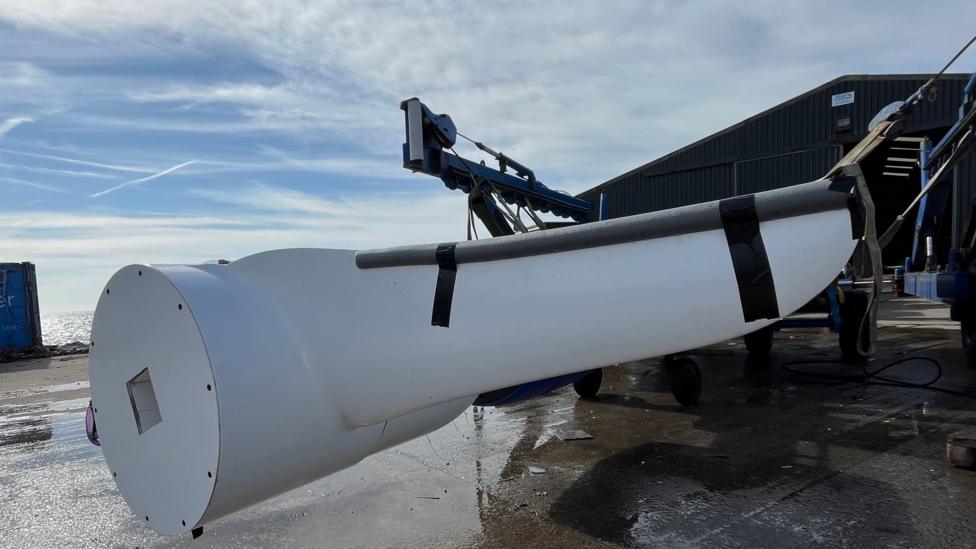
He developed a prototype which he successfully trialled in 2015 on the island of Luing, in the Firth of Lorn near Oban. This achievement secured Flex Marine's first major investment and expansion the following year.
What was the breakthrough moment?
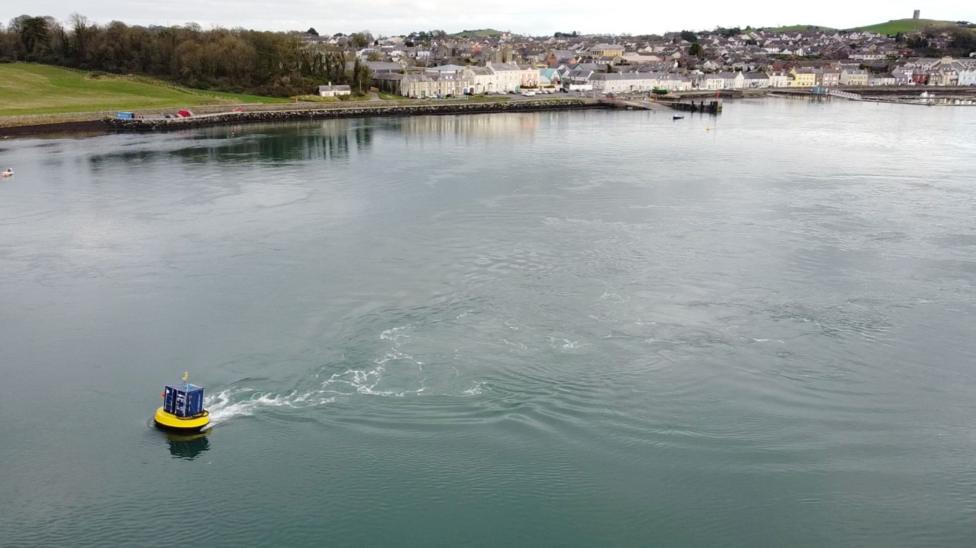
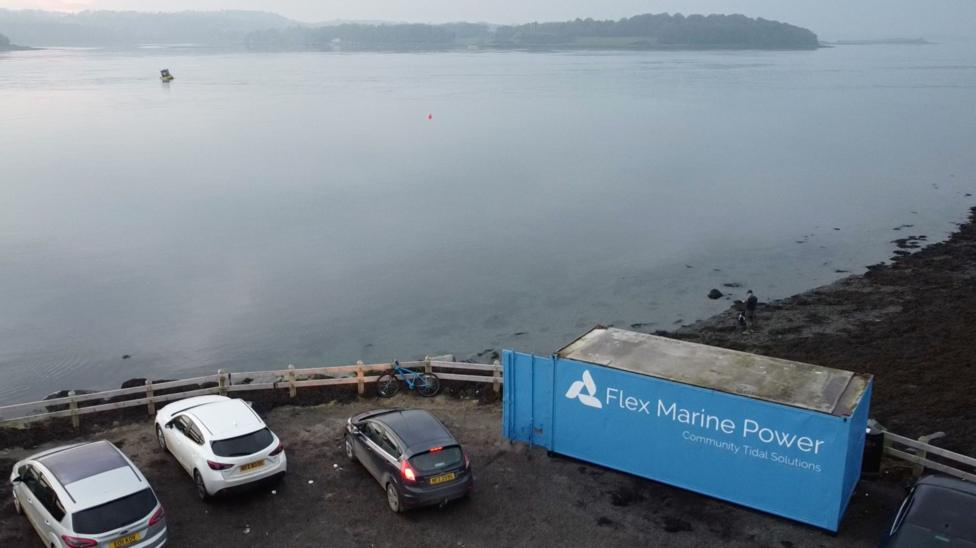
The next major milestone came in 2020 at Strangford Narrows in County Down, Northern Ireland. Mummery worked with Queen's University Belfast, which held an academic license to test tidal equipment at sea.
"Me and Mark, my accountant, lifted all of the components into a shipping container and sent it out on a lorry. We were introduced to a bunch of local mariners. We pulled off a full-scale tidal turbine installation out of a container deposited in a farmyard."
Generating electricity while tethered to the back of a boat, this full-scale proof-of-concept finally established Flex Marine Power's credibility. The success helped the company secure £968,000 from the UK government's Energy Entrepreneurs Fund, enabling a team of nine people to develop a commercial turbine model that would launch directly from shore and remain completely hidden beneath the water surface.
How did testing progress on Islay?
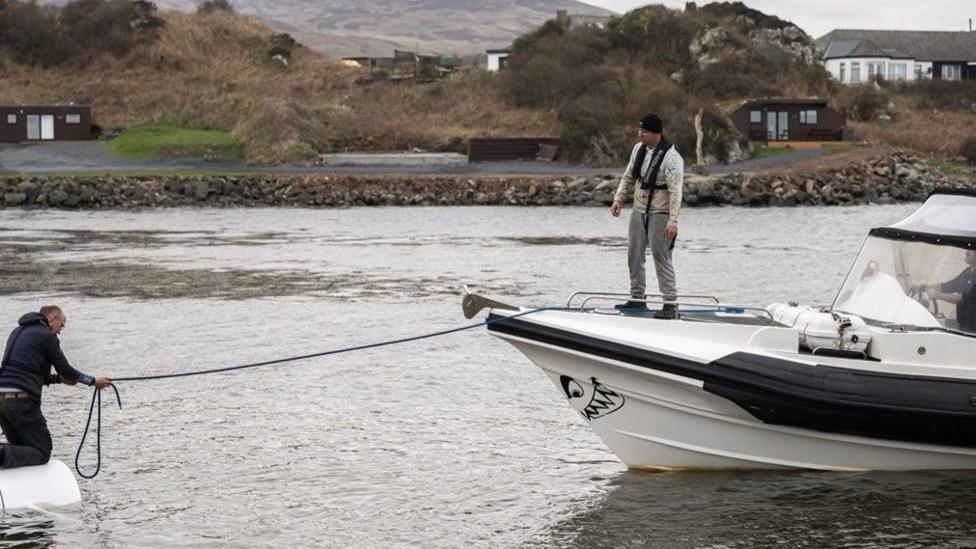
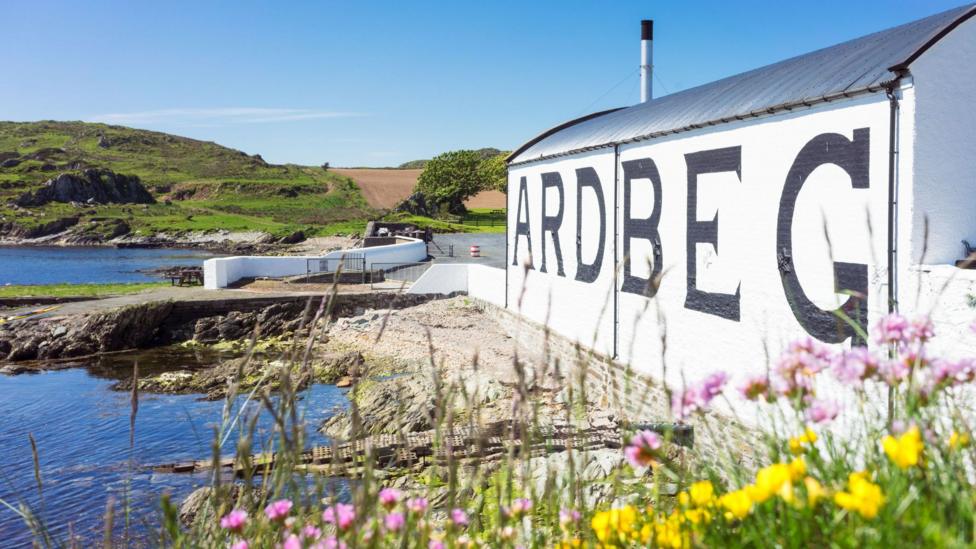
Mummery conducted extensive testing on the island of Islay—famous for its whisky distilleries and coastal waters ideal for tidal power—during the previous year. He rented space at a boatyard where local people were trained to assemble and launch the device. The defining moment arrived when he witnessed his vision realised:
"I was standing at the end of the slipway, seeing our machine, without any of my guys touching it. It was all local people. Fishermen, using their own tractor, launching it down their own slipway. This was my vision in a nutshell."
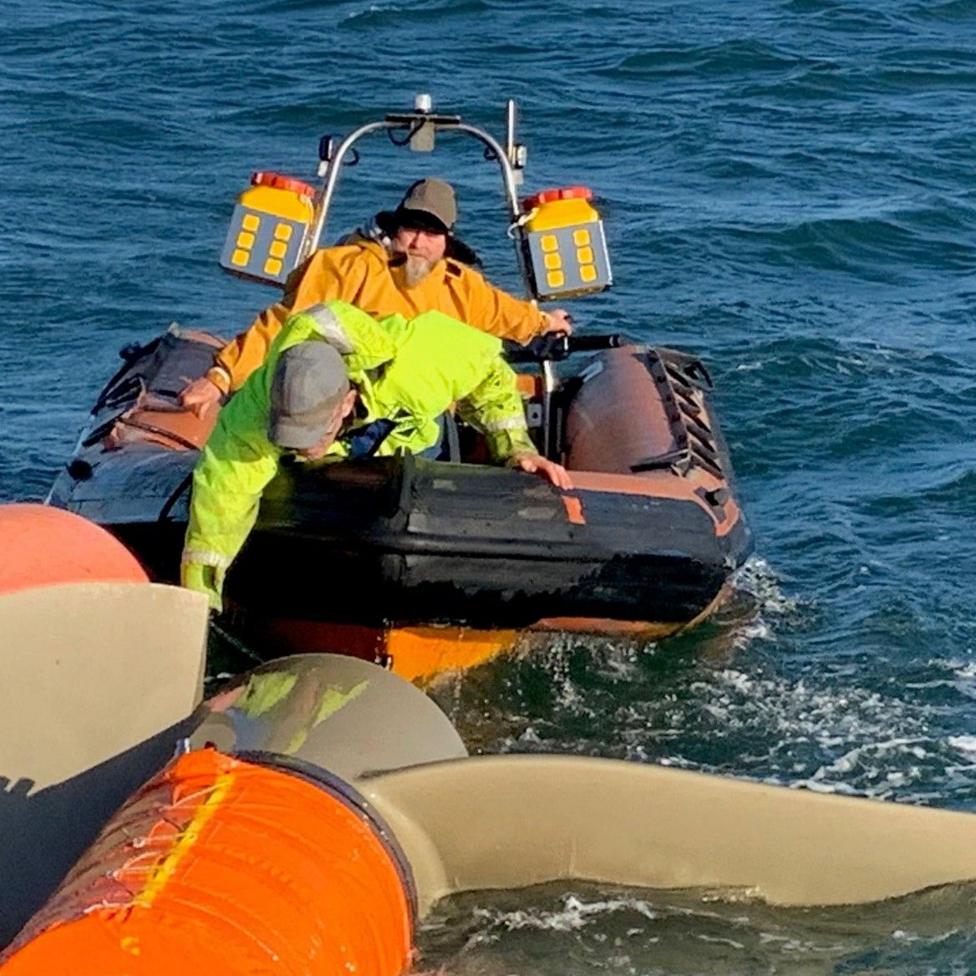
According to Flex Marine Power's project briefing, the Islay installation's first marine phase—laying the main anchor and moorings—is now complete, with the turbine launch and commissioning phase ongoing. The company noted that a death in the founder and technical director's family postponed parts of the installation programme, which now extends into 2027. The site coordinates are 55.819481° N, 6.095616° W, and the turbine will maintain at least 3.5 metres of clearance below the sea surface.
What are the technical specifications?
A Scottish marine environmental plan describes the proposed Islay device as rated up to 70 kilowatts, with electricity transmitted ashore for private connection. In 2023, Lloyd's Register awarded the SW2 turbine the first IECRE Feasibility Statement for a renewable-energy converter, following a rigorous technology-qualification process that validated the device's design and safety standards.
What is the vision for coastal communities?
Mummery's next phase involves putting the generated power to practical use. He plans to return to Islay with a scheme to generate electricity for the island itself.
"The sea is a very big space and these things are invisible. There could be different tidal arrays in different parts of the island, all owned by different people."
He emphasises that real coastal communities lack the infrastructure of large corporations.
"In those real coastal communities, they don't have flashy cranes and heavy lifting capabilities and big corporate companies with big pockets. But what they do have is knowledge and work ethic and a deep understanding of their environment and the sea. We're trying to equip real people to thrive by giving them access to the power that's in the tides."
What happens next?
Flex Marine Power's current programme lists subsea power-cable and onshore works for the third quarter of 2026, with the operational phase due to begin in the first quarter of 2027. This timeline positions the Islay project as a potential model for how small-scale, community-led tidal energy could reshape power generation in coastal regions across the UK and beyond.