

A new study has found that stick insects which have reproduced without male fertilisation for roughly a million years have nonetheless preserved the genetic machinery that balances gene activity between males and females. Researchers at Bangor University in Gwynedd examined Timema, wingless stick insects native to the western United States that reproduce through parthenogenesis, in which embryos develop from unfertilised eggs. The findings, published in the Proceedings of the National Academy of Sciences, contradict scientists' expectations that this balancing system would have broken down after being unused for so long.
According to Phys.org, the research was led by Darren J. Parker, and the paper carries the DOI 10.1073/pnas.2531501123. The study focused on rare surviving males within these largely asexual populations, since Timema is considered to have undergone the longest recorded stretch of asexual reproduction of any known insect group.
What is gene expression, and why does it matter here?
Genes are segments of DNA carried on chromosomes, and while most cells in a multicellular organism hold a full set of chromosomes and genes, only a small portion of those genes are switched on in any given cell, since each cell performs a specific role requiring only certain genes to be active.
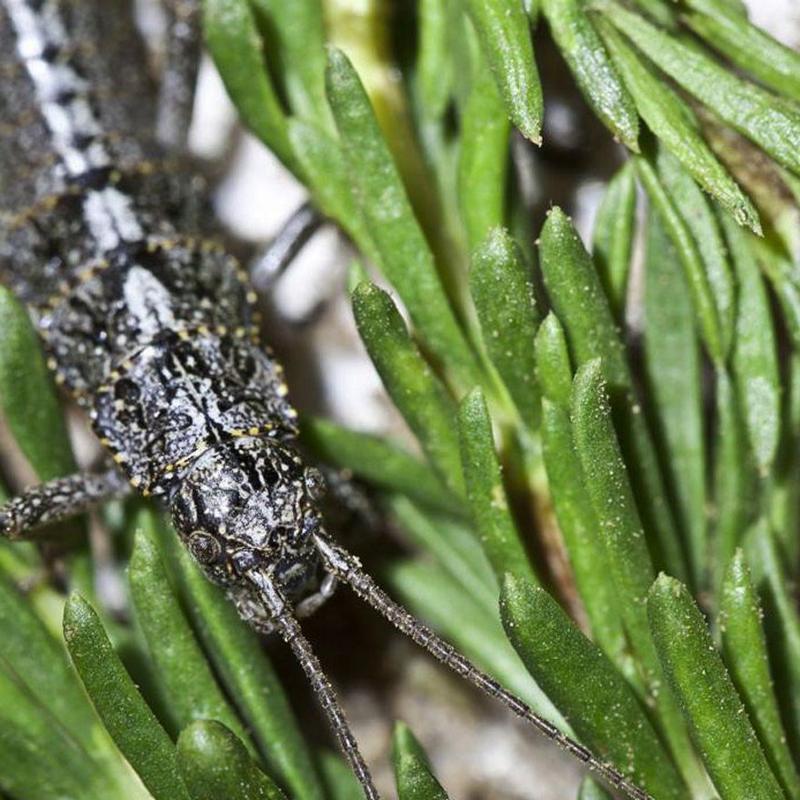
Dr Darren Parker, a lecturer in evolutionary biology, said parthenogenesis — reproduction without fertilisation by a male — occurs naturally across a number of animal species. Because males carry one X chromosome (XY) while females carry two (XX), organisms need a way to even out gene activity between the sexes, a process scientists call dosage compensation.
Parker and his team wanted to know what becomes of that balancing mechanism once it is no longer biologically necessary — precisely the scenario found in stick insects that reproduce asexually, since females bypass fertilisation altogether and therefore have no obvious need to keep the sexes' gene expression equal.

"That's the question we set out to answer," said Parker.
"This is the precise situation found in asexually reproducing stick insects."
"Because the females reproduce without fertilisation from males, there is no need to equalise gene expression."
"By investigating gene expression in rare males, our study found that rather than decaying away as we expected, dosage compensation mechanisms remained fully functional despite not being needed for over a million years."
How does this fit with earlier research on Timema?
Previous genetic studies had already shown that at least four of five examined asexual Timema lineages were still capable of producing functional males, according to earlier research published in PMC. Separately, work tracing mitochondrial and nuclear allele divergence estimated that these lineages have gone without recombination for more than a million generations, as detailed on PubMed.
A 2023 study also identified what researchers termed "cryptic sex" occurring in two Timema populations, T. douglasi and T. monikensis, raising the possibility that rare males occasionally do contribute genetically even in populations regarded as asexual, according to findings published in PMC. A related account from the University of Lausanne, reported by Phys.org, suggested this occasional mating could help explain how such populations persist over such long timescales without the usual genetic diversity sex provides.
Timema has become something of a benchmark species for evolutionary biologists studying the trade-offs between sexual and asexual reproduction. A 2018 review, cited by Nature, described the genus as one of the most intensively studied systems for weighing the costs and benefits of sex versus asexuality in evolutionary biology.
The discovery also arrives amid a broader reassessment of how much insect diversity remains undocumented. Our earlier coverage detailed research suggesting Earth could host between 14 and 30 million insect species, based on DNA barcoding of more than 1.6 million insect specimens from Costa Rica — a figure far higher than previous estimates and a reminder of how much remains unknown about insect biology generally.
What comes next?
The PNAS paper detailing these findings has now been published, and no further hearings, follow-up studies or scheduled announcements have been indicated in connection with this specific research. Researchers in the field continue to examine related questions, including the extent of cryptic sex across other Timema populations and what that might mean for how dosage compensation and other genetic mechanisms persist over evolutionary timescales.
Key Facts
- Timema stick insects, native to the western United States, have reproduced asexually for roughly a million years, the longest such period recorded in any insect.
- The study was led by Dr Darren Parker of Bangor University and published in the Proceedings of the National Academy of Sciences (DOI 10.1073/pnas.2531501123).
- Contrary to expectations, dosage compensation — the mechanism balancing gene expression between males (XY) and females (XX) — remained fully functional in rare males despite being unnecessary for over a million years.
- Earlier research found at least four of five asexual Timema lineages could still produce functional males, and a 2023 study found evidence of "cryptic sex" in two populations.


