Selecting the optimal time to harvest crops represents one of agriculture's most consequential decisions, with timing affecting both worker safety and profitability. When Washington State apple growers faced extreme heat during their first harvest day last year, the decision to stop work became unavoidable – but artificial intelligence tools designed to forecast ideal picking windows could help prevent such disruptions in future seasons.
It was like 38C… it's not safe for people to work in that heat,recalls Joel Carter at Okanagan Specialty Fruits, describing conditions that forced operations to halt by mid-morning.
You need to know more than just when your fruit is going to be ripe. How long do you have to pick it? That's where these models are really helpful.
Carter's operation manages more than 1,250 acres of apple orchards across Washington, producing fruit destined for sliced portions sold to institutional buyers including hotels and schools. The company has invested in advanced technology to boost output, even developing genetically engineered apple varieties that resist browning after cutting. Yet orchestrating a successful harvest involves far more complexity than simply waiting for fruit to mature.
Why harvest timing matters so much
Fruit prices – particularly for premium berries such as strawberries and blueberries – can swing dramatically based on market conditions and supply. Misjudging the harvest window creates cascading problems: seasonal workers may be booked unnecessarily, or growers miss peak pricing windows entirely. Emerging technologies that count and analyse fruit on trees or vines while predicting ripeness timelines are beginning to address this challenge.
Okanagan Specialty Fruits is already piloting cameras manufactured by Canadian firm Vivid Machines. These devices mount atop tractors and capture imagery as vehicles move through orchards, with artificial intelligence identifying buds, flowers and fruit within the footage.
Right now, Vivid is telling us crop estimates and harvest dates,Carter explains, noting that the system excels at detecting tiny flower buds invisible to the human eye. According to Vivid's technical specifications, the system delivers tree-level counts, fruit sizes, vigor and maturity predictions at centimetre-level resolution, and can operate without internet connectivity.
However, forecast accuracy depends heavily on the quality of historical data fed into the system.
This isn't something where an AI can scrape the internet and figure out what's the average [yield] for Granny Smith,Carter notes.
It's going to be bespoke to your farm.Apples offer growers a relatively forgiving three-week harvest window, but other crops demand far tighter timing.
How narrow is the window for soft fruit?
Berries present an entirely different challenge.
If a strawberry crop is on, you have to harvest it – otherwise your entire crop gets diseased very, very quickly,explains Raymond Martin, co-founder and chief operating officer of FruitCast, a UK-based company providing harvest forecasts to growers. His firm supplies predictions for strawberries, raspberries, blackberries, blueberries and tomatoes, with grape forecasting planned for the coming year.
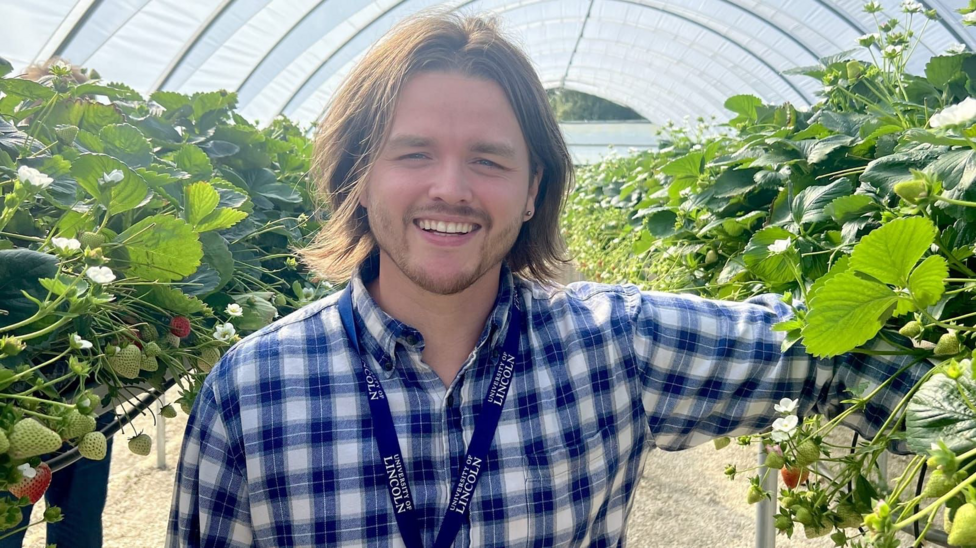
When asked whether experienced farmers already understand ripening patterns across their operations, Martin acknowledges their expertise but highlights a critical limitation. Growers managing hundreds of acres – particularly those operating both outdoor fields and controlled indoor environments – cannot monitor every section simultaneously at the granular level required for precision timing.
We do exactly what the farmers could do but we just do it on a scale that they can't.
FruitCast's system processes footage captured through multiple methods: drone imagery, smartphone video recorded by workers walking fields, or cameras mounted on farm vehicles. The model incorporates weather patterns and irrigation data into its forecasts. The company reports that
our forecasts land within 10% of actual picked volume one week out (90% accurate) and within 17% three weeks out (83% accurate). We guarantee less than 20% error…
This year proved particularly challenging across the UK, with intense heat and severe drought stressing many fruit plants and triggering thermal dormancy that slowed production. Angus Soft Fruits, which has partnered with FruitCast, views AI forecasting technology as still evolving. Operations director Neill Finlayson states:
AI tech for forecasting fruit ripeness is not yet "a finished solution". This journey is still ongoing and, whilst significant progress has been made, the industry remains some way from achieving a fully integrated forecasting ecosystem.California-based fruit seller Driscoll's, which operates substantially in the UK, confirmed that some of its independent UK growers have adopted FruitCast's technology.
What alternative ripeness detection methods exist?
Beyond predictive forecasting, researchers are developing new techniques for analysing fruit ripeness in granular detail. Many farmers already employ handheld brix meters to measure sugar content by assessing how light refracts through a liquid sample – indicating the concentration of solids. Some infrared versions eliminate the need to cut fruit for measurement.
Yasaman Ghasempour at Princeton University is exploring millimetre waves – high-frequency radio waves capable of penetrating deeper into fruit than conventional methods.
They basically respond very well to humidity, water [and sugar],she explains. Ghasempour and her students have developed a millimetre wave-based ripeness detector potentially usable by both farmers and retail customers seeking perfectly ripe produce. When her team tested the device at a New Jersey farmers' market, staff members grew suspicious of the unfamiliar technology.
[Staff] there got kind of scared that we were doing something shady,Ghasempour recalls with amusement.
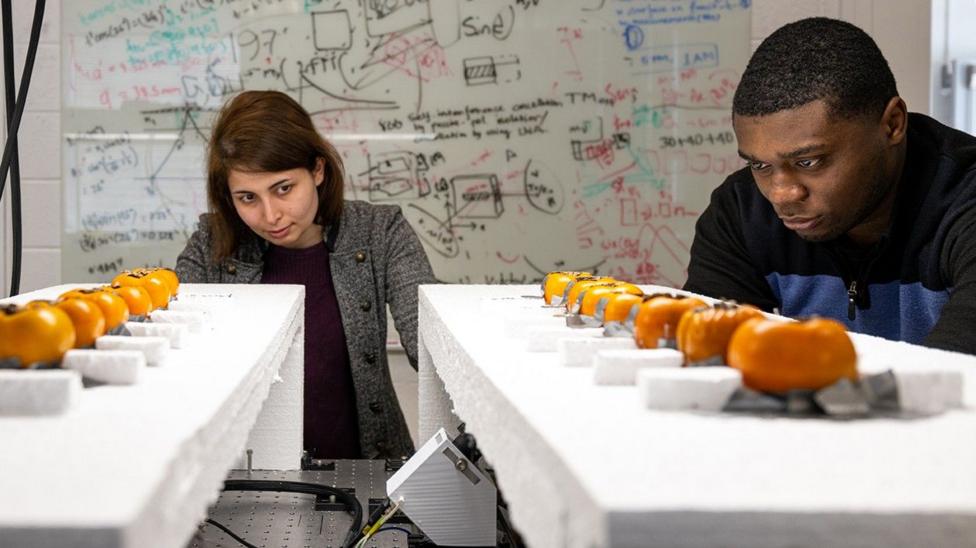
Such detailed fruit analysis could eventually feed into ripeness forecasting systems, providing real-time data on crop maturity status.
Are farmers actually adopting these technologies?
Adoption remains complicated despite growing interest from some growers like Carter.
Adoption is very complicated,says Jing Zhang at North Carolina State University.
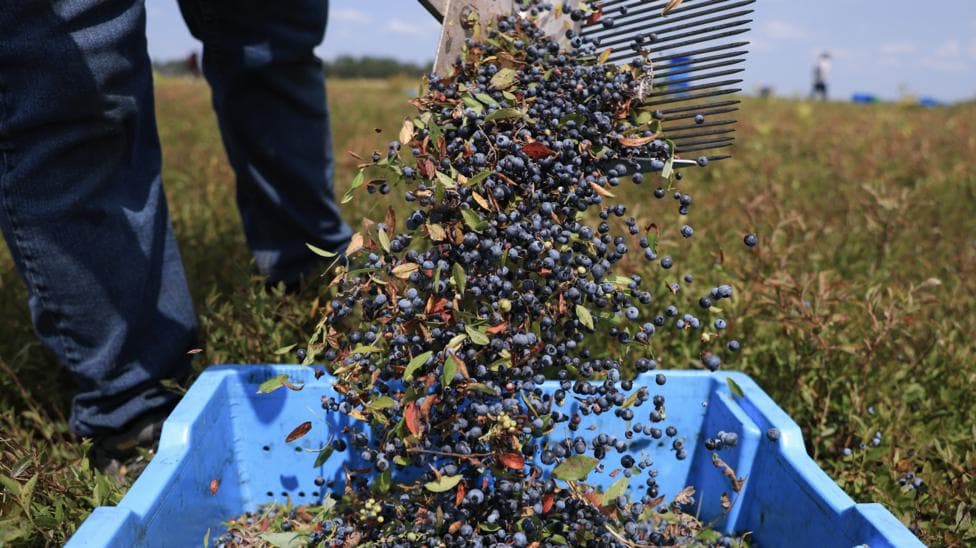
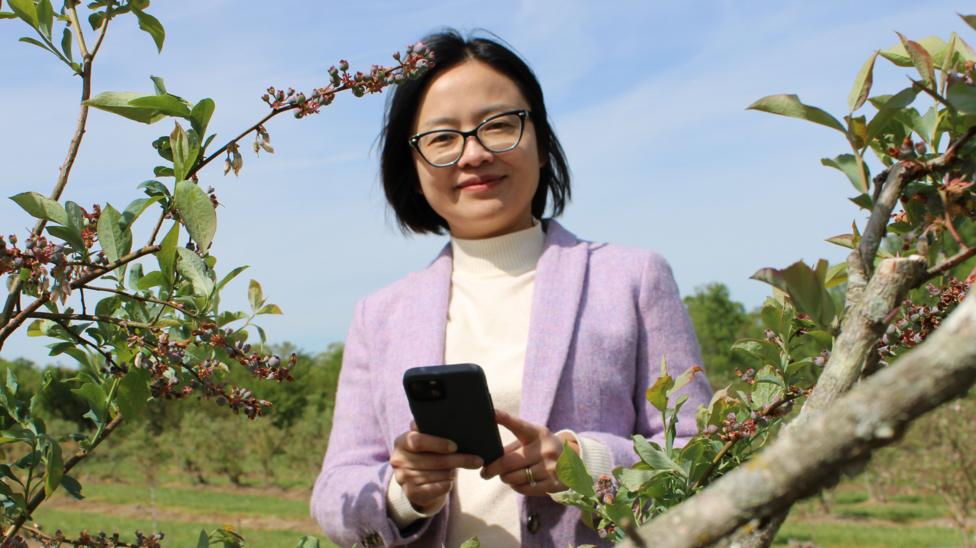
The grower has to have confidence in the research and whether or not it works.Zhang has developed a system to automatically count blueberries from smartphone images of bushes, while Kevin Wang at the University of Florida created a crop-counting tool using imagery from $100 (£74) drones – demonstrating that effective solutions need not require substantial capital investment.
Some farmers harbour concerns about sharing commercially sensitive information regarding growing strategies, including fertiliser applications and irrigation schedules, with third-party AI systems. Ben Palone, senior director of automation and commercialisation at Western Growers – an association representing western US farmers – views harvest forecasts as having potential as
an optimisation toolbut acknowledges that growers prefer maintaining human involvement in critical decisions, particularly those affecting harvest timing.
What developments are underway in the sector?
The technology landscape continues evolving rapidly. On 11 September 2026, Canada announced funding of up to C$1,693,412 for Vivid Machines to adapt its orchard AI system for vineyard applications, including tools to detect disease, assess fruit quality and estimate yields. This expansion builds on earlier work: a 2025 report documented a C$2.4 million Vivid project focused on dormant-tree pruning and vigour models, with just over C$800,000 contributed by the Canadian Agri-Food Automation and Intelligence Network.
Earlier collaborative efforts have also demonstrated the technology's potential. A Canadian Food Innovation Network project involving Vivid and Ontario growers Algoma Orchards and Blue Mountain Fruit Company aimed to create digital orchard records to improve harvest-readiness estimates and supply-chain planning. The vineyard adaptation initiative is intended to extend Vivid's existing apple-orchard capabilities to grape production, though the announcement did not specify a completion timeline.
As these technologies mature, the agricultural sector faces a fundamental question: whether the investment in AI-driven forecasting delivers sufficient returns to justify adoption across diverse farm operations. While the potential for optimised harvests, reduced waste and improved worker safety is evident, widespread implementation will likely depend on continued refinement, cost reduction and demonstrated success across varied growing conditions and crop types.