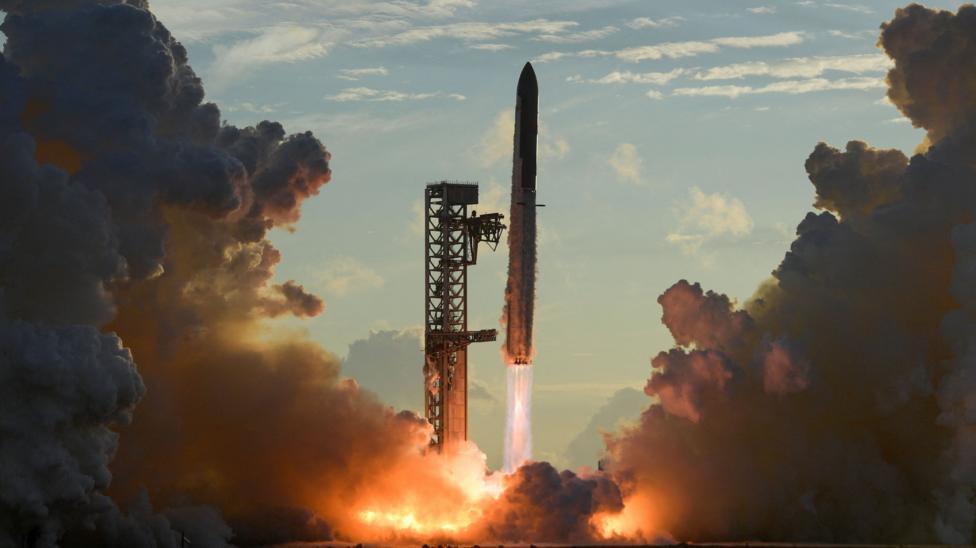
Starship stands as the tallest, heaviest and most powerful rocket ever to fly. On Friday, SpaceX will attempt an unprecedented feat: recovering both sections of this massive vehicle after it launches on its next test mission.
The company plans to use mechanical arms—nicknamed chopsticks—mounted on its launch tower to snatch both rocket segments from the air as they descend to Earth. According to BBC News, success would mark the first complete recovery of a rocket that has reached space, a milestone that could unlock the path to making Starship fully reusable for repeated flights.
The 124-meter-tall rocket is scheduled to depart from the Starbase launchpad in Texas at 1645 local time (2245 GMT), with a 75-minute launch window available. Reuters reported that the FAA had not issued a launch license as of Friday morning, though the mission remained on the schedule for November 13, 2026.
How will the recovery sequence work?
The first catch attempt will occur approximately six and a half minutes after liftoff, when the lower stage—known as the Super Heavy booster—returns to the launch tower for capture by the chopsticks. SpaceX has successfully executed this maneuver three times during earlier test flights.
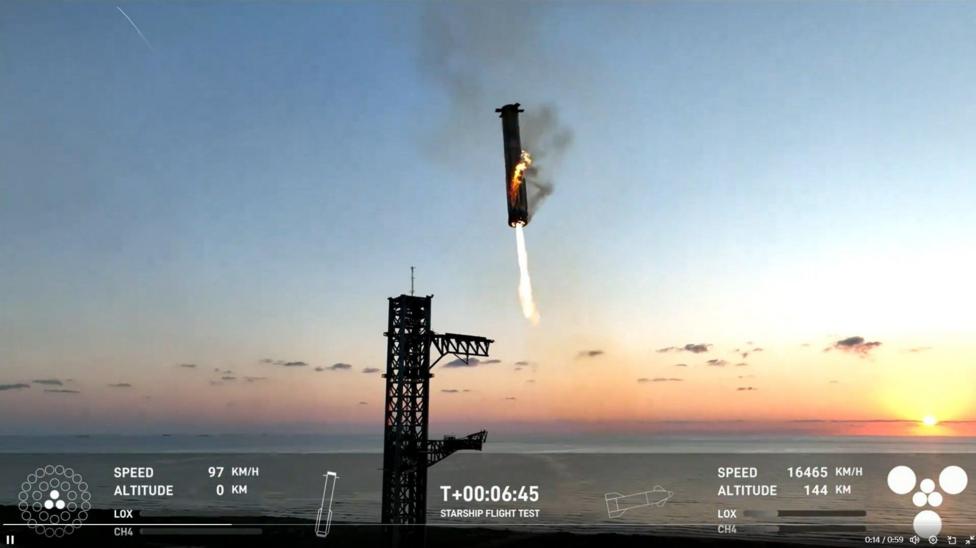
Meanwhile, the upper stage, called the Ship, will continue its ascent into space and deploy 26 satellites. According to Reuters, these spacecraft represent the newer V3 model of Starlink satellites, which form part of the constellation delivering high-speed internet from orbit.
The Ship will then orbit Earth 14 times before returning for the second catch attempt roughly 22 and a half hours after launch. This upper stage has never been grabbed by the chopsticks before; in all previous flights it has splashed down in the ocean instead. SpaceX stated it will only commit to attempting the Ship capture after thoroughly evaluating the vehicle's condition while in space, with multiple abort points available to bring the stage down safely in the ocean if problems emerge.
Why does this matter for space exploration?
Building a fully reusable rocket represents a long-standing goal for SpaceX. In 2015, the company became the first to vertically land part of a rocket when its Falcon 9 booster touched down successfully. Today, Falcon 9 rockets fly more than 100 times annually, and the ability to reuse the lower stage has dramatically reduced launch expenses.
A successful double catch would represent a major leap forward, according to Prof Malcolm Macdonald, President of the Royal Aeronautical Society.
A successful double catch would be visually spectacular, but full reusability has the potential to fundamentally change the economics of accessing space. One successful flight will not prove that model, but it could mark an important transition: from demonstrating that Starship can fly, to demonstrating how Starship could operate.
The implications extend far beyond SpaceX's commercial ambitions. NASA will be monitoring this flight closely, as the Starship rocket is designated to play a crucial role in the agency's Artemis programme, which aims to return astronauts to the Moon. SpaceX has received a NASA contract to configure the Ship into a lander that will eventually transport astronauts to the lunar surface.
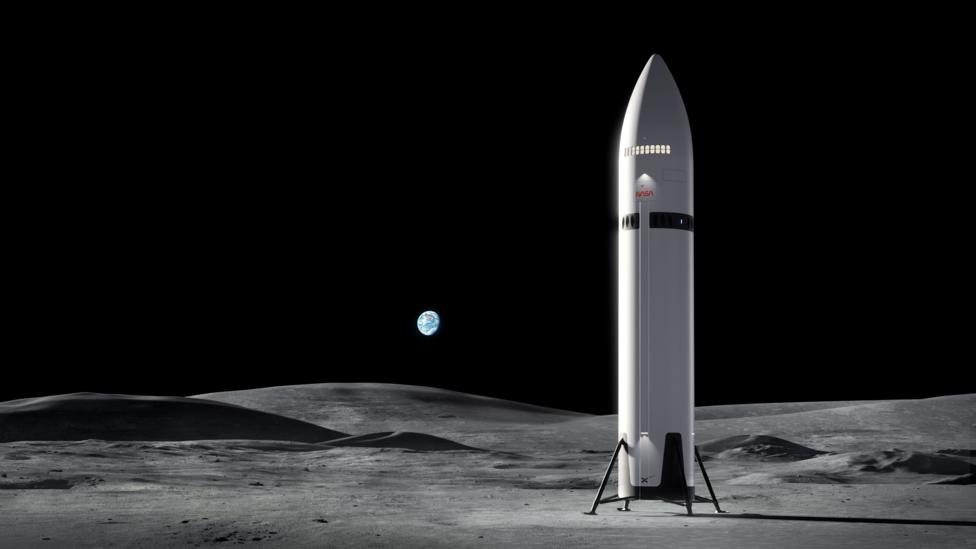
What are the stakes for NASA's Moon programme?
The progress of Starship carries direct consequences for NASA's goal to land humans on the Moon in 2028—an ambitious timeline that faces mounting pressure. NASA administrator Jared Isaacman has stated that America is engaged in a race with China to reach the Moon, with China planning to land its taikonauts on the lunar surface by 2030.
NASA's Artemis III mission, currently scheduled for summer 2027, will see four astronauts in NASA's Orion spacecraft attempt to dock with landers from both SpaceX and Blue Origin, the company owned by rival tech billionaire Jeff Bezos. Both firms hold contracts with NASA to support lunar landing operations.
Starship must achieve substantial progress in the coming months to meet these commitments. The rocket's development pace has been considerably slower than SpaceX originally intended. According to AFP, the previous test in September reached orbit for the first time but was cut short by an engine issue, with neither stage recovered.
Blue Origin faces its own challenges. The company suffered a major setback earlier in 2026 when its rocket exploded, completely destroying its launchpad in Florida. Although Blue Origin initially stated it would resume operations by year's end, the company has now delayed its return to flight to early 2027.
What comes next for SpaceX?
SpaceX's launch schedule lists Flight 15 from Pad 2 at Starbase on November 13, with Mechazilla serving as the planned landing site. Reuters reported that Elon Musk has stated he expects Starship launches to reach a weekly cadence by the first half of 2027, with SpaceX indicating that launches from a new Florida pad could commence by the end of 2026.
After SpaceX went public earlier in 2026, shareholders will be closely monitoring this flight alongside NASA and other stakeholders. The successful recovery of both rocket stages would represent a watershed moment for the company's reusability ambitions and its ability to support NASA's lunar exploration goals within the compressed timelines now in effect.