The UK's new AI minister, Kanishka Narayan, has already represented the sector at global tech conferences and will now sit at the top table of government, even as the Department for Science, Innovation and Technology (DSIT) is scrapped. DSIT, created by the Conservative Sunak government in 2023, will have its responsibilities split between other government departments, and there will no longer be a dedicated technology secretary after Liz Kendall was sacked by new Prime Minister Andy Burnham.
Narayan, who was appointed by Sir Keir Starmer, said the new prime minister inviting him to attend cabinet as minister for AI was a "sign of his deep commitment to AI's importance." Born in India and raised in Cardiff, Narayan worked in government and business before entering Parliament in 2024 as the MP for the Vale of Glamorgan.
As Parliamentary Under-Secretary of State within Sir Keir Starmer's government, his responsibilities spanned AI opportunities, the AI Security Institute, semiconductors and online safety. He is expected to continue shepherding many of those briefs, though now without Kendall's leadership.
"AI is likely the most significant technology in human history. Its impact will dwarf other things," Narayan wrote on X in the early hours of Tuesday, external.
"The best case for it is compelling beyond our dreams: a reindustrialised Britain, stronger national security, public services transformed for the better."
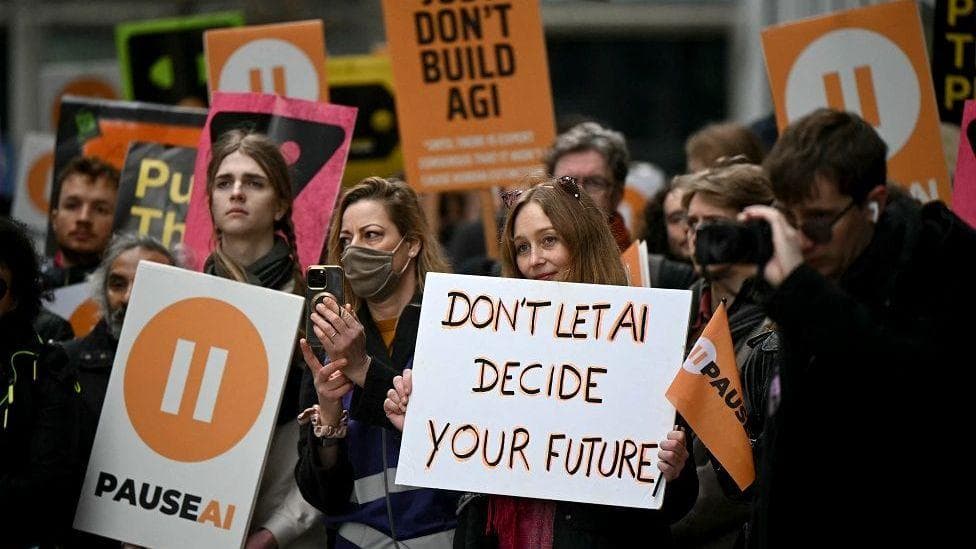
He added that, however, AI also poses real risks to the public, adding "it is right that the British public shares those worries, for jobs, for the pace of change".
Dom Hallas, head of tech trade body the Startup Coalition, said it was key that, with the dismantling of DSIT, the government did "not take the foot off the pedal" with tech. He said the previous department had provided good foundations, and now the priority should be spreading AI tech adoption through government and the wider public.
Big challenges
The minister faces multiple policy challenges, Professor Gina Neff, head of the Minderoo Centre for Technology and Democracy at the University of Cambridge, said. One of the most pressing is how society deals with the threat of AI replacing jobs.
But Neff said elevating an AI minister to cabinet at least sent a signal the Prime Minister was "serious about having someone serious in this key role".
What is AI, how does it work and why are some people concerned about it?
Professor Adam Beaumont, chairman of telecoms and digital infrastructure firm AQL, said the most pressing issue for a new AI minister was ensuring resilience. He said there was a danger another reorganisation of science and tech within government could be "changing too many things at once", and argued that the UK needed to build more data centres.

"We're a small island but the internet is borderless, we need more compute within our shores," he said.
That has proven extremely controversial, and the BBC was told in February government plans to make the UK a "world leader" in AI could put already stretched supplies of drinking water under strain.
But Prof Beaumont said that to supply data centres, the government needed to focus on delivering abundant and reliable energy for the grid immediately.
"Without power there's no compute, without the compute there's no knowledge economy," he said.
"All our aspirations on digital growth are reliant on the assumption of readily available energy, but that is not growing in line with the exponential growth of AI."
Prof Neff said the electorate could see things differently though.
"For any Labour government to hitch their future electability to benefits to AI, then the political challenge for a new government is people need to feel the benefits before any job losses," she said.
"How do you jump start the British economy to get growth? AI may be that solution, or it might be a longer term investment.
"People want to see the economy improving and kids getting jobs."
for our Tech Decoded newsletter to follow the world's top tech stories and trends. Outside the UK? here.

Who's in Andy Burnham's cabinet?
Government backtracks on AI and copyright after outcry from major artists
Data centres to be expanded across UK as concerns mount