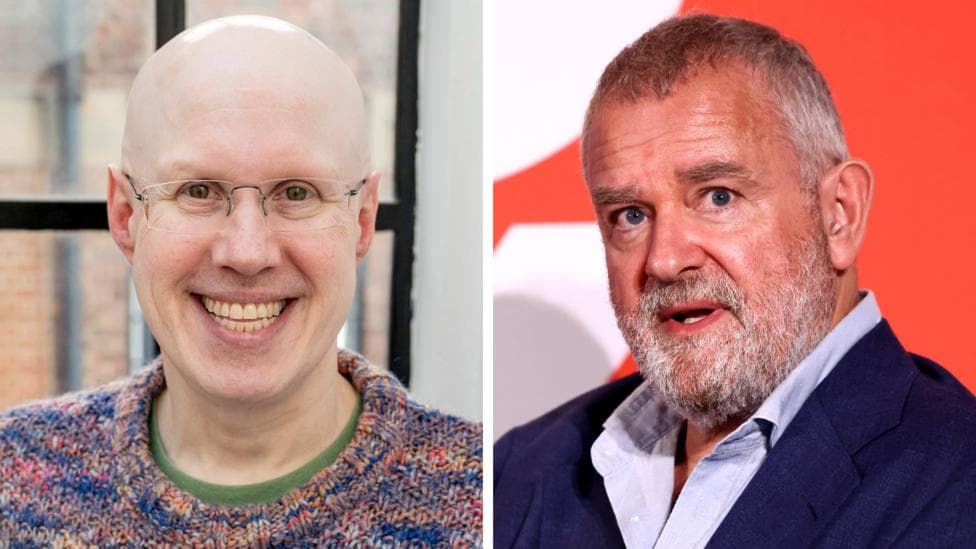
More than 80 performers, including Matt Lucas, Hugh Bonneville and Nicola Coughlan, have written to the UK government demanding legislation that would grant every person in the country a legal right to own their voice. The campaign reflects growing concern within the entertainment industry about the rapid advancement of artificial intelligence technology capable of replicating human voices without consent.
Voice clones are created by training AI systems on recordings of real people. Rapid versions can be produced in minutes from just a few seconds of audio, though high-fidelity reproductions typically require many hours of training data. Audiobook narrator Alice Sockett, who co-founded the campaign, described the threat as existential for her profession.
"My voice is out there in the public domain but completely unprotected," Sockett said. "We're seeing voice theft increase every week."
The letter was addressed to Prime Minister Andy Burnham and calls for statutory protection against unauthorised voice replication. Signatories span multiple performing disciplines, including actors, singers and other creative professionals. Scottish musician Sandi Thom, known for her 2006 hit "I Wish I Was a Punk Rocker (With Flowers in My Hair)," emphasised the personal nature of her voice.
"My voice is unique to me and was handed to me at birth," Thom said. "Behind that voice is the emotion, the life, the pain, the tears and joy that I've felt along the way. Without creativity, we are nothing."
Derry Girls actor Siobhán McSweeney expressed concern that government action was lagging behind the pace of technological change.
"There is a way to work alongside AI and to use it as a tool that benefits us rather than rendering us obsolete," McSweeney said. "Our audiences want that human connection. Not AI."

What has the government said?
A government spokesperson acknowledged that while digital replicas can serve legitimate creative purposes, they also pose risks. The government indicated it would launch a consultation on addressing these harms while protecting innovation. According to the government's copyright-and-AI consultation page, a formal consultation ran from 17 December 2024 to 25 February 2025, specifically seeking evidence on digital replicas that replicate a person's voice, image or likeness. The government received a little over 11,500 responses to that consultation, with 10,112 submitted via the online portal and over 1,400 by email.
What does current UK law protect?
Legal experts have warned that existing UK legislation is inadequate for the digital age. In June 2026, Dr Mathilde Pavis noted that while the law approaches the issue, it does not fully safeguard voices, faces or identities. According to legal commentary from 2026, the UK currently lacks a statutory "voice likeness right," leaving no clear legal foundation for licensing voice cloning. A government report published on 2 April 2026 confirmed that performers' rights last 50 years from the end of the year of performance, or 70 years for sound recordings, but these protections do not specifically address AI-generated replicas.
The performers' union Equity has taken action to address the gap. The organisation launched an AI toolkit in 2025 with model AI clauses and a takedown notice template aimed at protecting performers from unauthorised cloning. In June 2026, Equity took action against Fish Audio, arguing that the voices involved belonged to UK performers protected by UK GDPR, the Data Protection Act 2018 and performers' rights legislation.
Are there positive uses of voice cloning?
Not all applications of voice cloning technology have been controversial. Some individuals have benefited from the ability to preserve or restore their voices. Yvonne Johnson, who lost her voice due to motor neurone disease, told the BBC's Tech Life programme in February how having her voice cloned by AI had profoundly affected her.
"It totally blew her mind," Johnson said of the experience, noting that it brought her closer to her family, who had forgotten what she sounded like.
Others have extended the technology beyond voice alone. Pam Cronrath, from Washington state, used AI to create a holographic representation of her deceased husband that addressed mourners at his funeral.
"I was completely impressed," Cronrath told a national broadcaster. "It stayed with me."
What happens next?
The government has committed to launching a consultation on how to address harms from digital replicas while protecting legitimate innovation, though no specific date has been announced for this next phase of engagement. The campaign by performers and the government's response reflect a broader pattern of concern about AI's impact on creative industries. Earlier this year, the UK House of Lords warned against sacrificing creative industries for AI gains without proper licensing and permission, and Taylor Swift filed trademark applications to protect her voice and image from AI-generated impersonations, following similar moves by other celebrities.