The UK government will establish a national AI Biosecurity Lab (AIBL) as part of its strategy to strengthen defences against emerging biological threats. Announced in Wednesday's Budget, the initiative represents a significant commitment to leveraging artificial intelligence for public health security. According to BBC News, the government will commit £100m to establishing the new institute with support from leading AI firms.
The chancellor will also pledge millions of pounds across multiple initiatives designed to reinforce the UK's capacity to respond to evolving cyber, biological and AI-enabled threats.
AI will transform daily life: every firm, community, hospital, school, and every aspect of our economy can benefit,John Healey said.
I understand and share the concerns of working people, so I am setting out a distinctively British approach to AI. One that doesn't leave workers behind and defends our national interest, while ensuring the benefits of AI-enabled growth are felt right across the country.
The government says the lab will operate as an independent, non-profit organisation within a National AI Biosecurity Initiative involving UKHSA, APHA, Dstl and the life sciences sector. The initiative builds on the UK's broader Biological Security Strategy and represents an expansion of the government's approach to biosecurity challenges.
What will the lab do?
The AI Biosecurity Lab will serve as a major new global institution bringing together world-leading scientific expertise to safeguard citizens and national goals as AI develops. AI Minister Kanishka Narayan emphasised the lab's dual focus on threat prevention and capability building.
That means staying ahead of emerging threats, from cyber attacks to biological risks, while building more of the critical technology our security depends on,he said.
By backing British science, advanced chips and our own AI companies, we can strengthen our national security, rebuild Britain's industrial strength and create good, skilled jobs across the country.
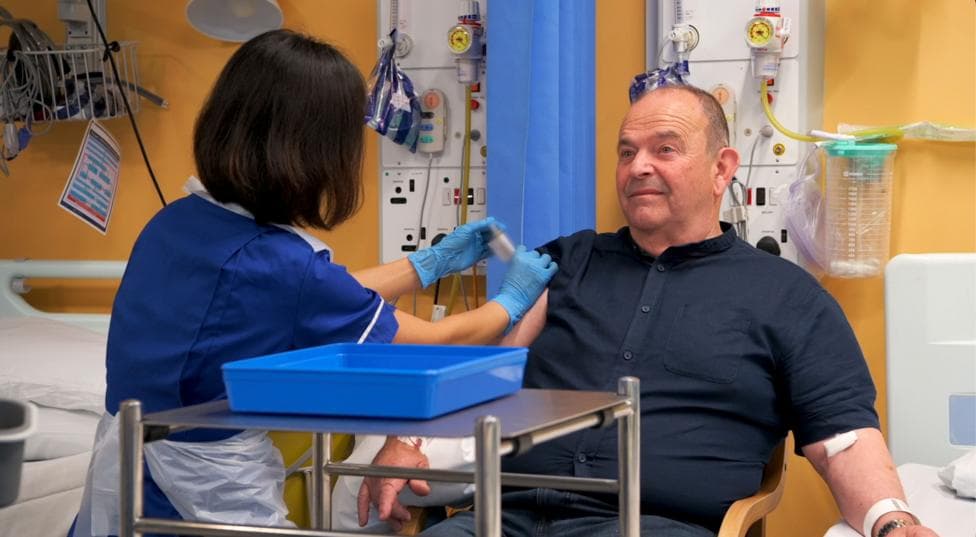
The lab's initial work is intended to improve early detection of biological threats and speed up development of vaccines, treatments and other medical countermeasures. This focus reflects growing recognition that AI tools can accelerate the identification and response to emerging pathogens and health emergencies.
Who is supporting the initiative?
Leading AI developers have committed substantial resources to the project. OpenAI will provide £100m in compute and model credits, plus trusted access to relevant models through its Rosalind Biodefense programme, while Anthropic will provide up to £100m in credits, trusted model access and technical support. These contributions represent a significant private sector investment in UK biosecurity capabilities.
Google DeepMind and Basecamp Research are named as research partners; Basecamp will provide access to AI-biology models and expertise, while DeepMind will collaborate on research and look to provide trusted access to Gemini and specialised science models. This partnership approach ensures the lab can draw on cutting-edge AI research and development capabilities from multiple organisations.
What other security investments are planned?
The Chancellor's budget includes additional funding for complementary security initiatives. An extra £120m will be committed to the UK's AI Security Institute (AISI), which was established by the former Conservative government in 2023. The institute evaluates the risks posed by the most advanced and powerful AI models and has been recognised for building a collaborative and open approach to AI testing.
The additional funding will enable the institute to continue its work amid growing calls for technical standards and guardrails for AI development. The government will also invest £60m in a National Cyber Shield programme, which will use agentic AI to enhance cyber-defences. A further £70m will fund a National Exposure and Real-Time Vulnerability (NERV) Centre, designed to harness AI tools to detect cyber vulnerabilities across the UK's critical infrastructure and economy.
Why is this investment urgent?
The announcement comes amid heightened awareness of emerging security risks. The UK government recently took some sites offline as a precaution after critical flaws were discovered in PHP, a popular server-side scripting language used in web development for decades. Researchers who identified the vulnerabilities, known as php2shell, warned that platforms using the language could be exposed to potential hacks.
Although there have been no reports of successful exploits of the flaw to date, experts have cautioned that the incident demonstrates how rapidly dormant bugs can be surfaced and potentially exploited using AI. This vulnerability underscores the need for enhanced detection and response capabilities. The government's broader investment in AI-driven security tools reflects recognition that traditional cybersecurity approaches may be insufficient against threats that evolve at the pace of technological change.
What happens next?
The government says further details about the lab's scientific advisory committee will be announced in due course. The full scope of the lab's operations and governance structure will become clearer as implementation progresses. The initiative represents a significant shift in how the UK approaches biosecurity, positioning artificial intelligence as a central tool in detecting and responding to biological threats.