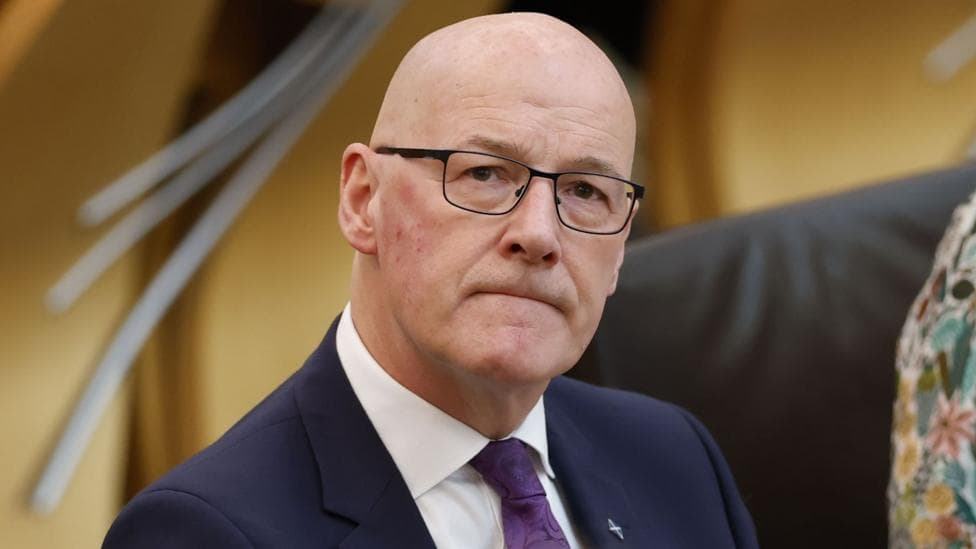
First Minister John Swinney announced on Tuesday that his government's plans to dramatically reshape Scotland's health service will not trigger compulsory job losses, despite a sweeping reduction in the number of territorial health boards from 14 to two.
Speaking to a national broadcaster's breakfast programme, Swinney committed to maintaining a no-compulsory-redundancy pledge even as the restructuring unfolds.
"I will maintain the no compulsory redundancy commitment. There is no question about that in my mind,"he said, though he declined to specify how many roles would be affected overall.
The first minister outlined his programme for government at Holyrood, positioning the NHS restructuring as the most significant structural reform of the NHS in the era of devolution. Swinney pledged to work collaboratively with trade unions throughout a reform programme that will inevitably reduce public sector employment numbers.
How will the health boards be reorganised?
The restructuring would consolidate Scotland's 14 territorial health boards into two strategic bodies, with one board serving the west and one serving the east of Scotland. The treatment of island authorities—Shetland, Orkney and the Western Isles—remains under consideration, with final arrangements still to be confirmed following consultation.
Swinney argued that the consolidation would free up additional time and capacity for direct patient treatment by eliminating duplication and reducing the number of senior management positions. The restructuring aims to improve access to care and reduce inequality caused by health-board boundaries, according to reporting on the announcement.

The proposals would not necessarily affect the operation of national health boards that run the Scottish ambulance service or provide procurement and other support functions to the NHS.
What about Scotland's local authorities?
Beyond the health service, Swinney signalled that the number of Scotland's councils could also be reduced to operate more sustainably. Currently there are 32 local authorities, but the first minister declined to specify a target number.
Instead, Swinney expressed a desire to work with local government to establish a range of larger councils that are strategic in their nature and capable of undertaking sophisticated challenges in areas such as public protection and the delivery of social work interventions. He emphasised that local communities should feel they have much more control over their lives through these reformed structures.
What is the broader context for these reforms?
The first minister's speech centred on public sector reform as a mechanism to save money, cut bureaucracy and improve service delivery. His programme for government encompasses a wider range of policies aimed at growing the economy, eradicating child poverty, transitioning to net zero and addressing what he described as
"the epidemic of violence against women and girls."
The health-board overhaul comes as Scotland's regions continue to grapple with significant job losses, with some areas experiencing cumulative employment declines across major employers. The government's commitment to avoid compulsory redundancies will be tested as the restructuring proceeds.
What happens next?
Final decisions on the health-board configuration and council restructuring will only be taken after a formal consultation process. The consultation phase represents the next critical step, during which unions, health service staff, local authorities and the public will have the opportunity to respond to the proposals. Further policy clarification is expected regarding the specific arrangements for island health boards and the final number of local authorities.
Key Facts
- Scotland's 14 territorial health boards would be consolidated into two strategic boards under the proposals, with island arrangements still to be confirmed
- First Minister Swinney has committed to maintaining a no-compulsory-redundancy pledge despite the restructuring reducing public sector jobs overall
- The local authority restructuring could reduce the current 32 councils, though a specific target number has not been disclosed
- The health-board overhaul is framed as the most significant structural reform of the NHS since Scottish devolution began in 1999
- Final decisions depend on consultation outcomes rather than immediate implementation