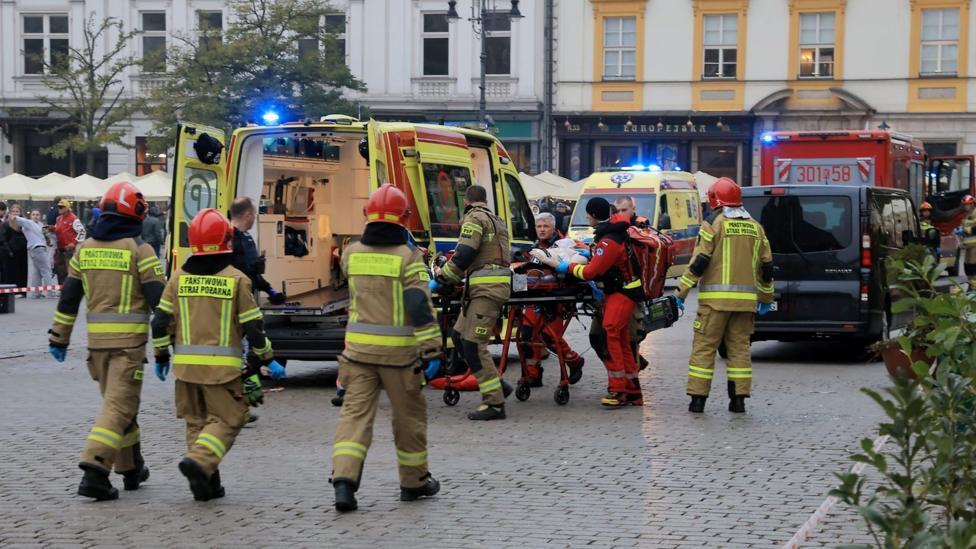
Two physicians who were dining near Kraków's Main Market Square on 7 November 2026 became emergency responders when a gunman opened fire, killing six people and wounding 15. One of the doctors later described his colleague's intervention as having "undoubtedly" saved the life of a police officer who sustained a critical chest wound during the attack. According to BBC News, the two medical professionals raced to treat both the attacker and the officers who were shot while subduing him.
The officers—both recognised as "true heroes" by Poland's prime minister for preventing further casualties—regained consciousness on Sunday, 8 November. Prosecutors initiated a terror investigation after determining that the 25-year-old Polish suspect, who remained in critical condition, had been motivated by "far-right ideologies". Among the six fatalities were a British national and an Austrian woman, alongside four Polish citizens.
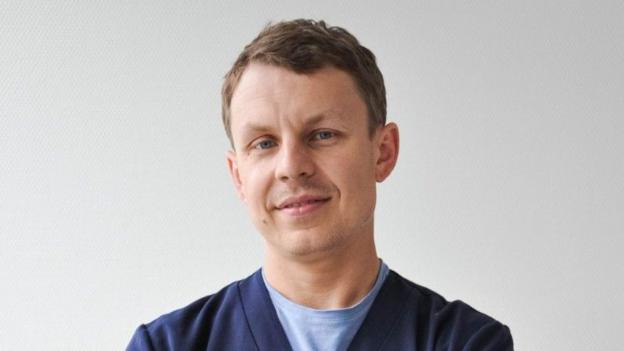
Professor Michal Pędziwiatr and Dr Mateusz Wierdak were enjoying a meal with their families in central Kraków when the violence erupted. Pędziwiatr recounted the moment to news outlet Fakt:
Suddenly my son ran up and said: 'Dad, they're shooting at people there, people are falling to the ground'.
Upon reaching the scene, the two surgeons began treating casualties without regard to their circumstances.
When it comes to saving lives, it doesn't matter who is who,Pędziwiatr explained. While Pędziwiatr attended to other victims and the perpetrator, Wierdak focused on the police officer struck in the chest during the confrontation.
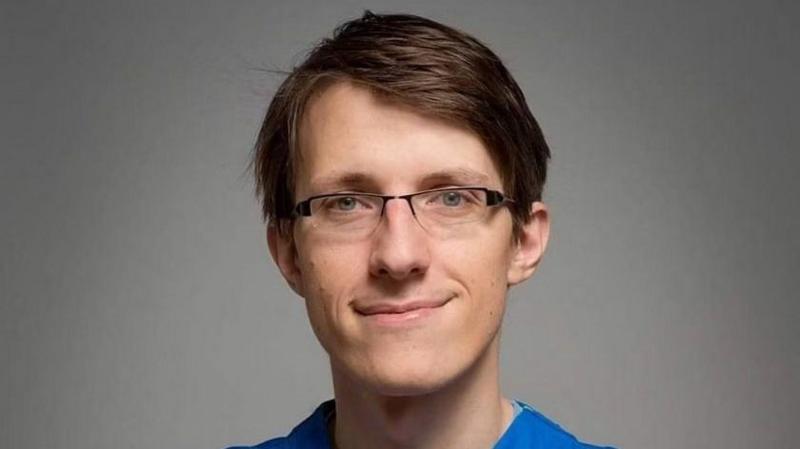
Describing Wierdak's emergency intervention, Pędziwiatr told Fakt:
He, to put it colloquially, stuffed all the bandages into [the police officer's] chest and stuck his hands in. If not for that, I don't know how things would have turned out, as there was a long wait for the ambulance.
Pędziwiatr immediately contacted John Paul II Hospital, where the Department of Thoracic and Cardiac Surgery operates.
I insisted they take him there because, in my opinion, he had the best chance of survival there, where there were specialists for precisely this type of injury,he told the outlet. Wierdak is recognised as a prominent surgeon in Kraków, while Pędziwiatr serves as head of General, Oncological, Metabolic and Emergency Surgery at the University Hospital in Kraków.
The two injured officers have been identified as senior constables Jakub Kulik and Artur Morański. According to ABC News, police issued an urgent appeal for AB Rh-positive blood donations for Kulik, who was described as fighting for his life. However, BBC News reported on Sunday that two women treated in hospital had been released, while the remaining patients in Kraków hospitals, including both officers, were in stable condition.
The attacker has not been publicly named by authorities. When his residence was searched following the assault in central Kraków, the bodies of his parents and sister were discovered. According to The Independent, investigators were also examining three deaths at the suspect's residence in Ostrowiec Świętokrzyski, approximately 190 kilometres from Kraków, where a search reportedly recovered seven firearms and ammunition.
How the attack unfolded
The rampage began shortly before 15:00 local time (14:00 GMT) on 7 November in the historic centre of Kraków. Footage captured the attacker's vehicle accelerating through the city's streets as people fled and gunfire echoed across the area. Bullets shattered shop windows and struck a tram during the assault, which police stated lasted approximately three minutes.
Witnesses near the attack described scenes of panic and disorientation. Ruby Catherine Warren, from London, heard the gunfire and
yelled at my friends to run and we all sprinted for our lives.Uncertain of the gunman's location or whether multiple shooters were involved, the group
just kept sprinting,eventually taking shelter in a hotel.
Tom Brook, from West Yorkshire, was inside a McDonald's adjacent to the square when he heard
multiple gunshots and saw people running for cover.He continued:
I then walked into the square and saw paramedics working on someone outside [a shop] and there was a dead body covered in foil blankets 20 meters away.
The suspect wore full military tactical gear and carried a military-grade weapon, though the government confirmed he was not a member of the Polish armed forces. Poland's Interior Minister Marcin Kierwiński stated that
everything suggeststhe suspect was
fascinated by far-right ideologiesand held ultra-nationalist views.
International response and additional assistance
Beyond the two surgeons' intervention, six Dublin Civil Defence volunteers also provided aid in the aftermath. James McConnell, an officer with the group, told RTE News that the volunteers were on a city break and were near the main square when the shooting occurred. The trained medical responders immediately assisted injured people, delivering
CPR and haemorrhage control.
Poland began two days of national mourning on Sunday, 8 November, for the victims of the attack.
Investigation and next steps
The National Public Prosecutor's Office in Poland launched an investigation with a unit specialising in "terrorist offences" leading the inquiry. According to ABC News, prosecutors were preparing six murder charges, with the total potentially rising to nine if investigators establish links between the suspect and the deaths of his parents and sister.
Investigators had not formally detained the suspect due to his medical condition and were awaiting clearance from doctors before questioning could commence. Prosecutors were also examining whether anyone else was involved in the attack. The mayor of Kraków submitted an urgent request for the two officers injured while stopping the attacker to be awarded titles of honorary citizens of the city.