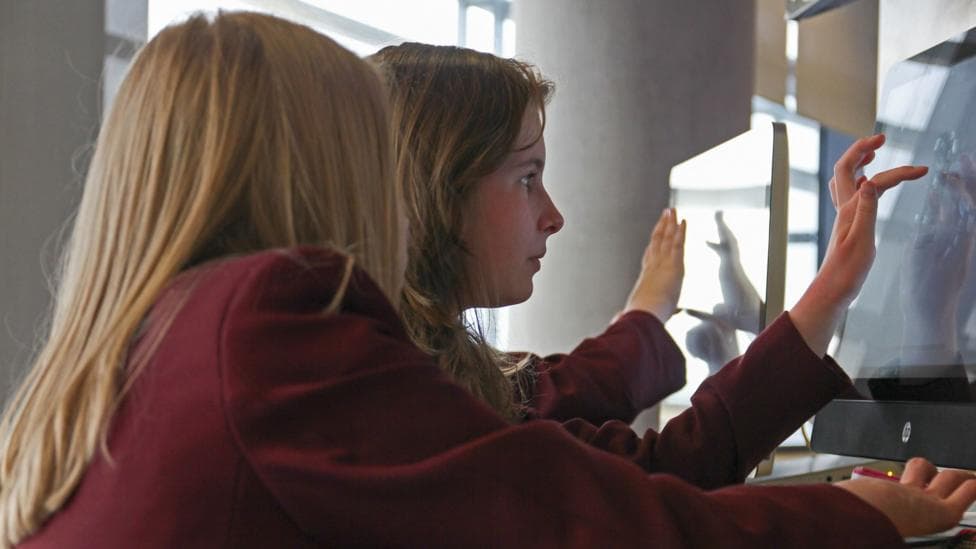
More than 150 medical professionals have warned that extensive screen use in English schools is damaging children's physical and developmental wellbeing, with particular concerns about rising rates of short-sightedness and speech difficulties.
The group of GPs, paediatricians and other healthcare specialists issued an open letter to Education Secretary Lucy Powell and Health Secretary Yvette Cooper, expressing alarm that tablets and laptops are deployed in classrooms without adequate understanding of their long-term health consequences. The clinicians stated they are increasingly treating children for vision problems, hearing difficulties and speech delays that they believe are being worsened by classroom technology use.
The letter highlights that nearly one million children in England now use screens during most of their lessons. Research cited by the signatories shows a dramatic shift in myopia prevalence: analysis of 276 studies involving 5.4 million participants worldwide found short-sightedness increased from approximately 24% in 1990 to nearly 36% by 2023. According to reporting on the clinicians' concerns, each additional hour of daily screen exposure is associated with 21% higher odds of myopia, and at four hours of daily use, the risk nearly doubles.
The clinicians warned that many children now spend longer periods on screens in school than health guidance recommends for a full 24-hour day.
As a country, we need to wake up to this now, and start rolling back screen use in schools before the damage compounds further.
What are the clinicians' specific concerns?
The letter emphasises that children with special educational needs are being disproportionately directed toward screen-based learning, potentially widening educational inequalities. The signatories also note that the condition is linked to increased risk of various eye health complications beyond simple short-sightedness.
Dr Becky Foljambe, an NHS GP and founder of Health Professionals for Safer Screens, was among those signing the letter. She told a national broadcaster's radio programme that parents have not been offered the opportunity to opt out of what she described as excessive screen use in schools, which risks children
just not thrivingin their education. She characterised the rise in short-sightedness as an
explosionthat cannot be attributed to genetics alone.
Foljambe rejected arguments that screen use is necessary to prepare children for digital careers, stating:
They also need their sleep, their eyesight, they need rest, they need ability to critically think and appraise.She described the digital-readiness argument as
a lazy argument.
The clinicians acknowledged that some evidence on screen health impacts is still emerging but stressed that
the direction of travel is consistent across multiple, independent, and in some cases very large, bodies of research.
What are the financial and regulatory implications?
According to analysis of the clinicians' letter, English schools currently spend approximately £900 million annually on educational technology. The letter calls for an independent review of one-to-one devices and educational technology in schools before additional public funding is allocated to such programmes.
A significant concern raised is that educational technology products are not required to demonstrate child-health safety before schools purchase them. This regulatory gap means schools may be investing heavily in devices without evidence of their safety for developing children.
How has the government responded?
The Department for Education stated it is developing new screen-time guidance for children aged five to 18 and will consult on the safety of artificial intelligence and educational technology in schools. A departmental spokesperson said:
Used well, technology can be a powerful tool to support learners who need it and free up teachers to deliver the excellent education every child deserves.
According to government announcements, the administration will also consult on AI and educational-technology safety, alongside developing safety standards for AI products used in schools.
This intervention follows the implementation of a smartphone ban in English schools that came into force in June 2026, making individual schools and trusts legally responsible for maintaining phone-free environments throughout the school day.
What existing guidance is in place?
The government has previously issued screen-time guidance for younger children. Current recommendations for under-fives advise avoiding screen time for children under two except for shared activities, and limiting use to no more than one hour daily for ages two to five. However, guidance for school-age children has been less prescriptive.
The government's call for evidence on screen use by children aged five to 16 closed on 29 June 2026. This consultation was designed to gather information about school-based screen use to inform both future policy and guidance for parents.
What happens next?
The government has committed to publishing new screen-use guidance for ages five to 16 in autumn 2026. The evidence gathered through the consultation process will feed into future policy decisions regarding screens in schools, potentially shaping how educational technology is deployed across the sector.
Among the medical professionals signing the letter were Dr Sanjiv Nichani, a senior consultant paediatrician, and Dr Louise Milne, a consultant paediatrician at Portsmouth Hospitals University Trust, indicating the breadth of clinical expertise behind the warning.
Key Facts
- More than 150 clinicians have warned that classroom screen use is harming children's physical and developmental health, particularly affecting eyesight and speech development
- Short-sightedness prevalence among children and adolescents rose from 24% in 1990 to 36% by 2023, according to analysis of 276 studies covering 5.4 million participants
- English schools spend approximately £900 million annually on educational technology, yet products do not require child-health safety certification before purchase
- The government will publish new screen-time guidance for ages five to 16 in autumn 2026 and will consult on AI and educational-technology safety standards
- A smartphone ban in schools came into force in June 2026, making schools legally responsible for maintaining phone-free environments