England is experiencing a significant surge in severe flu cases, with hospital admissions rising sharply as health officials urge vulnerable populations to seek vaccination urgently. The UK Health Security Agency (UKHSA) reported that hospital admission rates had climbed by almost 80% over the preceding week, reaching the highest level at this time of year since before the Covid pandemic. According to BBC News, outgoing NHS England chief executive Sir Jim Mackey described the situation as a
horrible spike in flu, noting that some hospitals had begun reintroducing mask-wearing to contain the spread of respiratory illnesses.
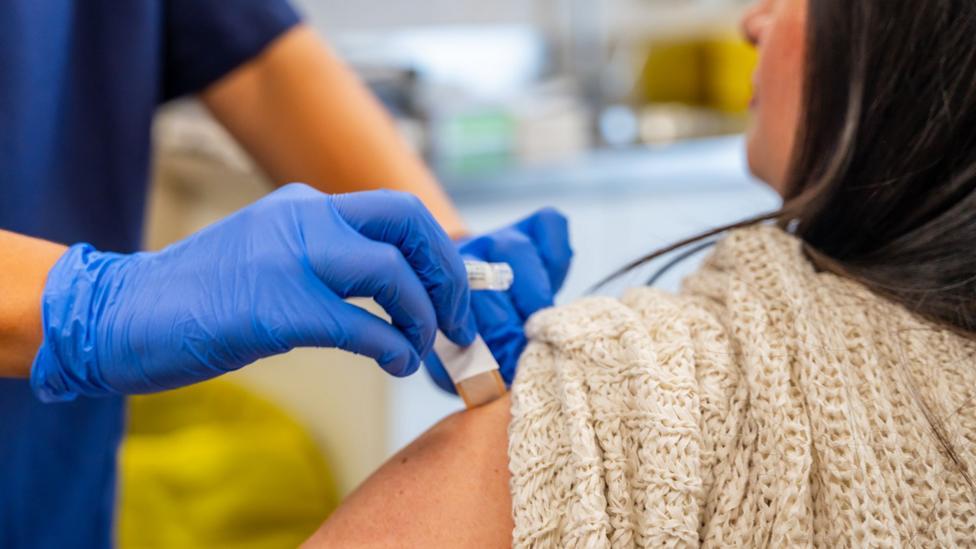
The surge comes as vaccination uptake remains below historical norms for this period. Among those aged 65 and over, flu vaccine uptake stood at just under 68%, lower than typical levels at this stage of the season. The situation is more concerning among younger adults in clinical risk groups: of the 9.5 million people under 65 with conditions such as lung disease, kidney or liver disease, and diabetes who are eligible for vaccination, only 34% had received the jab by 22 November, leaving approximately 7 million without protection.
The H1N1 strain is driving much of the current outbreak. Suzanna McDonald, who leads the UKHSA's flu programme, explained that the strain
does seem to have picked up a few more changes that we would have expected over the season. However, she offered reassurance about vaccine effectiveness, noting that
last year when we saw a drifted strain, the vaccine still worked very well.
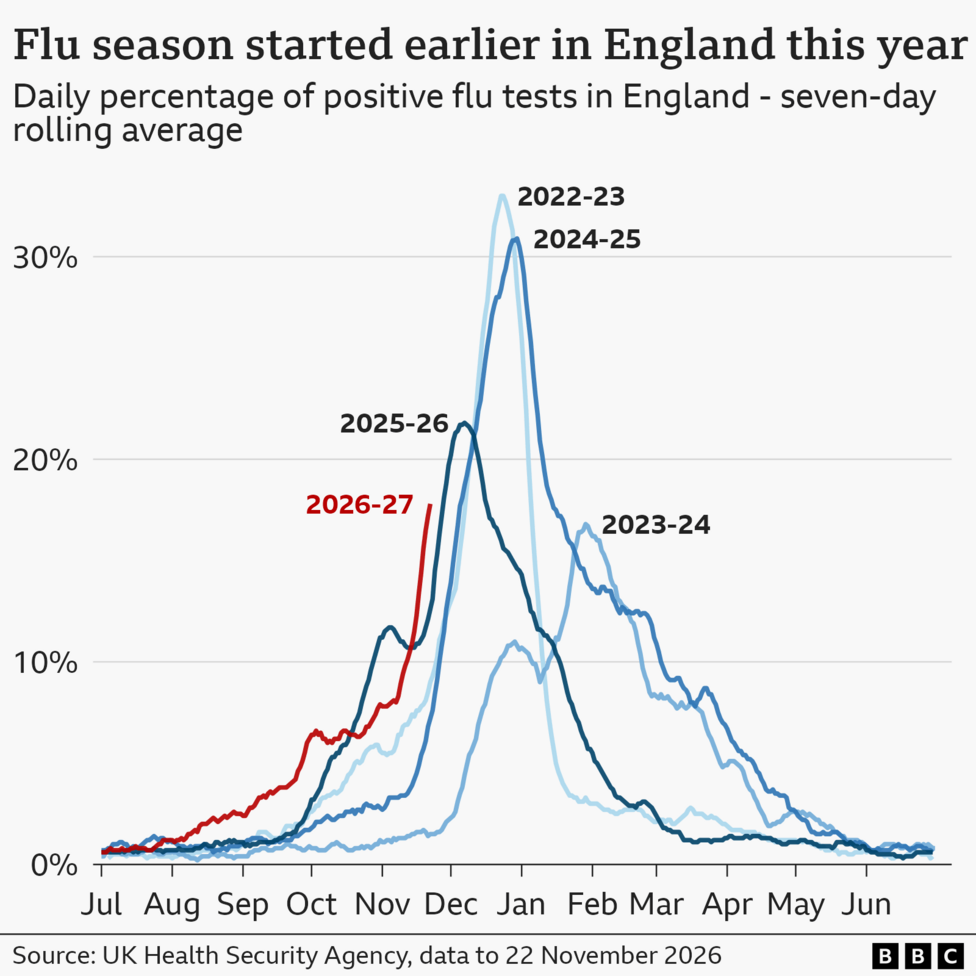
How severe is the current outbreak compared to last year?
Hospital admissions are running higher than the equivalent period in 2025. According to Sky News, the flu admission rate in the equivalent week of 2025 was 4.9 per 100,000, compared with 9.0 per 100,000 in the latest week. The UKHSA also reported that emergency-department attendances for flu-like illness were above seasonally expected levels. This time last year, an early increase in flu cases caused significant concern across the NHS, with fears that numbers would climb through the challenging Christmas and New Year period. However, that outbreak peaked early and the most severe predictions did not materialise. This year, hospital admissions with flu patients are already higher than 12 months ago following another early surge, and officials remain uncertain when the peak might be reached.
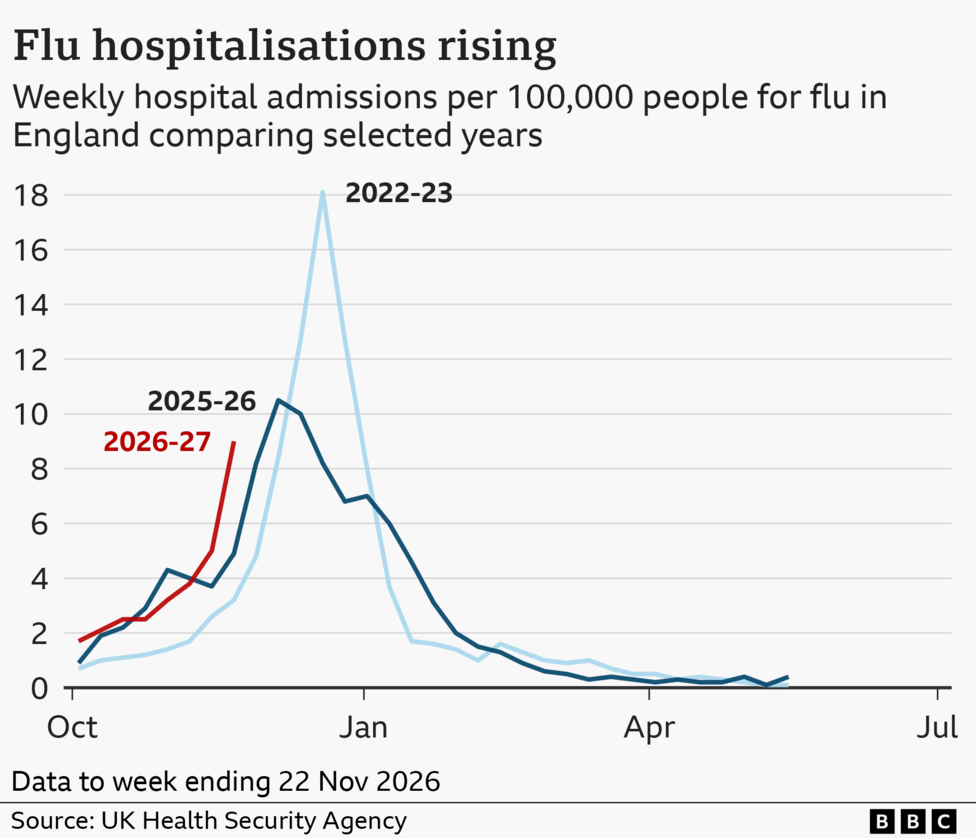
What do the latest surveillance figures show?
The most recent data reveals a sharp acceleration in flu activity. According to the UKHSA's latest week 47 data published on 26 November, flu positivity rose to 17.8%, up from 11.5% the previous week, while the hospital admission rate reached 8.98 per 100,000, up from 5.03 per 100,000. NHS 111 respiratory-infection calls and online assessments increased during the week ending 22 November, with online assessments above baseline; increases were steepest among children aged 14 and under. GP out-of-hours contacts for influenza-like illness were also above baseline in week 47 and continued to rise across age groups.
Why is vaccination uptake lagging?
Uptake among toddlers has been particularly low. Just over a third of eligible two and three-year-olds in England have received the flu vaccine so far this autumn, despite the vaccine being available free as a nasal spray at GP surgeries and some community pharmacies. The UKHSA reported that only 39% of those eligible had taken up the offer. McDonald urged parents not to underestimate the importance of childhood vaccination, stating
It will help keep them out of hospital and even save lives. School-age children typically receive the vaccine at school, with a catch-up available in pharmacies until 1 December for those who missed it.
What pressures is the NHS facing?
The flu surge arrives as the NHS already faces mounting strain from multiple sources. Sir Jim Mackey also condemned corridor care in hospitals, saying it had become
embeddedin some parts of the health service. He emphasised that
It's not something any of us would want for our families, our mothers, our aunties, uncles – whether it's from a safety point of view, or more importantly from a personal dignity point of view, calling for urgent action to eliminate the practice. Sir Ciaran Devane, chief executive of the NHS Alliance, warned that
While the flu season is clearly hitting earlier this year and could add to the strain on NHS services heading into another difficult winter, we are yet to see how or when it will peak. He noted that
The NHS has already had to deal with the challenge of heatwaves this summer, so this could pile yet more pressure on already squeezed services.
Adding to the challenges is an increase over the past year in patient numbers with a range of illnesses and conditions, partly explained by the ageing population. This demographic shift means even greater pressure on hospitals and their staff. The NHS had already been bracing for a tougher winter following record summer demand, with health secretary Yvette Cooper warning of heightened challenges and announcing £140m in funding for urgent care capacity.
What preventive measures are being recommended?
McDonald called on those experiencing respiratory symptoms to practise good hygiene by washing hands with warm soapy water, coughing and sneezing into an elbow or tissue, and staying at home in bed to avoid contact with those at much higher risk from infectious disease. Flu levels are expected to increase further as Christmas approaches and people begin socialising indoors more frequently.
What happens next?
The 2026/27 flu vaccination programme is scheduled to continue until 31 March 2027. The NHS had aimed for most vaccinations to be completed by 30 November, with the programme having begun on 1 September for children, pregnant women and some adults, and 1 October for other eligible groups. McDonald urged people to get vaccinated, emphasising that thousands of people die from flu every year.